 Free Shipping on US orders above $49




What You Need to Know
What Is the A10 Classic?
The Advance Paris A10 Classic is an amplifier. It takes the sound from your music sources and makes it powerful enough to drive your speakers.
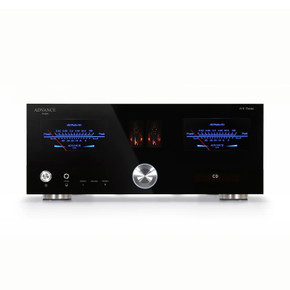
What makes it special is how it is built inside. The first part of the signal path — called the preamplifier — uses vacuum tubes. Tubes are a type of electronic component that many listeners find adds warmth and body to the sound. You can see the two glowing tubes through a window on the front panel, right next to a pair of large VU meters. VU meters are the moving needles that show you how loud the music is playing. They look great and are fun to watch.
The second part — the power amplifier — uses solid-state electronics. Solid-state means it uses transistors instead of tubes. This gives you plenty of clean, stable power: 130 watts per channel into 8-ohm speakers, or 190 watts into 4-ohm speakers.
This type of design is called a hybrid amplifier. It combines the warmth of tubes with the power and reliability of solid-state.
The A10 Classic also has a lot of inputs. You can connect up to 14 sources — including your TV, turntable, CD player, and computer. According to reviewer Ed Selley at AVForums (October 2024), “you can connect 14 things to the A10 and then add Bluetooth for good measure.”
A Built-In DAC — Digital Sources Sound Great
A DAC (short for Digital-to-Analog Converter) turns digital audio signals into analog sound your amplifier can use. The A10 Classic has one built in. It uses an ESS Sabre 9018 DAC chip — a well-regarded chip found in dedicated DAC units.
You can connect digital sources like a CD player, TV, or computer. The USB-B input connects to a computer and supports very high-quality audio files, including DSD files — a format used by audiophiles for very detailed sound.
What Do Reviewers Say?
AVForums — Ed Selley | October 2024
Ed Selley called the A10 Classic “a formidable integrated amp and sensational value for money.” He noted it could pull impressive detail and control from demanding speakers. He said the tube preamp stage was a real differentiator, adding that the A10 does not sound overtly tubey — but it does not sound purely solid-state either. — AVForums, Ed Selley, October 2024
AudioPals (UK) | July 2022
AudioPals called the A10 Classic “the best integrated amplifier I have heard for under £2,000.” The reviewer said the Hi-Bias Class A mode was “incredibly musical” with natural vocals and fast dynamics. They also praised the phono stage and called the DAC “more natural than many stand-alone DACs.” — AudioPals, July 2022
Steve Huff Hi-Fi | October 2024
Steve Huff reviewed both the A10 and A12 Classic. He described the A10 as “rocking with its own effortless flow” at its price point, calling it “highly competitive” with other amplifiers in the same price range — and “a step above” many of them. — Steve Huff Hi-Fi, October 2024
Who Is This For?
 You want a hybrid tube/solid-state amplifier that can connect to every source you own — including your TV, turntable, CD player, and computer — all in one unit.
You want HDMI ARC for clean TV audio. This is a rare feature on a stereo amplifier, and the A10 has it.
You like the look of glowing tubes and moving VU meters on your front panel.
You want to switch between Hi-Bias Class A mode for quiet late-night listening and full Class A/B power for louder, more dynamic music.
How Does It Connect?
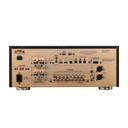
The A10 Classic has a lot of connections on the back. Here is what you get:
- 6 analog RCA inputs — For CD players, tuners, and other standard audio sources.
- 1 balanced XLR input — A high-quality connection for studio-grade sources.
- MM phono input — Connect a turntable directly. Works with moving magnet (MM) cartridges. Capacitance is adjustable at 100, 200, or 320pF to match your cartridge.
- 3 optical inputs — For TVs, CD players, and other digital sources.
- 1 coaxial input — Another option for digital sources.
- USB-B input — Connect a computer for high-resolution audio playback, including DSD files.
- USB-A input — Plug in a flash drive to play MP3 files.
- 2 HDMI inputs — One for a disc player or other HDMI source, and one HDMI ARC for your TV.
- Bluetooth port — Not built in, but the optional X-FTB01 or X-FTB02 module plugs in here.
- 2 subwoofer outputs — Dual mono RCA with a 400Hz low-pass filter built in.
- Speaker terminals — Switch between A, B, or A+B speaker pairs.
- Pre-out and amp-in — Insert external components into the signal chain if needed.
- 12V trigger in/out — Lets the A10 turn other components on and off automatically.
Features & Specifications
130 Watts Per Channel — Plenty of Power for Most Speakers
The A10 Classic puts out 130 watts per channel into 8-ohm speakers, and 190 watts into 4-ohm speakers. That is enough power to drive a wide range of loudspeakers — from bookshelf models to larger floorstanders. More power means the music stays clean and clear even when you turn it up.
Hybrid Tube/Solid-State Design — The Best of Both
The preamplifier section uses two ECC81/12AT7 vacuum tubes. You can see them glowing through a window on the front panel. Tubes process the signal in a way that many listeners find warmer and more musical than solid-state alone. The power amplifier section is solid-state, which gives you stable, reliable power output. Together, this is called a hybrid design. According to AVForums reviewer Ed Selley (October 2024), the A10 does not sound overtly tubey — but it does not sound purely solid-state either. It has its own character.
Hi-Bias Class A Mode — Refined Sound at Lower Volumes
A switch on the rear panel lets you turn on Hi-Bias mode. When you do, the amplifier runs the first watts of output in Class A. Class A is a style of amplification that many audiophiles prefer for quiet, detail-focused listening. It runs a little warmer, and it works best at moderate volume levels. AudioPals (July 2022) called Hi-Bias mode “incredibly musical” with natural vocals and fast dynamics. When you need more power for louder music, Class A/B takes over automatically.
ESS Sabre 9018 DAC Built In — Great Sound from Digital Sources
The A10 Classic has a built-in DAC — a Digital-to-Analog Converter. A DAC turns digital signals (from a computer, CD player, or TV) into analog audio your amplifier can use. This one uses an ESS Sabre 9018 chip paired with an AK4118 digital interface. Optical and coaxial inputs handle up to 24-bit/192kHz. The USB-B input supports up to 384kHz PCM and DSD64/128/256 via DoP. DSD is a high-resolution audio format used by serious music listeners. Having a capable DAC built in means you do not need to buy a separate one.
HDMI ARC — Connect Your TV the Easy Way
HDMI ARC (Audio Return Channel) lets you connect your TV with a single HDMI cable. The TV sends its audio back through that cable to the A10 Classic, so this amplifier becomes your TV’s sound system. It also supports CEC, which means your TV remote can control the volume. This is a very rare feature on a stereo amplifier. There is also a second HDMI input for a disc player or other HDMI audio source.
MM Phono Stage — Connect a Turntable Directly
The built-in phono stage works with MM (moving magnet) cartridges — the most common type found on turntables. You can also adjust the capacitance setting (100, 200, or 320pF) to fine-tune the match between the phono stage and your specific cartridge. This means you do not need a separate phono preamp. AudioPals (July 2022) found the phono stage did not compromise vinyl performance.
A/B Speaker Switching — Two Pairs of Speakers, One Amplifier
The A10 Classic has two sets of speaker terminals on the back. You can connect two different pairs of speakers and choose to play through speaker set A, speaker set B, or both at the same time (A+B). This is handy if you want speakers in two rooms, or if you just want to switch between two different pairs easily.
Dual Subwoofer Outputs — Add Deep Bass
Two RCA outputs on the back are set up specifically for subwoofers. They have a 400Hz low-pass filter built in. A low-pass filter lets only low bass frequencies through to the subwoofer, so the subwoofer only plays bass — not the full music signal. Both outputs are independently mono, which is useful for certain subwoofer setups.
12V Trigger — Automate Your System
The 12V trigger in/out lets the A10 Classic communicate with other components. When the A10 turns on, it can send a signal to turn on a power amplifier or a subwoofer automatically. It can also receive a signal from another component to turn itself on. This is a small feature, but it makes daily use much more convenient in a larger system.
VU Meters — Watch the Music Move
Two large illuminated VU meters sit on the front panel. The needles move in real time with the music, showing you the output level. They look great and give the A10 Classic a classic, high-end appearance. The glowing tubes are visible through a window just above them.
Quick-Reference Specifications
| Amplifier | |
| Output Power (8Ω) | 2 × 130W RMS |
| Output Power (4Ω) | 2 × 190W RMS |
| Amplifier Class | Class A/B with Hi-Bias mode (~20W Class A) |
| Preamp Tubes | 2 × ECC81/12AT7 |
| Max Power Consumption | 400W |
| DAC | |
| DAC Chip | ESS Sabre 9018; AK4118 digital interface |
| USB-B Support | PCM up to 384kHz / 32-bit; DSD64/128/256 (DoP) |
| Optical / Coaxial | Up to 24-bit/192kHz PCM |
| Inputs | |
| Analog | 6× RCA (including MM phono), 1× balanced XLR |
| Digital | 3× optical, 1× coaxial, 1× USB-B, 1× USB-A, 2× HDMI (incl. ARC) |
| Bluetooth | Optional X-FTB01 / X-FTB02 module |
| Phono Stage | MM; capacitance selectable 100 / 200 / 320pF |
| Outputs | |
| Subwoofer | Dual mono RCA (400Hz low-pass) |
| Speaker Switching | A / B / A+B |
| Pre-Out / Amp-In | Yes |
| Rec-Out | Fixed RCA |
| 12V Trigger | In / Out |
| Dimensions & Weight | |
| W × H × D | 430 × 175 × 385 mm (16.9″ × 6.9″ × 15.2″) |
| Net Weight | 14.5 kg (31.96 lbs) |
What’s in the Box
- Advance Paris A10 Classic integrated amplifier
- Remote control (works with other Advance Paris components)
- Power cable
- Documentation
Speaker cables, interconnects, and the Bluetooth module are sold separately. Please confirm exact contents before purchase.
Building Your System? Here Are Some Great Companions.
- Loudspeakers — 130W into 8Ω and 190W into 4Ω drives a wide range of speakers. Browse our loudspeaker collection.
- Turntables — The built-in MM phono stage means no extra phono preamp needed. Browse our turntable selection.
- Subwoofers — Two subwoofer RCA outputs with a built-in crossover are ready to go. Browse our subwoofer collection.
- X-FTB02 Bluetooth Module — Add wireless streaming with aptX HD. Browse Advance Paris accessories.
- Speaker Cables & Interconnects — You will need cables to connect your speakers and sources. Browse our cable collection.
Frequently Asked Questions
How does the A10 Classic differ from the A12 Classic?
The A10 Classic delivers 130W per channel and uses one toroidal transformer. The A12 Classic steps up to 190W per channel with two separate transformers — one per channel — which is called a dual-mono design. The A12 also adds MC phono support (the A10 has MM only), more digital inputs, and an AES/EBU input. According to Steve Huff Hi-Fi (October 2024), the A12 was “more refined, a touch smoother and sweeter” with deeper bass. The A12 costs more. If budget allows, the A12 is the step up. If the A10’s power is enough for your speakers, it is an outstanding value.
Does the A10 Classic support DSD files?
Yes. When connected via USB-B to a computer, it supports DSD64, DSD128, and DSD256 playback via DoP. DSD is a high-resolution audio format that some listeners prefer for its natural, analog-like sound. Optical and coaxial inputs handle PCM audio up to 24-bit/192kHz.
Can I connect a TV to the A10 Classic?
Yes. The HDMI ARC port lets you connect your TV with one HDMI cable. The TV sends its audio back through that cable to the A10 Classic. It also supports CEC, so your TV remote can control the volume on the A10. There is a second HDMI input for a disc player or other HDMI audio source.
Does Bluetooth come built in?
No. Bluetooth needs the optional X-FTB01 (aptX) or X-FTB02 (aptX HD) module. It plugs into a port on the rear panel. It is a quick and easy add-on.
What else do I need to get started?
You will need speakers and speaker cables. Everything else — the amplifier, DAC, phono stage, and multiple inputs — is already built in. If you want to connect a turntable, just plug it into the phono input. If you want Bluetooth, pick up the optional X-FTB02 module.
Can I use this with a subwoofer?
Yes. There are two subwoofer RCA outputs on the back with a 400Hz low-pass filter built in. The filter makes sure only bass frequencies go to the subwoofer. You can connect one or two subwoofers.
What does the 12V trigger do?
The 12V trigger lets your components talk to each other. When the A10 Classic turns on, it can send a small 12V signal to automatically turn on a power amp, subwoofer, or other compatible component. It works the other way too — another component can trigger the A10 to turn on. It is a handy feature in a larger system.
 40+ Years of Expertise — Since 1981, we’ve helped over a million music lovers find the right gear.
 60-Day Money-Back Guarantee — Take your time. Listen, enjoy, and make sure it’s right for you.
 Real Experts, Real Help — Our team is here at 800-942-0220, weekdays 9am–6pm EST.
 Free Shipping — On orders over $49.
 Flexible Payment Options — Financing available.
Want to learn more about hybrid tube amplifiers and hi-fi separates? Visit our Learning Center for guides, tips, and expert advice.


