 Free Shipping on US orders above $49






What You Need to Know
What Is the WTX-Tubes?
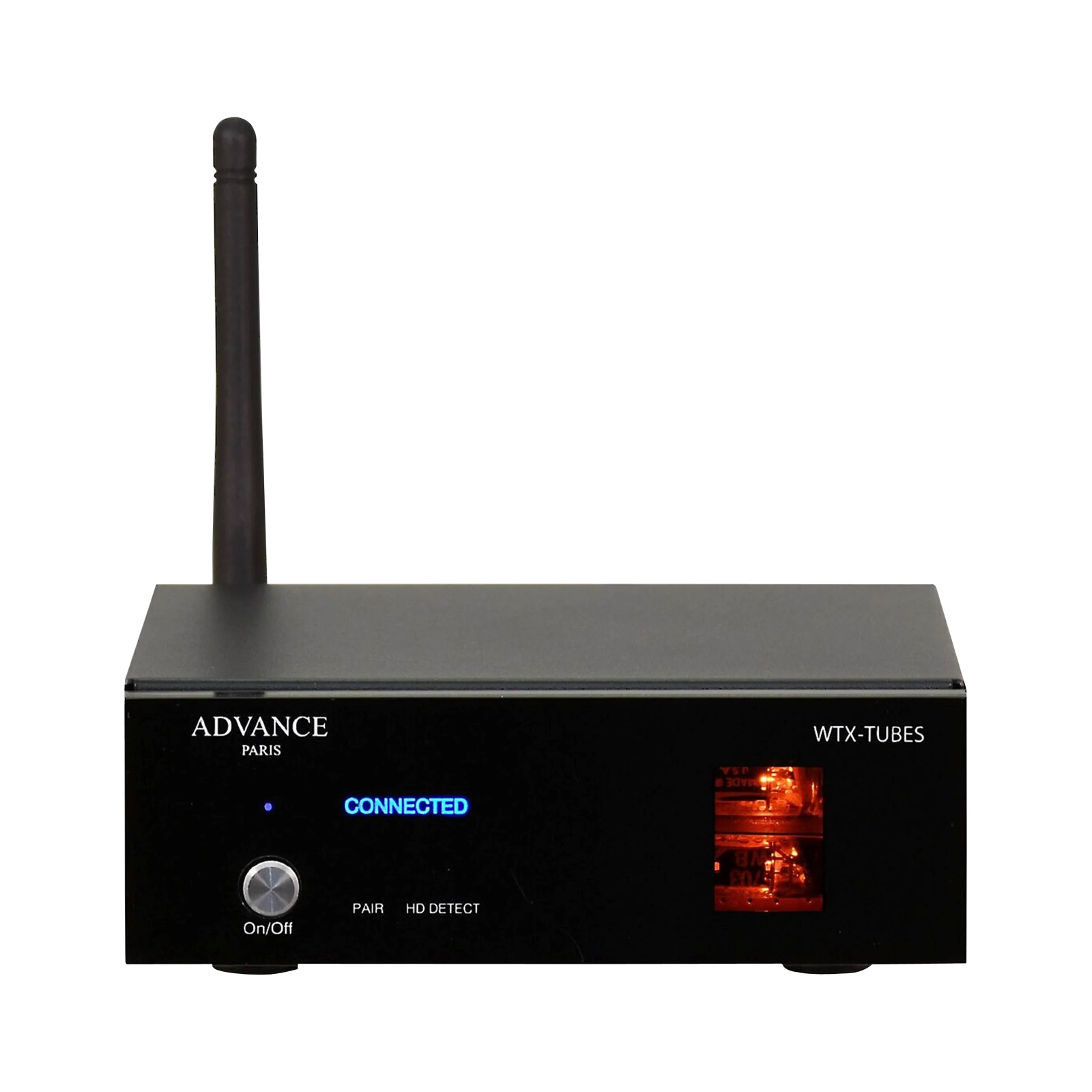
The Advance Paris WTX-Tubes is a standalone Bluetooth receiver with a twist that most wireless audio products simply don’t have: a real vacuum tube output stage. You pair it with your phone, tablet, or laptop just like any Bluetooth speaker or receiver. But once the signal arrives, it passes through two genuine Raytheon 5703 subminiature tubes in a Class A circuit before reaching your amplifier. The result, according to Advance Paris, is Bluetooth playback with an analog warmth and musicality that digital-only receivers typically can’t match.
If you’ve ever heard a good tube amplifier and appreciated the way it seemed to make music feel more alive — a little fuller, a little smoother, a little less clinical — the WTX-Tubes is Advance Paris’s attempt to bring that character to wireless streaming. It sits between your phone and your hi-fi system and handles everything: Bluetooth reception, high-quality DAC conversion, tube amplification, and output to your amplifier’s analog or digital inputs.
The WTX-Tubes is not a network streamer. It doesn’t connect to Wi-Fi or stream from Spotify or Tidal on its own — that’s a different product (the WTX-StreamTubes). This is a Bluetooth receiver specifically, designed to take audio wirelessly from a device you’re already using and pass it to your hi-fi system with a tube-flavored analog signal.
The Technology Inside — All Three Layers
Advance Paris built the WTX-Tubes around three distinct technologies working together, and it’s worth understanding what each one does.
Layer 1: Bluetooth 5.0 with aptX HD. The heart of the wireless connection is a Qualcomm QCC Bluetooth 5.0 chipset that supports aptX HD — the high-resolution codec that streams at up to 24-bit/48kHz. That’s meaningfully more detail than standard Bluetooth’s SBC compression. It also supports the standard aptX codec, AAC (for iPhones), and SBC for universal compatibility. A front-panel LED labeled HD DETECT lights up to confirm when an HD-quality codec is active, so you always know what quality level you’re getting.
Layer 2: Wolfson WM8740 DAC with tri-core processing. Advance Paris chose not to use the built-in DAC inside the Qualcomm Bluetooth chip. Instead, they route the digital audio signal to a dedicated Wolfson WM8740 DAC — a 24-bit/192kHz converter with 117 dB of dynamic range that Advance Paris selected specifically for its sonic character. Before that conversion happens, a tri-core processor (a 32-bit dual-core plus a 120 MHz single-core) handles timing and jitter correction — jitter being the tiny timing inconsistencies in digital audio that, if left unchecked, can make music sound harsh or vague. According to the Son-Vidéo.com review (Valentin Lefort, July 2021), this processor combination “ensures the correct timing of the data in order to optimize the precision of the information received by the DAC.”
Layer 3: Class A tube output stage with Raytheon 5703 tubes. After the DAC converts the digital signal to analog, that analog signal passes through a pair of Raytheon 5703 subminiature vacuum tubes in a Class A configuration. Class A means the tubes are always conducting — they never switch off — which is the most linear and least distortion-prone way to run a tube circuit, though it requires more power and produces more heat. The 5703 is an American military-specification tube known for its reliability and consistent performance. According to Advance Paris, the tubes are mounted in insulating holders specifically to suppress microphonic effects (vibrations that can cause tubes to pick up and amplify noise) and to maintain a stable operating temperature.
What Do Reviewers Say?
Valentin Lefort at Son-Vidéo.com reviewed the WTX-Tubes in July 2021, connecting it to a NAD C375 BEE amplifier with KEF LS50 Meta speakers, using both an iPhone 12 Pro Max (AAC codec) and iBasso/FiiO Android DAPs (aptX HD). Lefort described the contribution of the tubes as “undeniable” compared to a more conventional receiver, noting more warmth and softness in the presentation. He reported the sound was “smoother and less metallic and cold” — qualities he described as common complaints with Bluetooth playback generally. He also noted the receiver was “quite impressive and managed to erase the flaws that hinder the reputation of Bluetooth transmission for music playback.” He did note that LDAC and LHDC codec support is absent, which would have allowed higher resolution than aptX HD in some cases. — Son-Vidéo.com, Valentin Lefort, July 22, 2021
Wifimedia (Netherlands) noted that Advance Paris deliberately bypasses the standard Qualcomm DAC in favor of the Wolfson WM8740 specifically for its sonic character, and that the optical and coaxial outputs allow users to connect to an external DAC if preferred. — Wifimedia.eu
Who Is This Best For?
 You love streaming music from your phone but find Bluetooth audio too cold, flat, or digital-sounding — and you want to do something about it without rebuilding your entire system.
You already own a good integrated amplifier or stereo receiver and want to add a wireless source that sounds genuinely musical, not just adequate.
You’re a tube audio enthusiast curious about whether tube character can meaningfully improve wireless streaming — and you want to try it risk-free.
You use an Android phone or a device with aptX HD support and want to take full advantage of 24-bit wireless audio with a tube-warmed output.
You want a standalone receiver that looks distinctive on the shelf — the glowing tubes visible through the front panel are genuinely attractive.
How Does It Connect to Your System?
The WTX-Tubes offers three output options, giving you flexibility for most hi-fi setups.
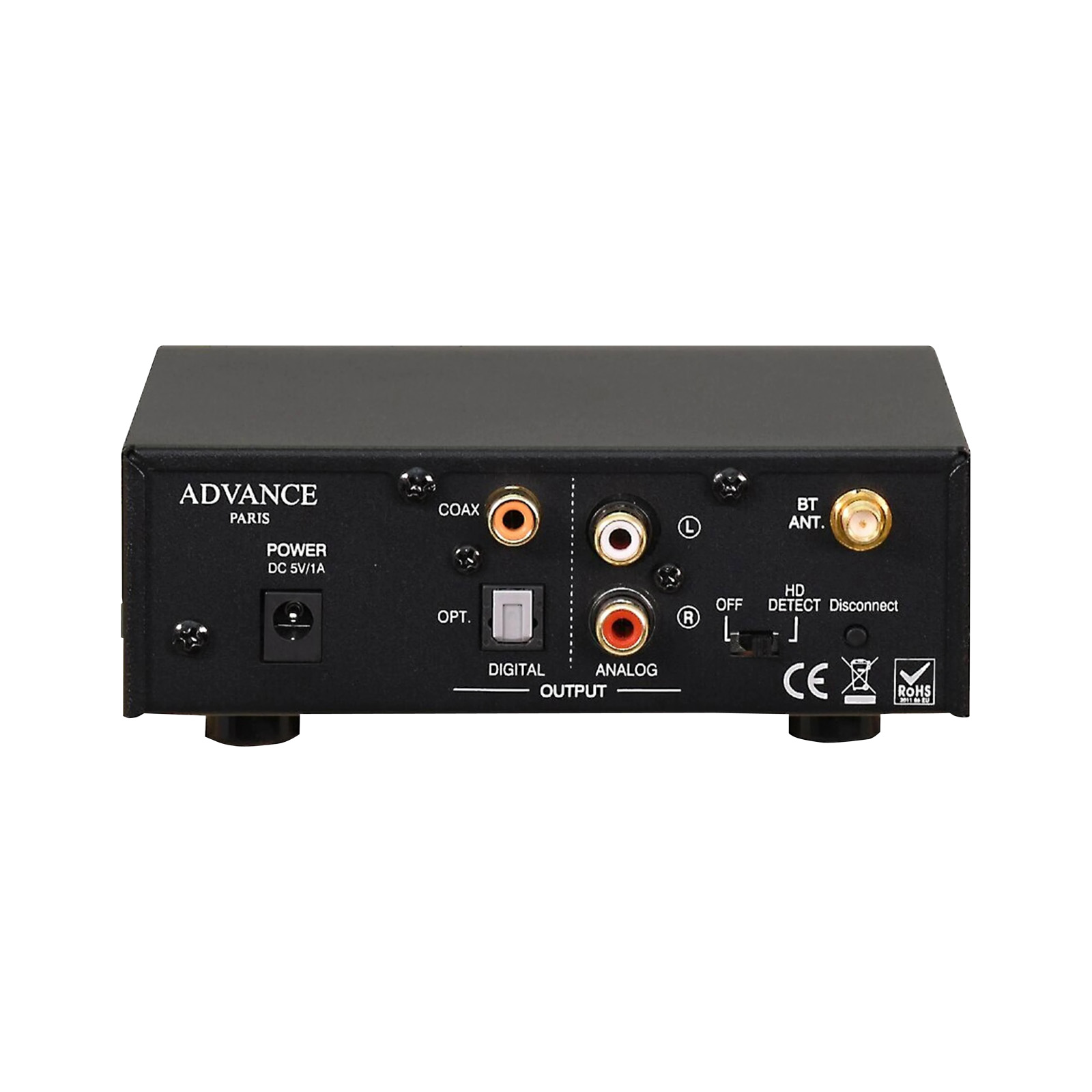
The stereo RCA analog output is the primary connection for most users. You run a pair of RCA cables from the WTX-Tubes to any aux or line-level input on your integrated amplifier, stereo receiver, or preamplifier. This is where the tube stage outputs — so using this connection gives you the full tube-flavored sound the product is designed around.
The optical (Toslink) and coaxial S/PDIF digital outputs let you bypass the tube output stage entirely and send the decoded digital signal to a separate external DAC or to an amplifier with digital inputs. This is useful if you want to use your own preferred DAC, or if you want to A/B the tube output against a clean digital signal to hear the difference.
On the input side, pairing is simple: power on the WTX-Tubes, wait for the PAIR LED to stabilize, select “WTX TUBES” in your device’s Bluetooth settings, and the CONNECTED indicator confirms the link. The HD DETECT LED on the front panel will illuminate if your source device is streaming in aptX or aptX HD.
The unit requires its included 12V/1A power adapter and comes with a removable, rotatable external Bluetooth antenna.
What’s in the Box
- Advance Paris WTX-Tubes Bluetooth receiver
- 12V / 1A power adapter (100–240V, 50/60Hz)
- Removable, rotatable Bluetooth antenna
- User manual / quick-start guide
Note: RCA interconnect cables and digital cables are not included. Verify exact packing contents with manufacturer or Audio Advisor prior to purchase.
Pairs Well With
- Integrated Amplifiers — The WTX-Tubes connects to any integrated amplifier with an aux or line-level RCA input. Browse our integrated amplifier selection for great pairings, including other Advance Paris models.
- Stereo Preamplifiers — If you run a separate preamp and power amp, connect the WTX-Tubes to any line-level input on your preamplifier.
- External DACs — The digital outputs (optical and coaxial) let you use the WTX-Tubes as a Bluetooth-to-digital bridge feeding your own DAC for a different sonic character.
- RCA Interconnect Cables — You’ll need a pair of RCA cables to connect to your amplifier. Explore our interconnect cable selection for options at every price point.
- Loudspeakers — Building a new system around the WTX-Tubes? Browse our loudspeaker collection for bookshelf and floorstanding options that pair well with tube-warmed sources.
Features & Specifications
Class A Tube Output Stage — Genuine Raytheon 5703 Subminiature Tubes
Two Raytheon 5703 American military-spec vacuum tubes handle the final analog output stage in a Class A configuration. Class A means the tubes are always active, which produces the most linear and lowest-distortion circuit topology available. According to Advance Paris, the tubes are mounted in insulating holders to suppress microphonic effects and maintain stable operating temperature. This is the feature that sets the WTX-Tubes apart from every other Bluetooth receiver at its price point.
Wolfson WM8740 DAC — Chosen for Sound, Not Just Numbers
Advance Paris bypasses the standard DAC inside the Qualcomm Bluetooth chip and routes audio to a dedicated Wolfson WM8740 converter — a 24-bit/192kHz component with 117 dB of dynamic range. According to independent reviewer Valentin Lefort at Son-Vidéo.com (July 2021), this choice was made “because of its beautiful sound” rather than purely for spec reasons. The DAC receives its signal via an I²S bus after timing correction by the tri-core processor.
aptX HD Bluetooth for 24-Bit Wireless Audio
The Qualcomm QCC Bluetooth 5.0 chipset supports aptX HD, which streams at up to 24-bit/48kHz — well beyond CD resolution in bit depth. It also supports aptX, AAC (for iPhones and Apple devices), and universal SBC, so the WTX-Tubes works with any Bluetooth source. The front-panel HD DETECT LED confirms when a high-definition codec is active.
Tri-Core Processor for Jitter Reduction
A 32-bit dual-core processor combined with a 120 MHz single-core processor handles precise timing of the incoming digital audio data before it reaches the DAC. This is designed to minimize jitter — the small timing errors in digital audio that can make music sound harsh or imprecise. According to reviewer Valentin Lefort (Son-Vidéo.com, July 2021), this architecture “ensures the correct timing of the data in order to optimize the precision of the information received by the DAC.”
Flexible Analog and Digital Outputs
The WTX-Tubes offers stereo RCA analog output (through the tube stage), optical Toslink digital output, and coaxial S/PDIF digital output. The digital outputs let you use the receiver as a Bluetooth bridge feeding an external DAC if you prefer to use your own conversion stage. This gives you options as your system evolves.
Solid Metal Chassis with Illuminated Front Panel
The chassis is metal rather than the plastic commonly used in this product category. The front panel features tinted plexiglass through which the glowing Raytheon tubes are visible during operation — a genuinely attractive design detail. The compact 130 × 110 × 42 mm footprint fits easily in a rack, on a shelf, or on top of an amplifier.
Quick-Reference Specifications
| Bluetooth Version | 5.0 |
| Chipset | Qualcomm QCC |
| Supported Codecs | aptX HD, aptX, AAC, SBC |
| Max Streaming Resolution | 24-bit / 48 kHz (aptX HD) |
| DAC | Wolfson WM8740, 24-bit / 192 kHz |
| Dynamic Range | 117 dB |
| Tubes | 2 × Raytheon 5703 subminiature vacuum tubes |
| Tube Configuration | Class A analog output stage |
| Processing | Tri-core: dual-core 32-bit + single core 120 MHz |
| Outputs | 1× stereo RCA (analog), 1× optical Toslink (digital), 1× coaxial S/PDIF (digital) |
| Power Supply | External adapter: 100–240V AC / 50–60Hz, 12V DC / 1A output (included) |
| Antenna | External, removable and rotatable |
| Chassis | Metal with tinted plexiglass front panel |
| Dimensions (W × D × H) | 130 mm × 110 mm × 42 mm |
Frequently Asked Questions
Frequently Asked Questions
What do the tubes actually do — will they change the sound noticeably?
Yes, according to both the manufacturer and independent reviewers. Reviewer Valentin Lefort at Son-Vidéo.com (July 2021) described the tube contribution as “undeniable,” noting that the WTX-Tubes sounded smoother, warmer, and less metallic than conventional Bluetooth receivers. Advance Paris describes the effect as music sounding more analog — “in the spirit of vinyl.” The tubes handle the final analog output stage, so their character is present whenever you use the RCA output. The digital outputs (optical and coaxial) bypass the tube stage if you want a cleaner, uncolored signal instead.
What is a Class A tube output stage, and why does it matter?
Class A means the tubes are conducting at all times — they never switch off between signal cycles the way Class B or Class AB circuits do. This continuous operation produces a more linear signal with lower distortion, at the cost of greater power consumption and heat. It’s widely regarded as the most musical and natural-sounding approach to tube circuit design. The WTX-Tubes uses this topology for its analog output stage, which is uncommon in a Bluetooth receiver at any price point.
Does this work with my iPhone?
Yes. iPhones use the AAC Bluetooth codec rather than aptX or aptX HD, and the WTX-Tubes supports AAC. You won’t get aptX HD resolution from an iPhone, but the AAC connection is solid — and the tube output stage adds its character regardless of the codec. To take full advantage of aptX HD (24-bit/48kHz), you’ll need an Android phone or other device that explicitly supports aptX HD.
What does the HD DETECT LED tell me?
The HD DETECT indicator on the front panel lights up when the WTX-Tubes receives an aptX or aptX HD Bluetooth signal from your source device. If it’s off, the connection is using AAC or SBC. It’s a useful at-a-glance indicator of what quality level your current connection is running, so you don’t have to guess.
Can I use this without the tube stage — just as a clean Bluetooth receiver?
Yes. The optical and coaxial digital outputs bypass the tube output stage entirely, delivering the raw converted audio signal to an external DAC or a digital input on your amplifier. This gives you the flexibility to try both approaches — tubes via the RCA output and clean digital via the S/PDIF outputs — and decide which you prefer with your own system.
How does the WTX-Tubes differ from the WTX-StreamTubes?
The WTX-Tubes is a Bluetooth-only receiver. It streams audio wirelessly from a Bluetooth source device (your phone, tablet, or computer). The WTX-StreamTubes is a full network streamer with Wi-Fi, Ethernet, Spotify, Qobuz, Tidal, and other built-in streaming services — plus an optional X-FTB01 or X-FTB02 Bluetooth dongle for Bluetooth input. Both use the same Raytheon 5703 tube output stage. If your primary use case is streaming from your phone, the WTX-Tubes is the simpler and more affordable choice. If you want to stream from Tidal or Qobuz directly without a phone in the loop, the WTX-StreamTubes is worth a look.
What else do I need to use the WTX-Tubes?
You’ll need a Bluetooth-enabled source device (any phone, tablet, or computer) and a stereo amplifier, receiver, or preamplifier with an available line-level input. A pair of RCA interconnect cables to connect the WTX-Tubes to your amp are required but not included. The 12V power adapter is included. If you’d like help choosing cables or confirming compatibility with your system, give us a call at 800-942-0220.
Do the tubes need to be replaced over time?
Vacuum tubes are consumable components, but Raytheon 5703 subminiature tubes are known for their durability and long service life — they were originally developed to military specifications. Replacement tubes should be available from audio tube suppliers if needed down the road. If you have questions about tube maintenance or sourcing, give us a call and we’ll help you figure it out.
Why Buy from Audio Advisor?
 40+ Years of Expertise — Since 1981, we’ve helped over a million music lovers find the right gear.
 60-Day Money-Back Guarantee — Take your time. Listen, enjoy, and make sure it’s right for you.
 Real Experts, Real Help — Our team is here to answer your questions at 800-942-0220, weekdays 9am–6pm EST.
 Free Shipping — On orders over $49, delivered to your door.
 Flexible Payment Options — Financing available so you can start listening now.
Want to learn more about Bluetooth audio or vacuum tube gear? Visit our Learning Center for guides, tips, and expert advice.


