Free Shipping on US orders above $49




Recommended Component - Stereophile Magazine
Economical Price and Great Performance
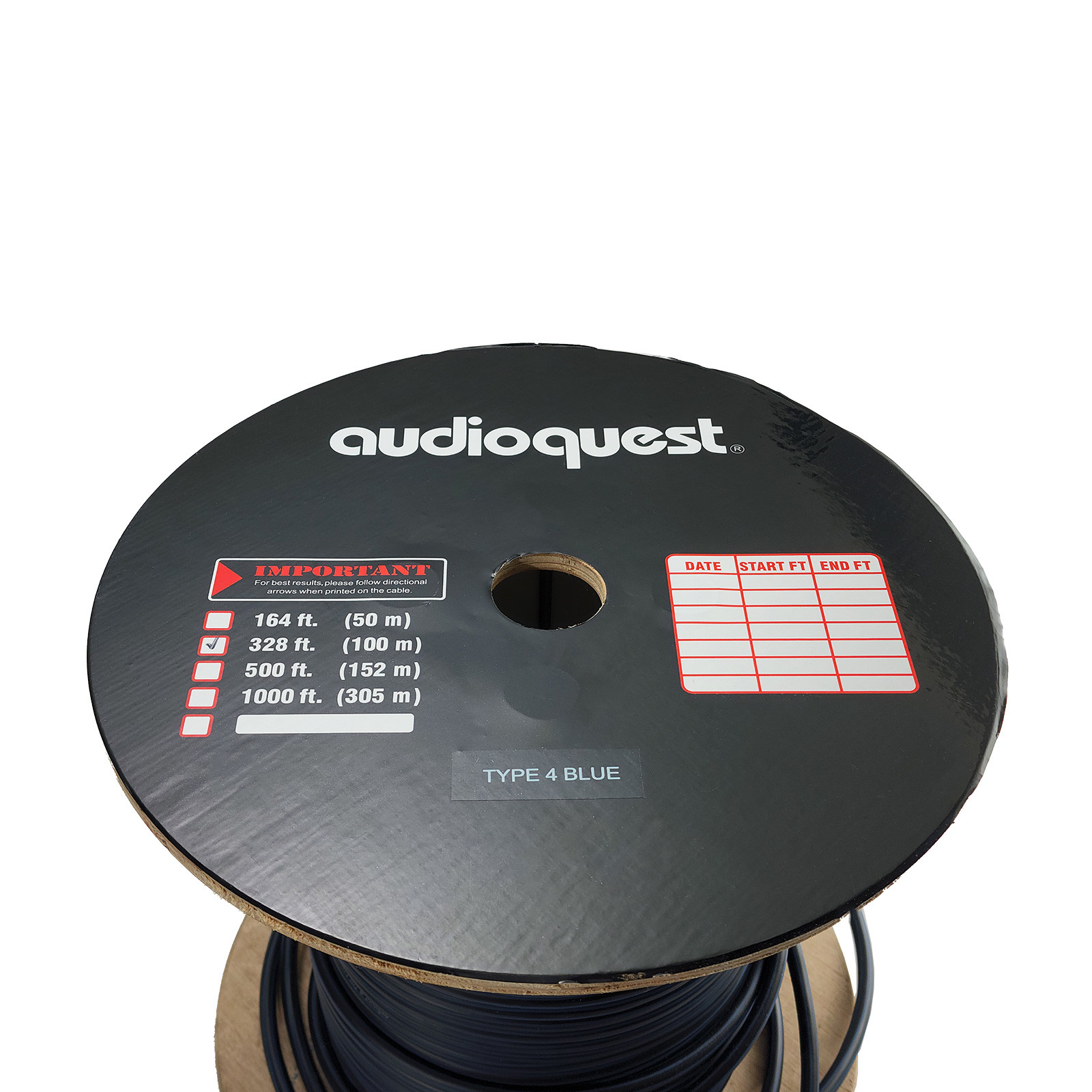
AudioQuest Type 4 is one of the most successful speaker cables in in AudioQuest's long history. Its roots go all the way back to the late 1980s. The fundamental geometry and conductor complement of Type 4 hasn't changed since 1995, because any change to the size or position of the Spread-Spectrum conductor arrangement would reduce performance.
Type 4 cable is UL / CL3 certified for in-wall use. Its combination of economical price and great performance makes it ideal for multi-room systems.
Award-Winning Performance
Excellent-value AudioQuest Type 4 received a "Recommended Component" nod from Stereophile magazine, which characterizes it as "smooth and resolving."
Other reviewers are crazy about it, too. "If you've gotten the impression that I liked AudioQuest's Type 4 speaker cable, you're quite correct," writes Greg Smith in SoundStage. "I haven't heard anything less expensive than this that is as well balanced and appropriate for such a wide range of systems."
"This is an excellent cable," marvels Britain's Home Entertainment magazine in issue 64. "Type 4 has a fuller and more vibrant palate of tonal colours and textures than most. The treble is detailed, and instruments and voices are well separated, yet the treble is also well controlled, lacking the forward quality and assertiveness of some."
"All I Can Really Say is… Wow!"
"We hooked up the Type 4, and… wow! All I can really say is... wow!" raves Dennis Russo, criticalblast.com, November 14, 2016.
"All the components of the sound, while open, were playing together as a cohesive unit. There was no graininess in the highs, and the mids were rich and full with a natural bloom to them that allowed voices to be 'real.'"
Solid Long-Grain Copper (LGC) Conductors
Type 4's solid Long-Grain Copper allows a smoother and clearer sound than cables using typical OFHC (Oxygen-Free High-Conductivity) copper. OFHC is a general metal industry specification regarding 'loss' without any concern for distortion. LGC has fewer oxides within the conducting material, less impurities, less grain boundaries, and definitively better performance.
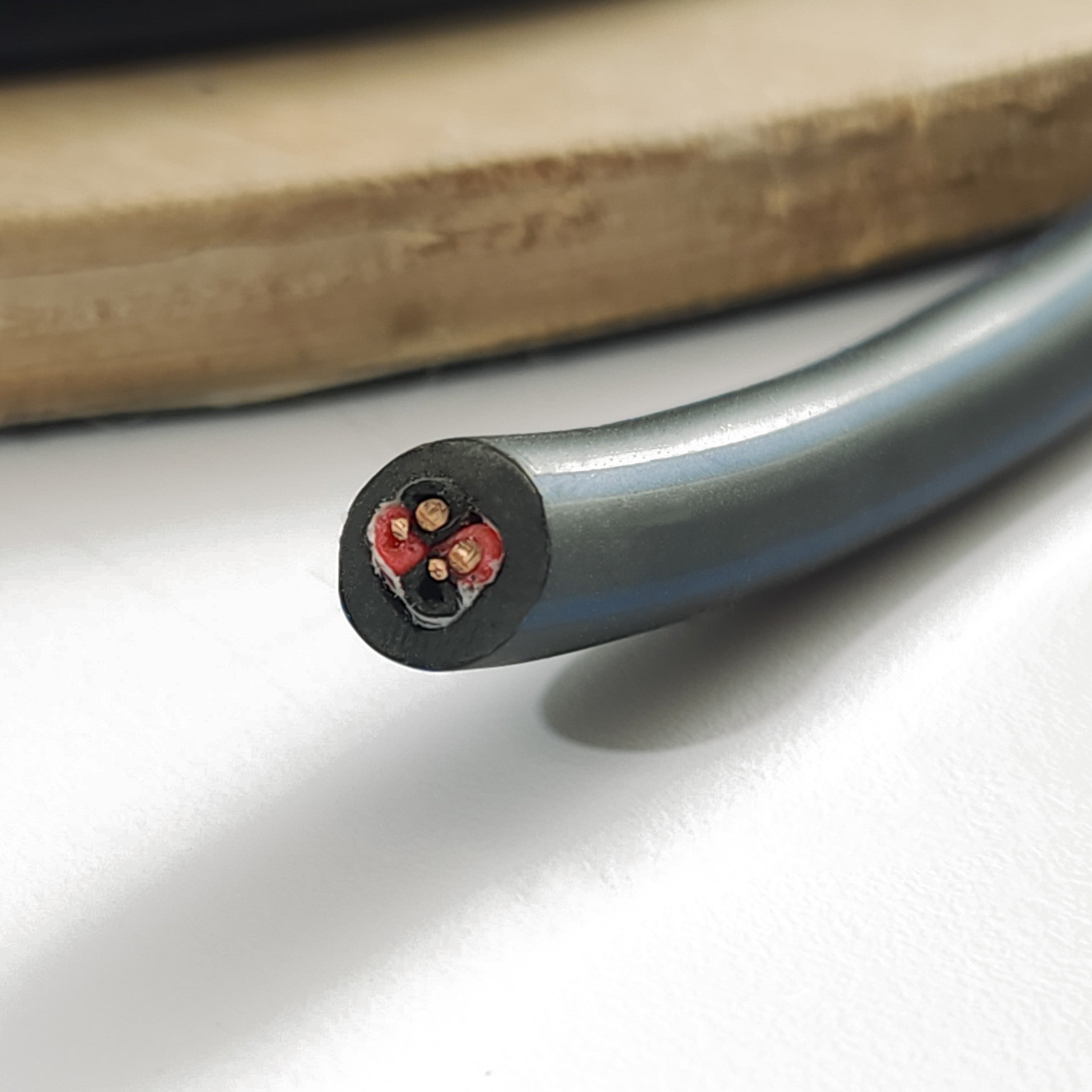
All four of Type 4's conductors are solid. Electrical and magnetic interaction between strands in a conventional cable is the single greatest source of distortion, often causing a somewhat harsh, dirty and confused sound. Solid conductors are the most important ingredients enabling Type 4's very clear sound. Whether a conductor is solid or stranded, skin-effect is a prime distortion mechanism in speaker cables. Type 4 very simply keeps this effect out of the audio range by using conductor sizes that are below the threshold for audible distortion.
Carbon-Based Noise-Dissipation and Cross-Talk-Dissipation Systems (Insulation)
The two negative conductors in Type 4 are insulated with partially conductive Carbon-Loaded Polyethylene. This remarkable material damps radio-frequency interference from being fed back into the amplifier. The sonic benefit is exactly the same reduction in 'hash' and better dimensionality that comes whenever RF interference is reduced in an audio circuit. Type 4 uses Nitrogen-Injected Foamed-Polyethylene Insulation on its positive conductors because air absorbs next to no energy, and Polyethylene is low-loss and has a benign distortion profile. Thanks to all the air in Foamed-PE, it causes much less of the out-of-focus effect common to other materials.
Star-Quad Geometry
The relationship between conductors defines a cable's most basic electrical values (capacitance and inductance). However, even when those variables are kept in a reasonable balance, the relationship between conductors can be varied in ways that greatly affect the sound. The Star-Quad construction of Type 4 allows for significantly better dynamic contrast and information intelligibility than if the same conductors were run in parallel.
Spread-Spectrum Technology (SST)
Any single size or shape of conductor has a specific distortion profile. Even though radially symmetrical conductors (solid or tubular) have the fewest discontinuities, any conductor of a particular size does have a sonic signature. SST is a method for significantly reducing the awareness of these character flaws by using a precise combination of different size conductors. The different SST-determined conductor sizes used in Type 4 allow an exceptionally clear, clean and dynamic sound.