 Free Shipping on US orders above $49







What You Need to Know
What Is the audiolab D9?
A DAC (digital-to-analog converter) is the device that takes a digital audio signal—from a streamer, computer, CD transport, or even a USB hard drive—and converts it into the analog signal your amplifier and speakers (or headphones) need to produce music. Every digital audio system has a DAC somewhere in the chain. A better DAC means cleaner, more detailed, more lifelike sound.
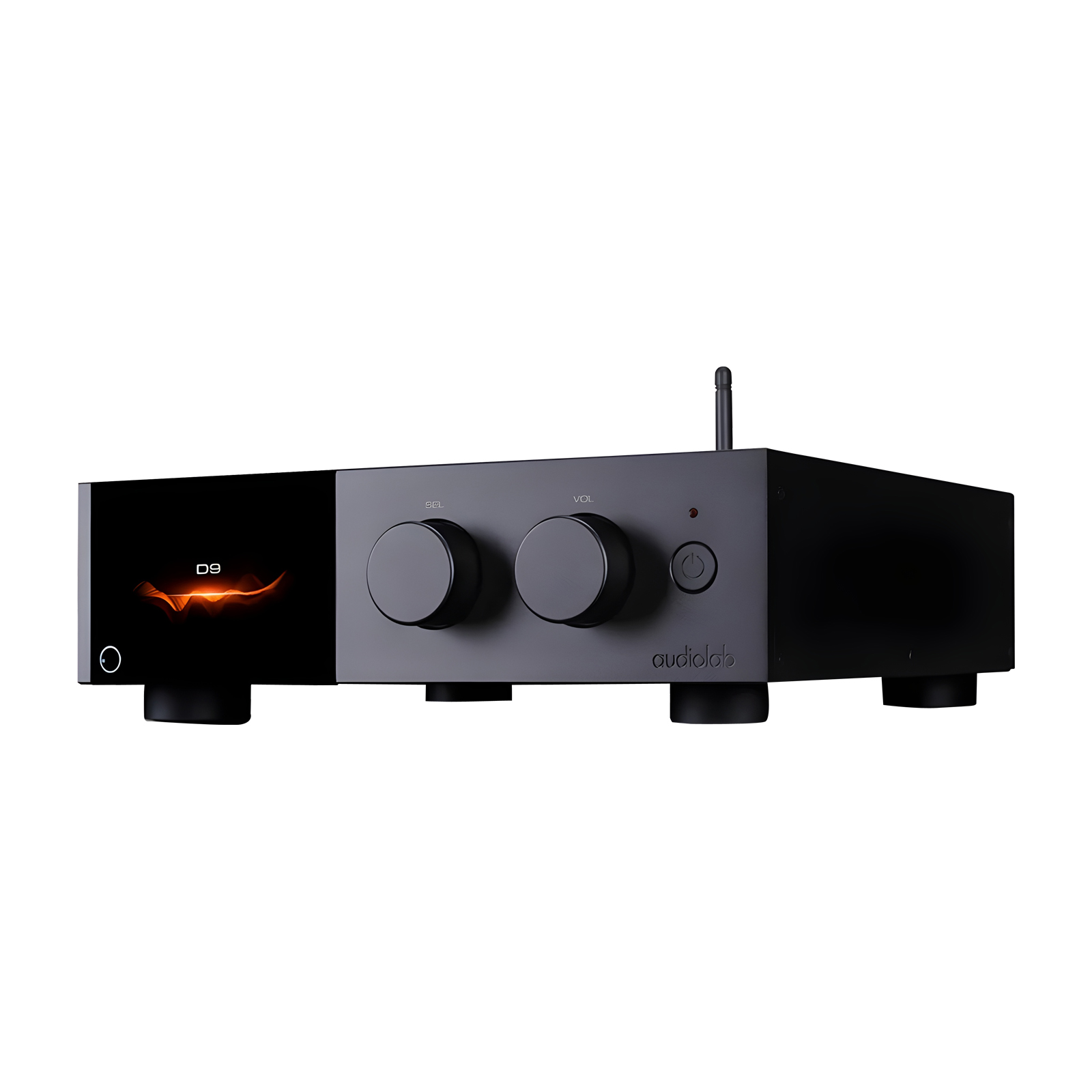
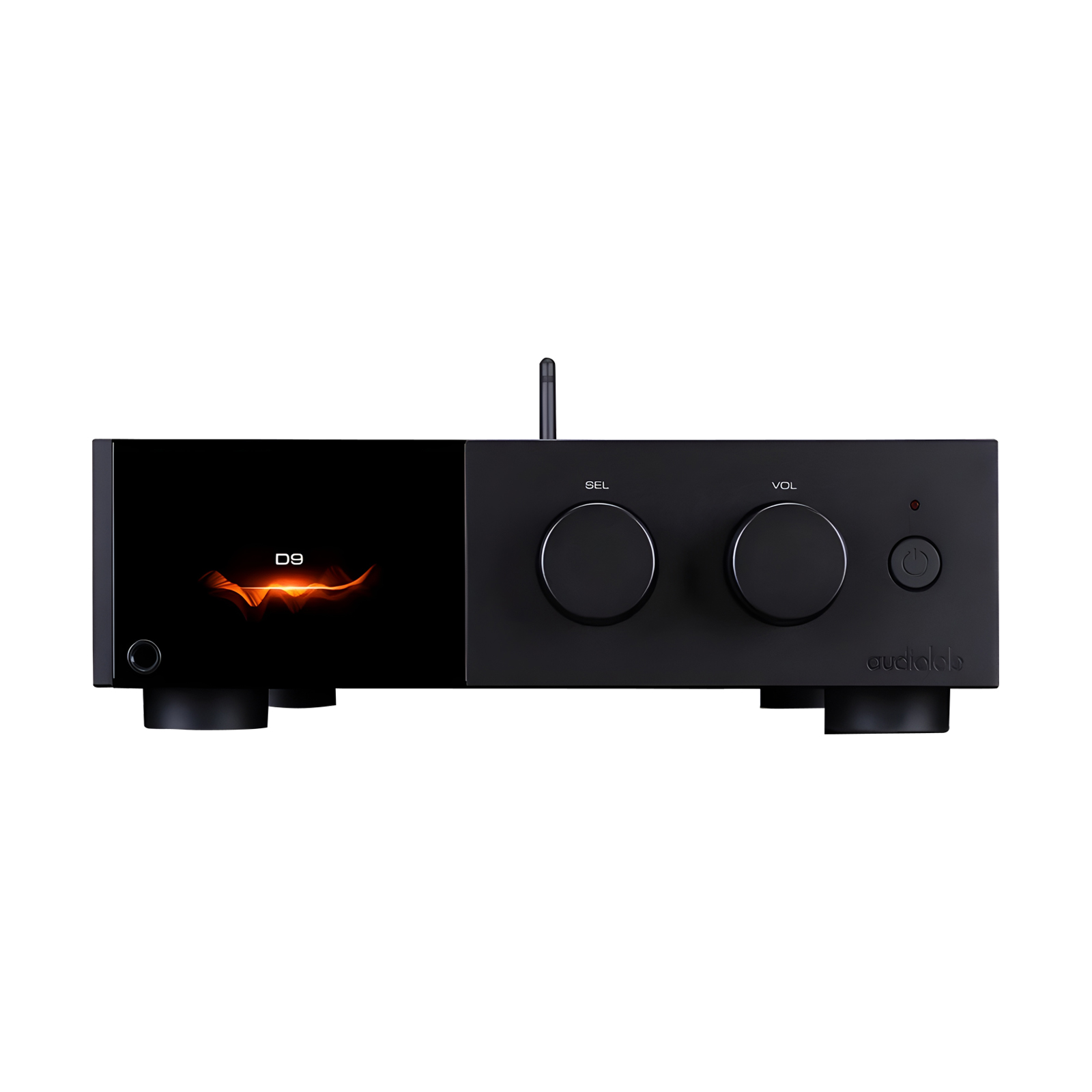
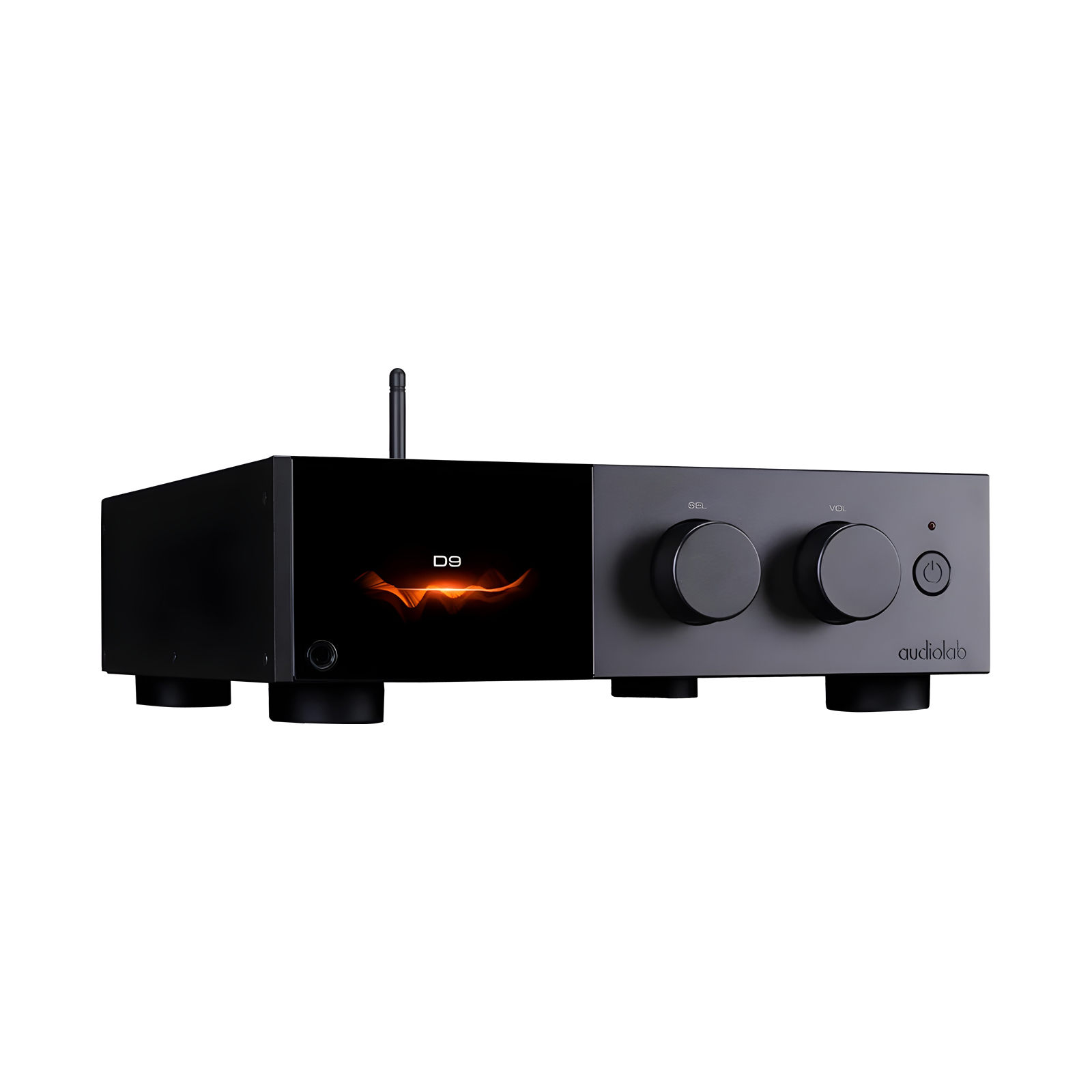
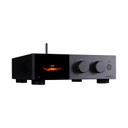
The audiolab D9 is a premium DAC, preamplifier, and headphone amplifier all in one chassis. It’s the successor to audiolab’s legendary M-DAC and M-DAC+, which earned widespread critical acclaim from the early 2010s onward. The D9 represents 30 years of audiolab’s digital audio expertise, and it shares much of its internal architecture with the company’s flagship 9000N streamer—at less than half the price of that model.
What Makes It Special?
At the heart of the D9 is the ESS Sabre32 ES9038PRO—a flagship, eight-channel, 32-bit DAC chip. audiolab uses all eight channels to deliver a fully balanced stereo signal, which means each audio channel gets four dedicated DAC channels working in parallel. This maximizes the signal-to-noise ratio and channel separation.
The ES9038PRO is paired with ESS’s HyperStream II architecture and a Time Domain Jitter Eliminator—a precision clocking system that keeps the digital signal perfectly timed. In plain terms, this reduces “jitter” (tiny timing errors that can smear and blur your music), resulting in a more natural, three-dimensional soundstage.
The D9 handles virtually every digital format you can throw at it: PCM up to 32-bit/768kHz, DSD up to DSD512 (22.5MHz), and full MQA decoding for master-quality streaming. It’s also Roon Tested certified, so it integrates smoothly with Roon-based systems.
Five selectable DAC reconstruction filters let you fine-tune the sound to your preference and system. You can also upsample incoming digital audio to 352.8kHz or 384kHz, which can help extract more musical detail from standard-resolution sources.
The headphone amplifier section uses current-feedback circuitry—a topology known for wide bandwidth, high slew rate, and low output impedance. It delivers up to 600mW of power and handles headphones from 20 to 600 ohms, making it suitable for everything from sensitive in-ear monitors to demanding planar magnetic headphones.
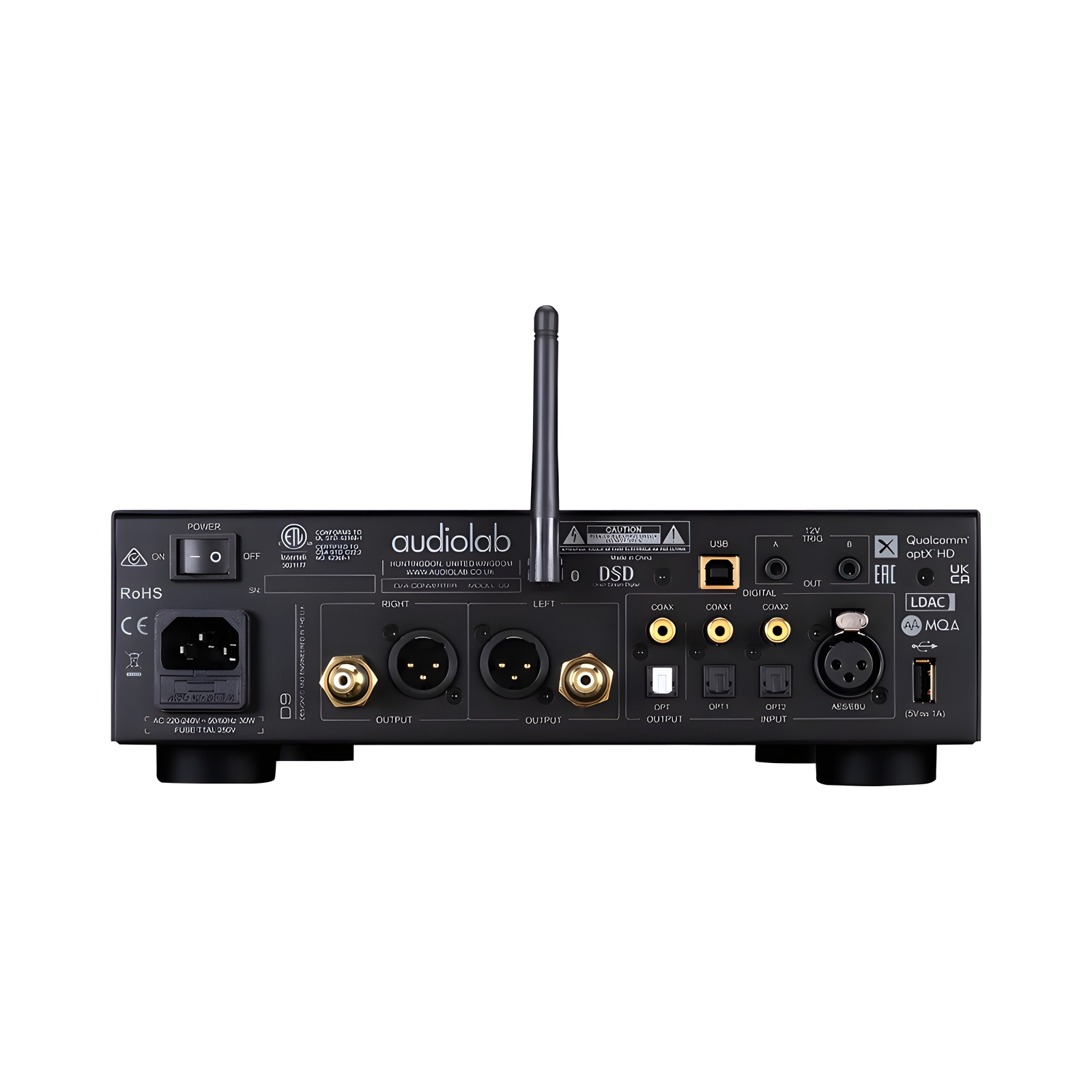
Connectivity is exceptionally broad. You get two coaxial and two optical S/PDIF inputs, an AES/EBU input (for professional sources), USB-B for your computer, USB-A for playing files directly from a USB hard drive or flash drive, and Bluetooth 5.1 with aptX HD and LDAC for wireless streaming from your phone or tablet. There are even coaxial and optical digital outputs for feeding other digital equipment, plus balanced XLR and unbalanced RCA analog outputs (both fixed and variable) for connecting to your amplifier or powered speakers.
What Are Reviewers Saying?
Sound Advice — Becky Roberts, September 2025
Sound Advice called the D9 a worthy heir to audiolab’s legendary M-DAC lineage and the culmination of 30 years of digital audio design. Roberts praised its tonally balanced presentation—muscular yet controlled bass, direct and lucid midrange, and sharp but never fatiguing treble. She noted the D9 entertains as well as it informs.
HiFiReport — 2025
HiFiReport praised audiolab’s proprietary implementation of the ESS chip, calling the D9 an exceptional choice at its price point. They highlighted its expanded dynamic range, ultra-low noise, and the five selectable digital filters that allow users to fine-tune the sound. They recommended it for listeners who seek a great-sounding DAC without feature bloat.
HomeTheaterReview — May 2025
HomeTheaterReview covered the D9 launch and noted it is geared toward higher-end systems with more demanding needs. They highlighted the ES9038PRO chip, extensive connectivity including AES/EBU and USB HDD, and the combination of DAC, preamp, and headphone amp in one refined chassis.
Who Is This Best For?
 You want a reference-class DAC that can serve as the digital heart of a serious two-channel or headphone system.
You use multiple digital sources—computer, CD transport, streamer, USB hard drive, Bluetooth—and want one device that handles them all.
You listen with high-quality headphones and want a capable, powerful headphone amp built into your DAC.
You need both balanced XLR and unbalanced RCA outputs (fixed and variable) to feed your amplifier or powered speakers.
You appreciate audiolab’s M-DAC heritage and want the spiritual successor with modern technology.
How Does It Connect to Your System?
The D9 is designed to be the digital hub of your system. On the input side, you can connect a computer via USB-B, a CD transport or streamer via coaxial or optical S/PDIF, a professional source via AES/EBU, a USB hard drive or flash drive via USB-A (for direct file playback up to 96kHz), or stream wirelessly from your phone via Bluetooth 5.1 (with aptX HD and LDAC for hi-res quality).
On the output side, balanced XLR and unbalanced RCA analog outputs connect to your amplifier. Both outputs can be switched between fixed level (for use with an amplifier that has its own volume control) and variable level (for use as a preamp feeding a power amplifier or powered speakers directly). The 6.35mm headphone jack on the front handles headphones from 20 to 600 ohms.
Digital outputs (coaxial and optical) let you pass the digital signal to another DAC or digital recorder if needed. Two 12V trigger outputs can automatically power on/off other components in your system.
The 2.8-inch full-color IPS display and included remote control make it easy to switch inputs, select filters, adjust settings, and monitor what’s playing—including artist, track, album, file format, and sample rate for USB HDD and Bluetooth sources.
What’s in the Box
- audiolab D9 DAC and Headphone Amplifier
- Remote control
- Power cable
- User manual / quick-start guide
Pairs Well With
Building your system? Here are some great companions for the D9:
- Integrated Amplifiers & Power Amplifiers — Use the D9’s variable outputs to feed a power amp directly, or connect its fixed outputs to an integrated amp. Browse our Integrated Amplifiers.
- Headphones — The D9’s headphone amp drives everything from IEMs to demanding planars. Browse our Headphones.
- CD Transports — Feed the D9 a pristine digital signal from a dedicated transport. Browse our CD Players & Transports.
- Interconnect Cables — XLR balanced or RCA cables connect the D9 to your amplifier. Browse our Interconnects.
- Digital Cables — Coaxial, optical, AES/EBU, or USB cables connect your sources to the D9. Browse our Digital Cables.
Features & Specifications—Benefit-Driven
DAC Performance
ESS Sabre32 ES9038PRO DAC — The flagship ESS chip, with all eight channels used for balanced stereo. This delivers an exceptional signal-to-noise ratio, ultra-low distortion, and wide dynamic range—meaning your music sounds clean, detailed, and lifelike.
HyperStream II & Time Domain Jitter Eliminator — ESS’s advanced architecture and precision clocking system minimize jitter for a natural, three-dimensional soundstage with pinpoint imaging.
Hi-Res Format Support — PCM up to 32-bit/768kHz, DSD up to DSD512 (22.5MHz), and full MQA decoding. Whatever format your music is in, the D9 handles it.
Five DAC Reconstruction Filters — Fine-tune the sound to your preference. Each filter subtly shapes the time-domain and frequency-domain behavior of the DAC.
Upsampling — Upsample digital audio to 352.8kHz or 384kHz to extract additional musical detail from standard-resolution sources.
Roon Tested Certified — Integrates smoothly with Roon-based music management systems.
Headphone Amplifier
Current-Feedback Circuitry — A topology known for wide bandwidth, high slew rate, and low output impedance. The result is fast, dynamic, detailed headphone sound with plenty of power.
Up to 600mW Output — Drives headphones from 20 to 600 ohms, including demanding planar magnetic models.
Connectivity
Seven Digital Inputs — 2× Coaxial S/PDIF, 2× Optical S/PDIF, 1× AES/EBU, 1× USB-B (computer), 1× USB-A (HDD/flash drive). Connect virtually any digital source.
Bluetooth 5.1 with aptX HD & LDAC — Stream wirelessly from your phone or tablet in hi-res quality.
USB HDD Playback — Plug a USB hard drive or flash drive into the USB-A port and play music files directly (up to 96kHz)—no computer needed.
Balanced XLR & RCA Analog Outputs — Both fixed and variable. Use variable mode as a preamp to feed a power amplifier or powered speakers directly.
Digital Outputs — 1× Coaxial and 1× Optical for passing the digital signal to other equipment.
12V Triggers — 2× trigger outputs to automatically power on/off companion components.
Design & Interface
2.8″ Full-Color IPS Display — A vibrant screen shows input, format, sample rate, filter settings, and media metadata (artist, track, album) for USB HDD and Bluetooth sources. Multilingual menus give easy access to all functions.
All-Aluminum Chassis — Provides durability, shielding from interference, and a refined aesthetic. Available in Black or Silver.
Remote Control — Full-function remote included for convenient operation from your listening position.
Quick-Reference Specifications
| DAC Performance | |
| DAC Chip | ESS Sabre32 ES9038PRO (8-channel, balanced stereo) |
| Architecture | HyperStream II + Time Domain Jitter Eliminator |
| PCM Support | Up to 32-bit / 768 kHz |
| DSD Support | Up to DSD512 (22.5 MHz) |
| MQA | Full decoding |
| THD+N | <0.001% (1 kHz @ 0 dBFS) |
| DAC Filters | 5 selectable reconstruction filters |
| Upsampling | 352.8 kHz or 384 kHz |
| Roon | Roon Tested certified |
| Headphone Amplifier | |
| Topology | Current-feedback |
| Output Power | Up to 600 mW |
| Impedance Range | 20 Ω – 600 Ω |
| Headphone Output | 6.35mm (1/4″) |
| Digital Inputs | |
| Coaxial S/PDIF | 2× (up to 192 kHz) |
| Optical S/PDIF | 2× (up to 192 kHz) |
| AES/EBU | 1× |
| USB-B (Computer) | 1× (PCM up to 768 kHz, DSD512) |
| USB-A (HDD/Flash) | 1× (up to 96 kHz) |
| Bluetooth | 5.1 with aptX HD & LDAC |
| Analog Outputs | |
| Balanced XLR | 1× pair (4.1 Vrms, fixed or variable) |
| Unbalanced RCA | 1× pair (2.05 Vrms, fixed or variable) |
| Digital Outputs | |
| Coaxial S/PDIF Out | 1× |
| Optical S/PDIF Out | 1× |
| 12V Triggers | 2× |
| Design & Dimensions | |
| Display | 2.8″ full-color IPS (multilingual menus) |
| Chassis | All-aluminum |
| Finishes | Black or Silver |
| Dimensions (W × H × D) | 315 × 88 × 277 mm (12.4″ × 3.5″ × 10.9″) |
| Remote Control | Included |
Frequently Asked Questions
Is the D9 just a DAC, or does it also work as a preamp?
The D9 is a DAC, preamplifier, and headphone amplifier all in one. Both the balanced XLR and unbalanced RCA outputs can be switched between fixed level (for use with an integrated amp) and variable level (for direct connection to a power amplifier or powered speakers, with volume controlled from the D9).
What’s the difference between the audiolab D7 and D9?
The D7 ($600) uses the ESS ES9038Q2M chip, while the D9 ($1,460) uses the flagship ES9038PRO with all eight channels for balanced stereo. The D9 adds an AES/EBU input, LDAC Bluetooth support (the D7 has aptX HD only), a larger chassis, and an upgraded headphone amplifier section. Both share the same general design language and feature set, but the D9 is built for higher-end systems.
Can I play music from a USB hard drive or flash drive?
Yes. The D9 has a USB-A port that accepts a USB hard drive or flash drive and plays music files directly—no computer needed. It supports files up to 96kHz via USB HDD. The 2.8-inch display shows artist, track, album, and file format information during playback.
Does it support Bluetooth?
Yes. Bluetooth 5.1 with aptX HD and LDAC codecs provides hi-res wireless streaming from your phone or tablet. LDAC can deliver up to 990 kbps, which approaches wired quality.
What headphones can the D9 drive?
The D9’s current-feedback headphone amplifier delivers up to 600mW and handles headphones from 20 to 600 ohms. This covers most headphones on the market, including planar magnetic models that need more power. The 6.35mm (1/4″) headphone jack is on the front panel.
What digital filters are available?
The D9 offers five selectable DAC reconstruction filters. Each subtly changes the time-domain and frequency-domain behavior of the conversion. Experiment with them to find the one that sounds best with your system and music. The display shows the active filter at all times.
Is the D9 related to the M-DAC?
Yes. The D9 is the spiritual successor to audiolab’s M-DAC and M-DAC+, which earned widespread critical acclaim from 2011 onward. The D9 also shares much of its internal architecture with audiolab’s flagship 9000N network streamer, including the ES9038PRO DAC, master clock, and Class A post-DAC filter circuitry.
What do I need to connect the D9 to my amplifier?
If your amplifier has XLR balanced inputs, use a pair of XLR cables for the best signal quality. If it has RCA inputs, use RCA interconnect cables. Both types of output are available on the D9’s rear panel. For digital sources, you’ll need the appropriate digital cable (coaxial, optical, AES/EBU, or USB) to connect your source to the D9.
What are the 12V triggers for?
The D9 has two 12V trigger outputs that can automatically power on or off other components when you turn the D9 on or off. This is useful if you have an audiolab power amplifier or other trigger-compatible equipment in your system.
See It in Action
Sound Advice’s Becky Roberts reviews the audiolab D9 DAC:
Why Audio Advisor?
 40+ Years of Expertise — Since 1981, we’ve helped over a million music lovers find the right gear.
 60-Day Money-Back Guarantee — Take your time. Listen, enjoy, and make sure it’s right for you.
 Real Experts, Real Help — Our team is here to answer your questions at 800-942-0220, weekdays 9am–6pm EST.
 Free Shipping — On orders over $49, delivered to your door.
 Flexible Payment Options — Financing available so you can start listening now.
Learn More
Want to learn more about DACs and how digital-to-analog conversion affects your sound? Visit our Learning Center for guides, tips, and expert advice.


