 Free Shipping on US orders above $49








What You Need to Know
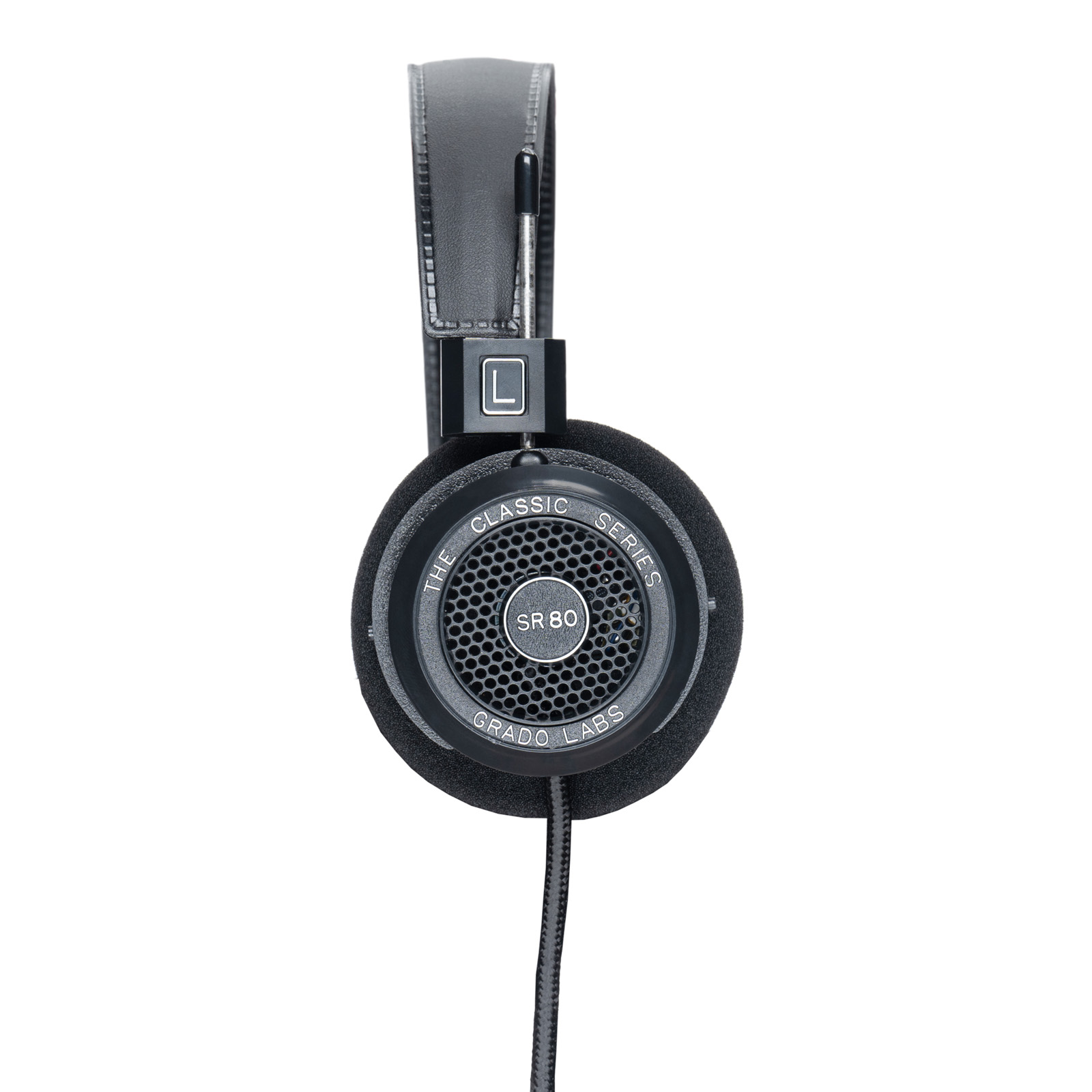
The SR80 Classic — Grado’s Most Storied Headphone
Grado Labs has made headphones in Brooklyn, New York since 1953. The company is still family-owned, now in its third generation. Their headphones are known for open-back, wired designs with a vivid, immediate, and musical presentation — a character that has built a devoted following among listeners who want to feel genuinely close to the music.
The SR80 occupies a unique place in that history. The first SR80 was built in 1991, making it the longest-running Grado headphone. Generations of listeners have started their audiophile journey with the SR80 — and many have simply stayed there, finding it more than good enough to live with for years. The 2026 Classic version brings the updated 44mm X2 driver platform to the SR80 while preserving everything that made the original worth living with: an immediate, forward-sounding presentation with a world-renowned midrange, controlled bass, and a wiry, quick character that suits almost any genre.
It sits just above the SR60 and well below the SR325. It is the model Grado itself describes as delivering “greater immediacy and presence with tighter bass response, more forward midrange energy, and extended high-frequency detail” compared to the SR60. If you want the full Grado character without spending more than you need to, the SR80 is where most people land.
Open-Back Design — What That Means
The SR80 Classic is an open-back headphone. The rear of the driver housing vents freely to the outside air. This produces a wider, more natural-sounding presentation than most closed-back headphones at this price — the driver breathes in both directions rather than bouncing sound inside a sealed cup.
The practical trade-off is leakage: people nearby will hear your music, and ambient noise will come in. The SR80 is a home listening headphone. It is not suited to offices, public transit, or shared spaces. In a quiet room with a decent source, the open design is a genuine advantage that most comparably priced closed headphones simply cannot match.
The 44mm X2 Driver — Tuned for Immediacy and Energy
The SR80 Classic uses Grado’s 44mm X2 dynamic driver, built around a Mylar diaphragm, copper voice coil, and rare earth magnetic system. The X2 platform was developed across the entire Classic Series to deliver improved clarity, balance, and consistency over previous generations, while preserving the lively Grado character.
In the SR80, that tuning is specifically aimed at immediacy and presence. Where the SR60 is tuned for balance and long-session musicality, the SR80 is tuned to be more direct, more energetic, and more forward — with tighter bass response, a more prominent midrange, and extended high-frequency detail. Grado describes this as the SR80’s “world renowned midrange.” It is the quality that has made the SR80 the go-to recommendation for genres that benefit from this character: rock, jazz, acoustic music, and vocals in particular.
Driver-to-driver matching is held to 0.1 dB, keeping the left and right channels well balanced across every pair.
Die-Injection Molded Housing — Lightweight and Consistent
The SR80 uses the same die-injection molded plastic housing as the SR60. It is lightweight, durable, and precisely controlled for consistent acoustic performance. The housing does not have the tonal warmth of mahogany or the density of cocobolo — it keeps the headphone light and comfortable for extended wear and lets the X2 driver’s character come through clearly without adding coloration.
The open-back architecture vents through the rear of the housing, producing the spacious, natural-sounding presentation that defines the Grado sound at every price level.
Standard Headband with Padded Synthetic Strap
The SR80 uses Grado’s standard headband assembly with a padded synthetic headstrap — the same construction as the SR60. It is lighter and simpler than the Signature Silver or Gold assemblies found on the Hemp, RS1, and GS models. The strap is padded for comfort during extended sessions, and an internal steel spring band allows easy, tool-free clamping adjustment for a personalized fit.
S Cushions — Close-Coupled On-Ear Fit
The SR80 ships with Grado’s S cushions — the smallest cushion in the Grado lineup. S cushions sit directly on the ear (supra-aural) rather than around it. This close, direct coupling between driver and ear reinforces the SR80’s immediate, forward character. Like all Grado cushions, S cushions are also a tuning element — experimenting with other cushion types will shift the sound signature meaningfully. Larger cushions push the driver farther from the ear, widening the soundstage and softening the directness.
Bronze Cable — Fixed, Lightweight, Dependable
The SR80 ships with Grado’s Bronze cable in a fixed, hard-wired configuration — the same cable as the SR60. It is engineered to be lighter, softer, and more flexible than previous Grado cables while maintaining signal integrity. The standard termination is a 3.5mm plug with a 1/4” adapter included, making it compatible with both phones and dedicated headphone amplifiers straight out of the box.
All Classic Series headphones use fixed, hard-wired cables. Detachable cables are reserved for Grado’s Signature Line. This is a deliberate design choice maintained throughout the Classic range.
Thirty-Five Years of the SR80
The SR80 debuted in 1991 — making it, by a significant margin, the longest-running Grado headphone in history. It has been reviewed, recommended, and lived with by more listeners than almost any other open-back headphone in its price class. The Classic version with the X2 driver is the most refined version of this headphone yet, but its character — vivid, immediate, musical — is the same one that has made it a recommendation for over three decades.
Every SR80 Classic is hand-built at Grado’s facility in Brooklyn, New York. The same building, the same process, the same standard as every other Grado headphone from the SR60 to the GS3000.
What the Experts Say
ecoustics described the SR80 as delivering “tighter bass, more midrange presence, and more top-end detail” compared to the SR60 — characterizing it as “the livelier, more direct option.” They noted that Grado itself positions the SR80 as the heart-of-the-line model for many listeners, acknowledging it as the step-up that brings the full Grado character into focus. The X2 driver platform was praised for meaningful improvement across the entire Classic lineup without disrupting the fundamental character that made these headphones popular.
Grado describes the SR80 as delivering “greater immediacy and presence with tighter bass response, more forward midrange energy, and extended high-frequency detail” compared to the SR60. They note its “world renowned mid-range” and describe it as the longest-running Grado headphone, with the first pair built in 1991. The X2 driver’s tuning is described as “improving balance and clarity while preserving the lively character that has long defined the SR80.”
Across multiple generations of the SR80, reviewers have consistently praised its “world-renowned midrange,” soundstage, and speed. One archived review noted: “The midrange opened up and the highs were so gentle and crisp” when comparing the SR80 to the SR60, while another highlighted “full-bodied vocals and excellent dynamics” as defining qualities. These characteristics are carried forward in the Classic version with the X2 driver refinement.
Building Your Listening Setup?
- Headphone Amplifier (Optional). The SR80 is very easy to drive at 38 ohms and 98 dB sensitivity — a phone, laptop, or portable DAC will produce plenty of volume. A dedicated headphone amplifier will improve clarity and dynamic control. Given the SR80’s forward, energetic character, transparent amplification that doesn’t add warmth pairs well. Browse Headphone Amplifiers.
- DAC. An outboard DAC improves signal quality from a computer or streamer. The SR80’s forward presentation will reveal differences in source quality clearly. Browse DACs.
- Alternative Cushions. S cushions (included) give the SR80 its close, direct, immediate character. F cushions push the driver slightly farther away for a smoother, more relaxed presentation. G cushions create the widest, most spacious Grado sound. All are interchangeable — ask us which types are compatible with the SR80.
- Step Up: Classic SR325. The SR325 moves to a CNC-machined aluminum housing with the Signature Silver headband assembly, delivering a more refined, detailed, and resolved presentation. A meaningful step up in both materials and sonic character.
Features & Specifications
44mm X2 Dynamic Driver — Tuned for Immediacy and Presence
Grado’s X2 platform uses a Mylar diaphragm, copper voice coil, and rare earth magnetic system. In the SR80, the 44mm X2 is specifically tuned for greater immediacy and presence compared to the SR60: tighter bass response, more forward midrange energy, and extended high-frequency detail. The SR80’s famous midrange is a defining characteristic of this tuning. Driver-to-driver matching: 0.1 dB.
Open-Back Design — Spacious, Natural, Immediate
The open-back housing vents the driver freely, producing a wider and more natural-sounding presentation than most closed-back headphones at this price. The forward tuning of the SR80 means the open-back character comes through with particular directness and energy. Designed for home listening in a quiet space.
Die-Injection Molded Housing — Lightweight and Consistent
Precision injection-molded plastic construction keeps the SR80 light and durable while providing a consistent acoustic environment for the driver. Same fundamental housing as the SR60.
Standard Headband with Padded Synthetic Strap
Grado’s standard headband assembly with a padded synthetic strap and internal steel spring band for easy, tool-free clamping pressure adjustment.
S Cushions — Direct, Immediate On-Ear Presentation
Grado’s smallest cushion sits directly on the ear, creating close coupling between driver and ear that reinforces the SR80’s immediate, energetic character. Interchangeable with other Grado cushion types for tonal customization.
Bronze Cable — Lightweight and Flexible
Fixed hard-wired Bronze cable. Lighter, softer, and more flexible than previous Grado cables. 3.5mm plug with 1/4” adapter included.
Specifications
- Driver: 44mm X2 dynamic (Mylar diaphragm, copper voice coil, rare earth magnetic system)
- Design: Open-back, on-ear (supra-aural)
- Frequency response: 20 Hz–20 kHz
- Sensitivity: 98 dB
- Impedance: 38 ohms
- Driver matching: 0.1 dB
- Cushions: S cushions (included)
- Housing: Die-injection molded plastic, open-back
- Headband: Standard assembly with padded synthetic strap and steel spring band
- Cable: Bronze, fixed hard-wired
- Termination: 3.5mm plug (1/4” adapter included)
- Series: Classic Series
- Made in USA (Brooklyn, NY)
Frequently Asked Questions
What’s the difference between the SR80 and the SR60?
Both use the same 44mm X2 driver in the same injection-molded housing with the same Bronze cable and S cushions. The difference is tuning. Grado specifically positions the SR80 as delivering tighter bass, more forward midrange energy, and more top-end detail than the SR60. The SR60 is tuned for balance and long-session musicality; the SR80 is tuned for immediacy and energy. If you like the Grado character and want the full expression of it, the SR80 is the right choice. If you want something more relaxed and balanced for long sessions, the SR60 is worth considering. If you’re not sure, call us and we can help.
Is the SR80 good for rock music?
Yes — its forward, energetic tuning with tight bass and prominent midrange suits rock particularly well. Grado headphones have a long reputation in the rock and jazz communities specifically because of the speed, directness, and midrange presence this type of tuning produces. Electric guitars, drums, and vocals all benefit from the SR80’s character. That said, it is equally capable across genres — jazz, acoustic music, and vocal recordings also sound excellent through the SR80.
Do I need an amplifier for the SR80?
No — at 38 ohms and 98 dB sensitivity, the SR80 will play from a phone, laptop, tablet, or portable DAC. The 3.5mm plug and included 1/4” adapter cover both. A dedicated headphone amplifier will improve dynamics and control, but it is not a requirement at this level.
Can I use these at the office or while commuting?
No. The SR80 is open-back — it leaks sound significantly in both directions. People near you will hear your music, and ambient noise will come through to you. These are home listening headphones. In a quiet room they work beautifully; in shared or mobile environments they are not practical.
How does the SR80 compare to the SR325?
The SR325 moves to a CNC-machined aluminum housing and uses the Signature Silver headband assembly — a more refined mechanical platform than the standard headband on the SR80. The aluminum housing gives the SR325 a different acoustic character: more resolved, more detailed, more refined at the top end. The SR80’s energy and directness are its strengths; the SR325 adds refinement and control on top of that foundation. If you want the most for the money without climbing further, the SR80 is hard to beat. If you want to hear what those extra refinements do, the SR325 is worth auditing.
Can I swap the cushions?
Yes. Grado cushions are interchangeable across the lineup. S cushions (included) create the closest, most direct on-ear presentation that the SR80’s tuning is built around. F cushions push the driver slightly away from the ear for a smoother, less immediate character. G cushions create the widest, most spacious presentation. Swapping cushion types is one of the easiest ways to adjust the SR80’s character to your preference. Ask us which types are compatible and available.
Is the cable detachable?
No. The Classic Series uses fixed, hard-wired cables by design. The SR80 ships with the Bronze cable in 3.5mm with a 1/4” adapter. Detachable cables are reserved for Grado’s Signature Line.
Why has the SR80 been made for 35 years?
Because it works. The first SR80 was built in 1991 and the fundamental character — open, immediate, vivid, musical — has been the right answer for enough listeners that Grado has never needed to replace it. The X2 driver in the Classic version is the most refined version of that character yet. If a headphone survives this long, it means real people keep choosing it and living with it. That is more meaningful than any marketing claim.
Where is the SR80 made?
By hand, in Brooklyn, New York. Every SR80 Classic passes through multiple workbenches at Grado’s facility before it ships — the same building and process used for every Grado headphone since 1953.
What’s in the Box
- Grado SR80 Classic open-back headphones
- S cushions (installed)
- Fixed Bronze cable (hard-wired)
- 1/4” (6.35mm) adapter
Why Audio Advisor?
 40+ Years of Expertise — Since 1981, we’ve helped over a million music lovers find the right gear.
 60-Day Money-Back Guarantee — Take your time. Listen, enjoy, and make sure it’s right for you.
 Real Experts, Real Help — Our team is here to answer your questions at 800-942-0220, weekdays 9am–6pm EST.
 Free Shipping — On orders over $49, delivered to your door.
 Flexible Payment Options — Financing available so you can start listening now.
New to open-back headphones, or trying to decide where in the Classic Series to start? Visit our Audio Advisor Learning Center for guides on headphone types, what to listen for, and how to choose the right headphone for your music and setup.


