 Free Shipping on US orders above $49









What You Need to Know
Where the RS1 Fits — and Why It Matters
Grado Labs has been making headphones in Brooklyn, New York since 1953. The company is still family-owned, now in its third generation. Their headphones are known for an open, immediate, and musical character that connects the listener directly to the recording.
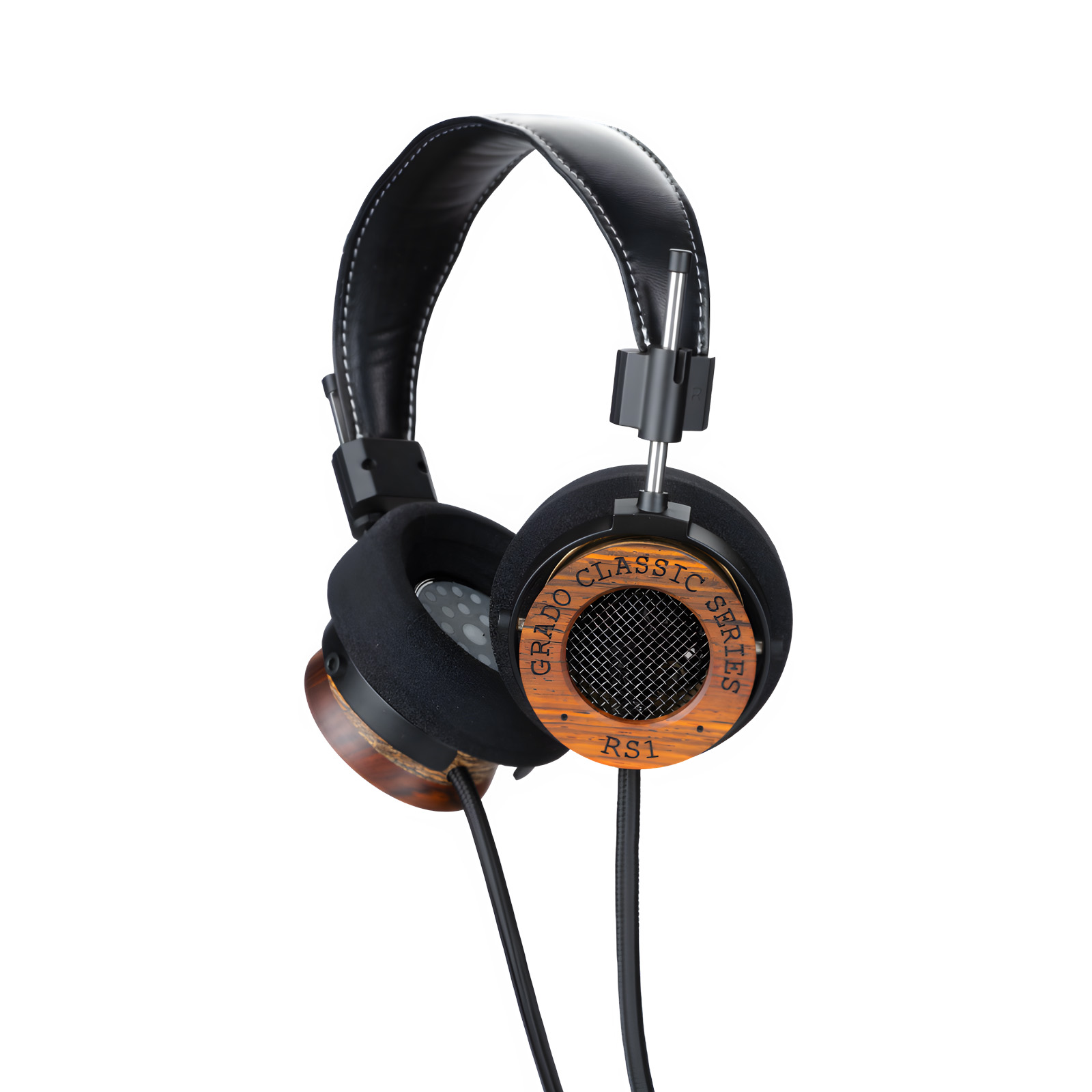
The RS1 is not just another model in the Classic Series. It is the one that started Grado’s wood-body tradition entirely. In 1994, John Grado went downstairs in the middle of the night and built the first RS1 — the first Grado headphone to use a wooden housing. That decision changed the direction of the brand and set the template for everything above it: the GS1000, the GS3000, and every wood-body Grado that followed.
The 2026 Classic version of the RS1 brings the updated 50mm X2 driver and tri-wood cocobolo, hemp, and maple housing to the Classic Series at $750 — positioned above the Hemp ($495), below the GS1000 ($1,195), and at the point in the lineup where Grado’s own language focuses on midrange expression and musical immediacy. It is a more focused, more direct sounding headphone than the GS models, and deliberately so.
Open-Back Design — What That Means
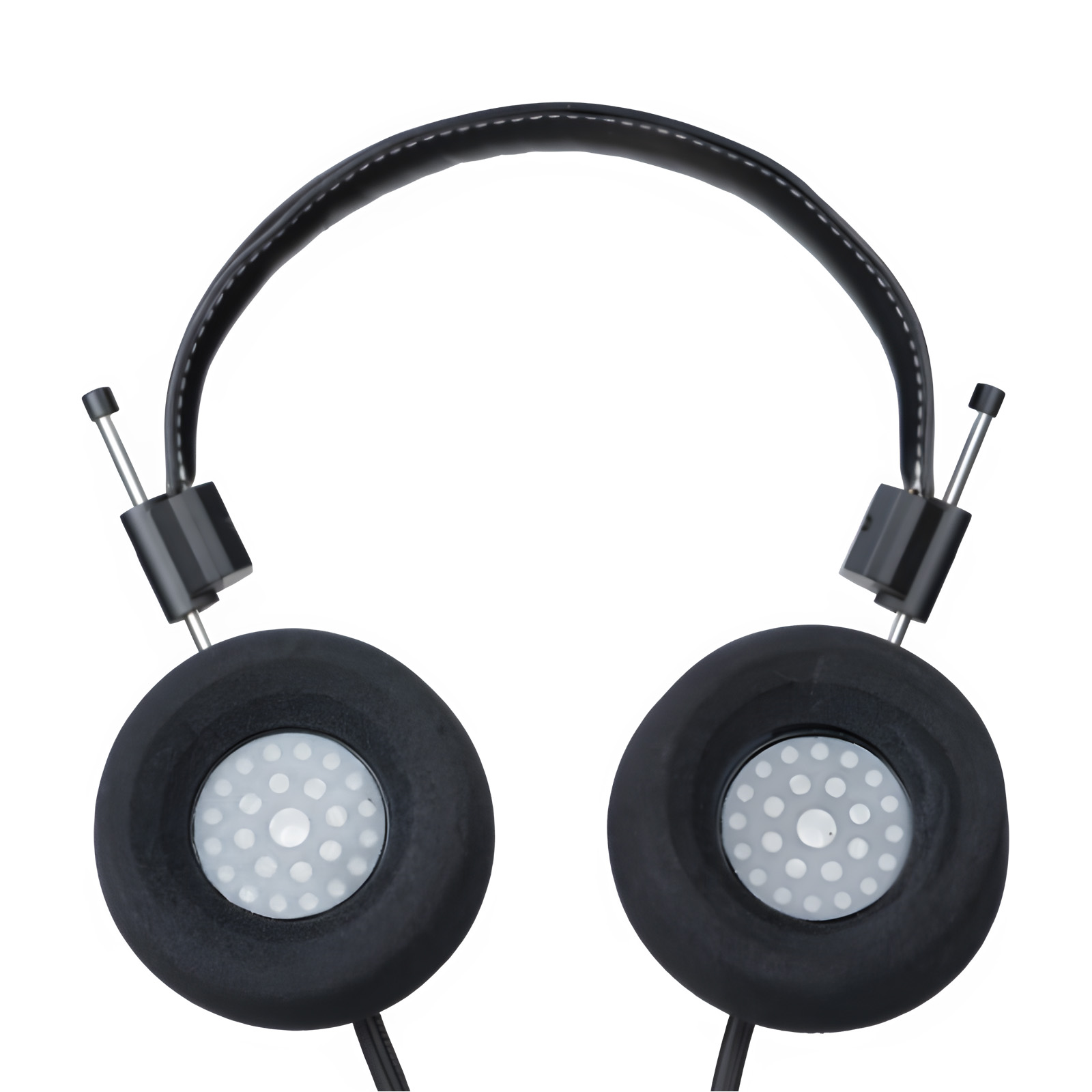
The RS1 Classic is an open-back headphone. The rear of the driver housing vents freely to the outside air, producing a wider, more natural-sounding presentation than closed-back designs. Sound breathes in both directions rather than bouncing inside a sealed cup.
The practical consequence: these headphones leak sound in both directions. People near you will hear your music, and ambient noise will come in. The RS1 is a home listening headphone, designed for a quiet room. In that context, the open-back character is a genuine advantage — one that most similarly priced closed-back headphones simply cannot replicate.
The 50mm X2 Driver — Tuned for Midrange Expression
The RS1 Classic uses Grado’s 50mm X2 dynamic driver, built around a Mylar diaphragm, copper voice coil, and rare earth magnetic system. The X2 platform was developed across the entire Classic Series through extensive listening, improving clarity, balance, and consistency while preserving Grado’s characteristic immediacy.
In the RS1, the tuning specifically emphasizes expressive midrange detail and musical immediacy. This is a more focused, direct presentation than the GS1000 or GS3000 — which use the same or larger drivers but with G cushions that push the driver farther from the ear for a wider, more expansive character. The RS1 with L cushions keeps the driver closer, creating a presentation that is more forward and intimate. Driver-to-driver matching is held to 0.05 dB for precise stereo balance.
Tri-Wood Housing — Three Woods, One Purpose
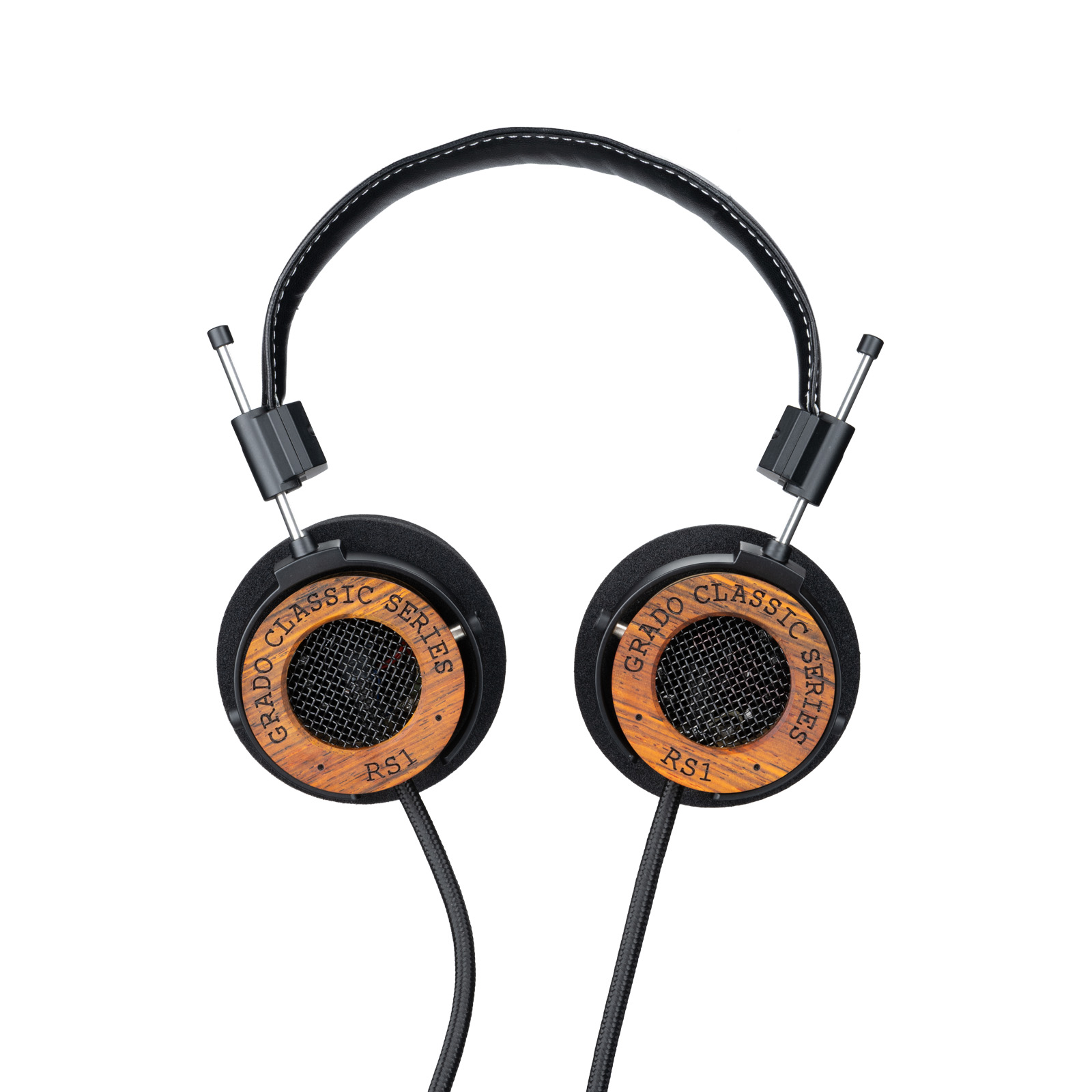
The RS1 Classic’s housing is constructed from three distinct woods, each chosen for a specific acoustic contribution:
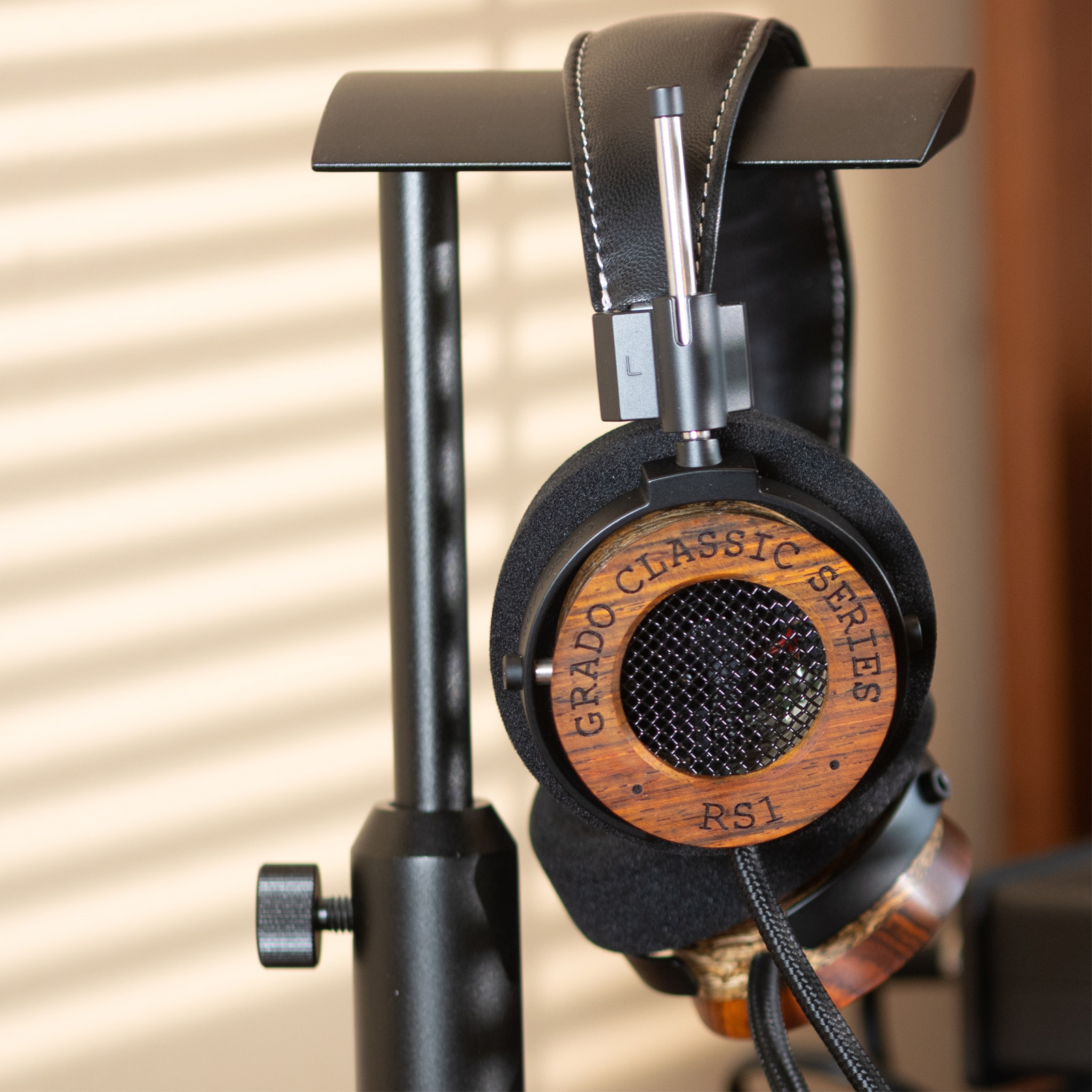
- Cocobolo forms the outer ring — a dense, tropical hardwood known for its striking grain patterns and tonal richness. Cocobolo adds density and what Grado describes as “extra punch”: a quality of definition and attack that makes the RS1’s presentation feel grounded and focused.
- Hemp forms the core layer — the same compressed hemp fiber material used in the Hemp headphone, known for its natural damping properties. Hemp smooths the top and low ends of the frequency response, contributing to the RS1’s balanced, controlled character without softening the midrange.
- Maple forms the outer sleeve — a harder, denser wood that handles most of the structural damping work. Maple provides stability and rigidity at the driver interface, controlling resonances within the housing.
These three materials work together as a system rather than simply being layered for aesthetics. Grado describes the result as “a rich, nuanced tonal palette” — full-bodied, dynamic, and defined. The RS1 is the only model in the Classic Series that uses this specific tri-wood construction, sitting between the Hemp’s dual-wood (hempwood and maple) and the GS3000’s bi-material (cocobolo and aluminum).
L Cushions — Close-Coupled, Forward-Sounding
The RS1 Classic ships with Grado’s L cushions. L cushions are a mid-size pad that positions the driver closer to the ear than the G cushions used on the GS1000 and GS3000, but farther than the S cushions on the SR60 and SR80. This geometry reinforces the RS1’s focused, forward midrange character — the driver is close enough to the ear to create a direct, immediate presentation, but not so close as to feel compressed or congested.
Like all Grado cushions, L cushions also serve as a tuning element. Experimenting with other cushion types will shift the RS1’s character — G cushions will push the driver farther from the ear, widening the soundstage significantly at the cost of some directness. Ask us which cushion types are compatible.
Signature Gold Headband Assembly
The RS1 uses the Signature Gold headband assembly — the same premium mechanical platform as the GS1000 and GS3000, and the most refined headband in the Classic Series. It includes:
- Engraved aluminum alloy gimbals for controlled rotation and precise driver alignment
- Stainless steel height rods for structural rigidity and long-term durability
- Reinforced aluminum junction blocks for improved mechanical stability
- Genuine leather headstrap with contrasting white stitching for comfort during extended sessions
- Internal steel spring band for easy, tool-free clamping adjustment
The RS1 sharing the Signature Gold headband with the GS1000 is meaningful — it signals that Grado considers this the hardware level appropriate for a $750 headphone in its lineup, and it is a noticeable step up from the Signature Silver headband on the Hemp and SR325.
Signature Silver Cable
The RS1 ships with Grado’s Signature Silver cable — the same cable as the GS1000, engineered to be lighter, softer, and more flexible than previous Grado cables while maintaining signal integrity. The cable is fixed and hard-wired. Optional XLR termination is available for listeners with balanced headphone amplifiers. Standard termination is 6.35mm (1/4”) single-ended.
The Origin Story — Why the RS1 Exists
In 1994, John Grado built the first RS1 headphone by hand, in the middle of the night, in Grado’s Brooklyn facility. It was the first time the company had used wood in a headphone housing — an experiment driven by curiosity about how natural materials could affect sound. The result became one of the most acclaimed and recognizable headphones in Grado’s history. Every wood-body Grado that followed — from the GS1000 to the current GS3000 — traces its lineage to that first RS1. The Classic Series version carries forward that history with the X2 driver update and refined build components.
Hand-Built in Brooklyn, New York
Every RS1 Classic is assembled by hand at Grado’s facility in Brooklyn, New York — the same building where the first RS1 was built in 1994. Every pair passes through multiple workbenches before it ships.
What the Experts Say
ecoustics positioned the RS1 as the point in the Classic Series “where Grado wants tradition and refinement to meet without going full GS.” They noted Grado’s own language for the RS1 focuses on midrange expression and immediacy, and highlighted that the L cushions “suggest a more focused presentation than the GS models.” The RS1 received the Signature Gold headband and Signature Silver cable, putting it on the same hardware level as the GS1000 despite its more compact wood-body format. The X2 driver update was praised across the Classic Series for improving consistency without disrupting the fundamental character that made these headphones popular.
Headphone Guru reviewed the RS1x predecessor and described the tri-wood housing as “stunningly beautiful looking” and the sound as “warm,” calling out the combination of maple, hemp, and cocobolo as producing a result that is “full-bodied, dynamic, and truly defined.” They praised the RS1x’s expressive midrange and noted it as a headphone that “opens Grado to a new level of sound” when the three woods work together with the 50mm driver. The RS1 Classic carries forward this tri-wood formula with the X2 driver refinements.
Best of High End described the RS1 as taking the hemp-and-maple bi-wood concept of the Hemp model “a step further with tri-wood construction, blending maple, hemp, and cocobolo for a rich, nuanced tonal palette.” They noted the Classic Series overall “exemplifies Grado’s philosophy of steady evolution — building upon proven designs, refining where it counts.”
Note: The Classic Series launched late March 2026. No scored reviews of the RS1 Classic specifically exist at time of writing. The Headphone Guru review covers the RS1x predecessor. Replace with RS1 Classic-specific scored reviews as they are published.
Building Your Listening Setup?
- Headphone Amplifier. The RS1 is easy to drive at 38 ohms and 99.8 dB sensitivity, but it scales meaningfully with quality amplification. A dedicated headphone amplifier will bring out more dynamics, deeper soundstage, and better driver control. Given the RS1’s expressive, forward midrange, transparent amplification pairs well. Browse Headphone Amplifiers.
- DAC. An outboard DAC improves signal quality from a computer or streaming source. The RS1’s expressive character will reveal differences in source quality clearly. Browse DACs.
- Alternative Cushions. L cushions (included) give the RS1 its focused, forward, midrange-forward character. G cushions will push the driver farther from the ear, widening the soundstage significantly for a more expansive presentation. Both are available separately — ask us which types are compatible.
- Step Down: Classic Hemp. If the RS1 is above budget, the Hemp ($495) uses a bi-wood hempwood and maple housing with the same Signature Silver headband but a different 44mm X2 driver and F cushions. Warmer and fuller in character, less forward than the RS1.
- Step Up: Classic GS1000. The GS1000 ($1,195) adds a 50mm X2 driver in a solid mahogany housing with G cushions for a wider, more spacious presentation — a different tonal character from the RS1’s focused immediacy. Browse Grado headphones.
Features & Specifications
50mm X2 Dynamic Driver — Tuned for Midrange Expression
Grado’s X2 platform uses a Mylar diaphragm, copper voice coil, and rare earth magnetic system. In the RS1, the 50mm X2 is specifically tuned to emphasize expressive midrange detail and musical immediacy — a more focused, forward presentation than the GS models. Driver-to-driver matching: 0.05 dB.
Tri-Wood Housing — Cocobolo, Hemp, and Maple
The only tri-wood model in the Classic Series. Cocobolo outer ring for density and tonal richness. Hemp core for natural damping and smooth frequency extremes. Maple sleeve for structural stability and primary resonance control. Each wood is chosen for its acoustic role; together they produce a full-bodied, defined sound that is richer and more textured than single-wood designs.
Open-Back Design — Natural, Immediate Soundstage
The open-back architecture vents the driver freely, producing a natural-sounding presentation wider than closed-back designs. The RS1’s L cushion geometry and forward tuning make this openness feel direct and immediate rather than expansive. Designed for home listening in a quiet space.
L Cushions — Direct, Focused Presentation
L cushions position the driver at an intermediate distance from the ear — closer than G cushions, farther than S cushions. They reinforce the RS1’s forward midrange character. Interchangeable with other Grado cushion types for tonal customization.
Signature Gold Headband Assembly
The most refined headband in the Classic Series. Engraved aluminum alloy gimbals, stainless steel height rods, reinforced aluminum junction blocks, genuine leather headstrap with contrasting white stitching, and an internal steel spring band for easy clamping adjustment. Shared with the GS1000 and GS3000.
Signature Silver Cable — Fixed, Flexible
Hard-wired Signature Silver cable, lighter and more flexible than previous Grado cables. Standard 6.35mm (1/4”) termination. Optional XLR termination available for balanced systems. All Classic Series headphones use fixed, hard-wired cables; detachable cables are reserved for the Signature Line.
Specifications
- Driver: 50mm X2 dynamic (Mylar diaphragm, copper voice coil, rare earth magnetic system)
- Design: Open-back, over-ear
- Frequency response: 12 Hz–30 kHz
- Sensitivity: 99.8 dB
- Impedance: 38 ohms
- Driver matching: 0.05 dB
- Cushions: L cushions (included)
- Housing: Tri-wood — cocobolo outer ring, hemp core, maple sleeve
- Headband: Signature Gold assembly (engraved aluminum gimbals, stainless steel rods, leather strap)
- Cable: Signature Silver (fixed, hard-wired)
- Termination: 6.35mm (1/4”) standard; optional XLR available
- Series: Classic Series
- Made in USA (Brooklyn, NY)
Frequently Asked Questions
How does the RS1 differ from the GS1000?
Both use a 50mm X2 driver with the Signature Gold headband. The key differences are housing and cushions. The GS1000 uses solid mahogany and G cushions, which position the driver farther from the ear for a wider, more spacious, effortless presentation. The RS1 uses a tri-wood cocobolo/hemp/maple housing and L cushions, which position the driver closer to the ear for a more focused, forward, midrange-expressive character. The RS1 is more immediate; the GS1000 is more expansive. Which is better depends on what you want from a headphone — call us if you want help choosing.
How does the RS1 differ from the Hemp?
The Hemp ($495) uses a bi-wood hempwood and maple housing with a 44mm X2 driver and F cushions. Its tuning is described as “fuller and more grounded” — warmer and denser than typical Grado headphones. The RS1 ($750) uses a tri-wood cocobolo/hemp/maple housing with a 50mm X2 driver and L cushions, tuned for midrange expression and immediacy — more forward and energetic than the Hemp but with cocobolo’s added tonal richness. The RS1 also steps up to the Signature Gold headband, while the Hemp uses Signature Silver.
Why does the RS1 use three different woods?
Each wood contributes a specific acoustic quality. Maple handles the primary resonance damping and provides structural stability. Hemp smooths the top and low ends of the frequency response, helping the overall presentation feel balanced. Cocobolo adds density, definition, and what Grado calls “extra punch” — a quality of solidity and focus in the upper bass and lower midrange. Together they produce a result that is richer and more textured than any single wood could achieve alone. This tri-wood approach was first developed for the RS1x predecessor.
Do I need a headphone amplifier?
Not strictly — at 38 ohms and 99.8 dB sensitivity, the RS1 will play from a phone, laptop, or portable DAC. But it scales noticeably with quality amplification. A good headphone amplifier will improve dynamics, imaging, and control. Given the RS1’s expressive, forward midrange, transparent amplification is a better match than anything that adds warmth or coloration. Call us for amplifier recommendations at your budget.
Can I use these away from home?
No — the RS1 is open-back, which means it leaks sound significantly in both directions. People near you will hear your music, and ambient noise will enter freely. These are home listening headphones, designed for a quiet room with quality amplification.
Can I change the cushions?
Yes. Grado cushions are interchangeable across the lineup. L cushions (included) give the RS1 its forward, focused, midrange-forward character. G cushions will push the driver farther from the ear, widening the soundstage considerably for a more expansive presentation — similar in geometry to the GS models. S and F cushions are also compatible. Experimenting is encouraged — each type meaningfully shifts the character. Ask us which cushion types are available.
Is the cable detachable?
No. All Classic Series headphones use fixed, hard-wired cables by design. Detachable cables are reserved for Grado’s Signature Line. The RS1 ships with the Signature Silver cable. Optional XLR termination is available for balanced headphone amplifier systems.
Is optional XLR termination available?
Yes, confirmed for the RS1 Classic. Verify the ordering mechanism (factory option vs. separate SKU) and any price difference with Audio Advisor before ordering.
Where is it made?
By hand, in Brooklyn, New York — the same facility where John Grado built the first RS1 in 1994. Grado Labs has assembled headphones there since 1953. Every RS1 Classic passes through multiple workbenches before it ships.
What’s in the Box
- Grado RS1 Classic open-back headphones
- L cushions (installed)
- Signature Silver cable (fixed, hard-wired)
Why Audio Advisor?
 40+ Years of Expertise — Since 1981, we’ve helped over a million music lovers find the right gear.
 60-Day Money-Back Guarantee — Take your time. Listen, enjoy, and make sure it’s right for you.
 Real Experts, Real Help — Our team is here to answer your questions at 800-942-0220, weekdays 9am–6pm EST.
 Free Shipping — On orders over $49, delivered to your door.
 Flexible Payment Options — Financing available so you can start listening now.
Want to understand how wood housing materials affect headphone sound, or how to build a great open-back listening setup? Visit our Audio Advisor Learning Center for guides on headphone types, amplifier pairing, and choosing the right headphone for your music and room.


