 Free Shipping on US orders above $49









What You Need to Know
What Is This Cable and What Does It Do?
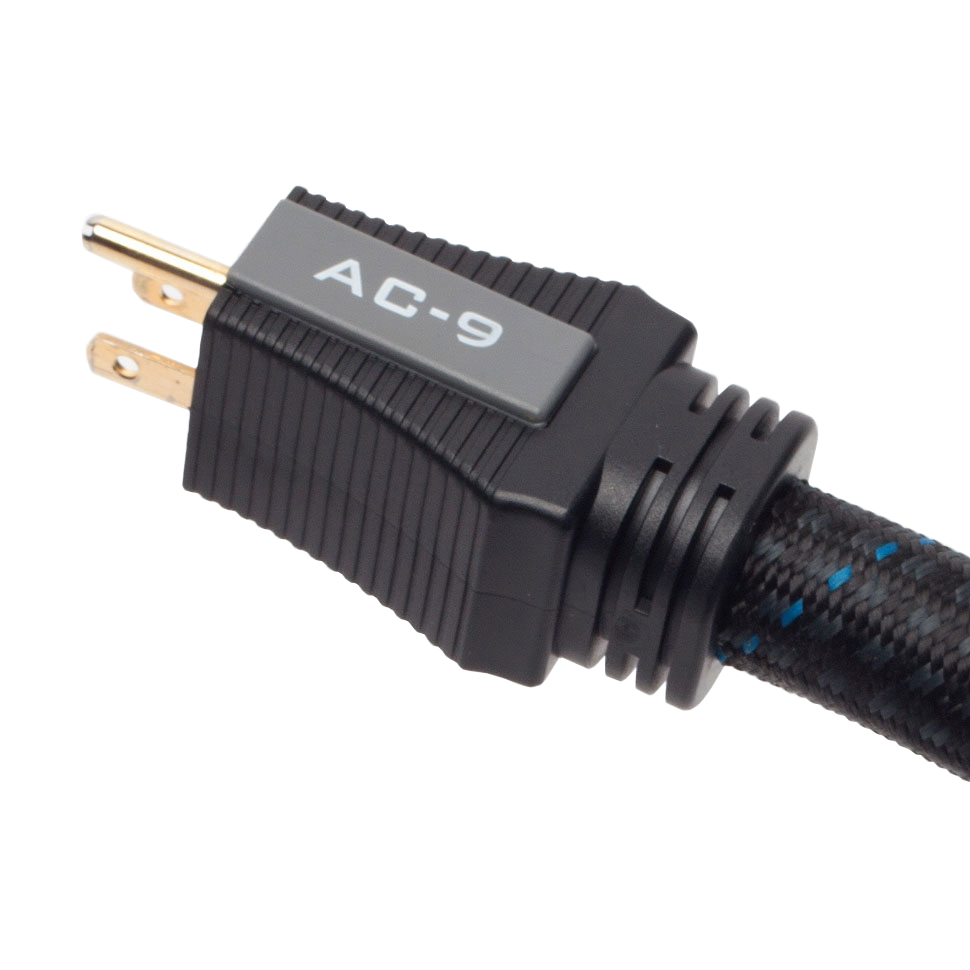
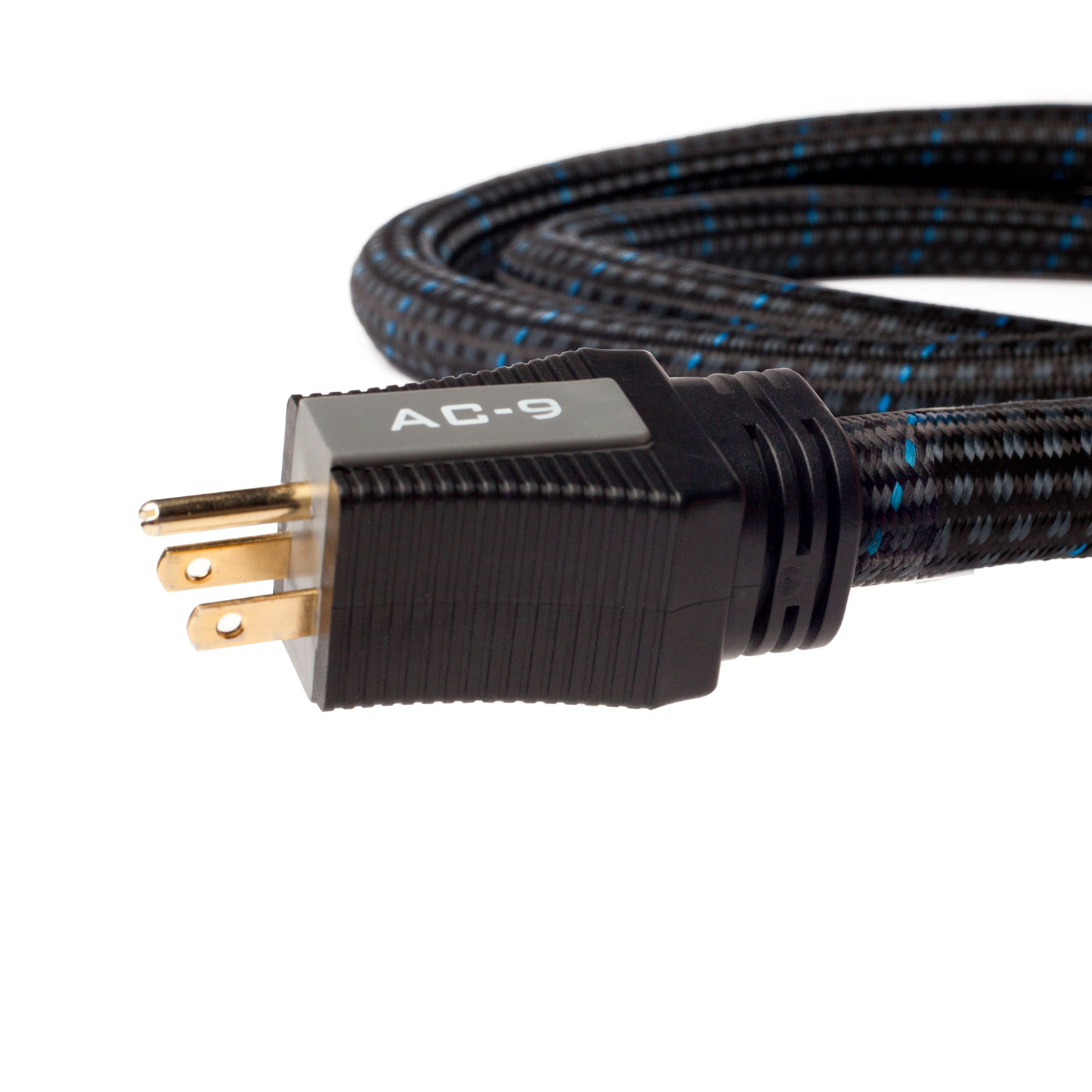
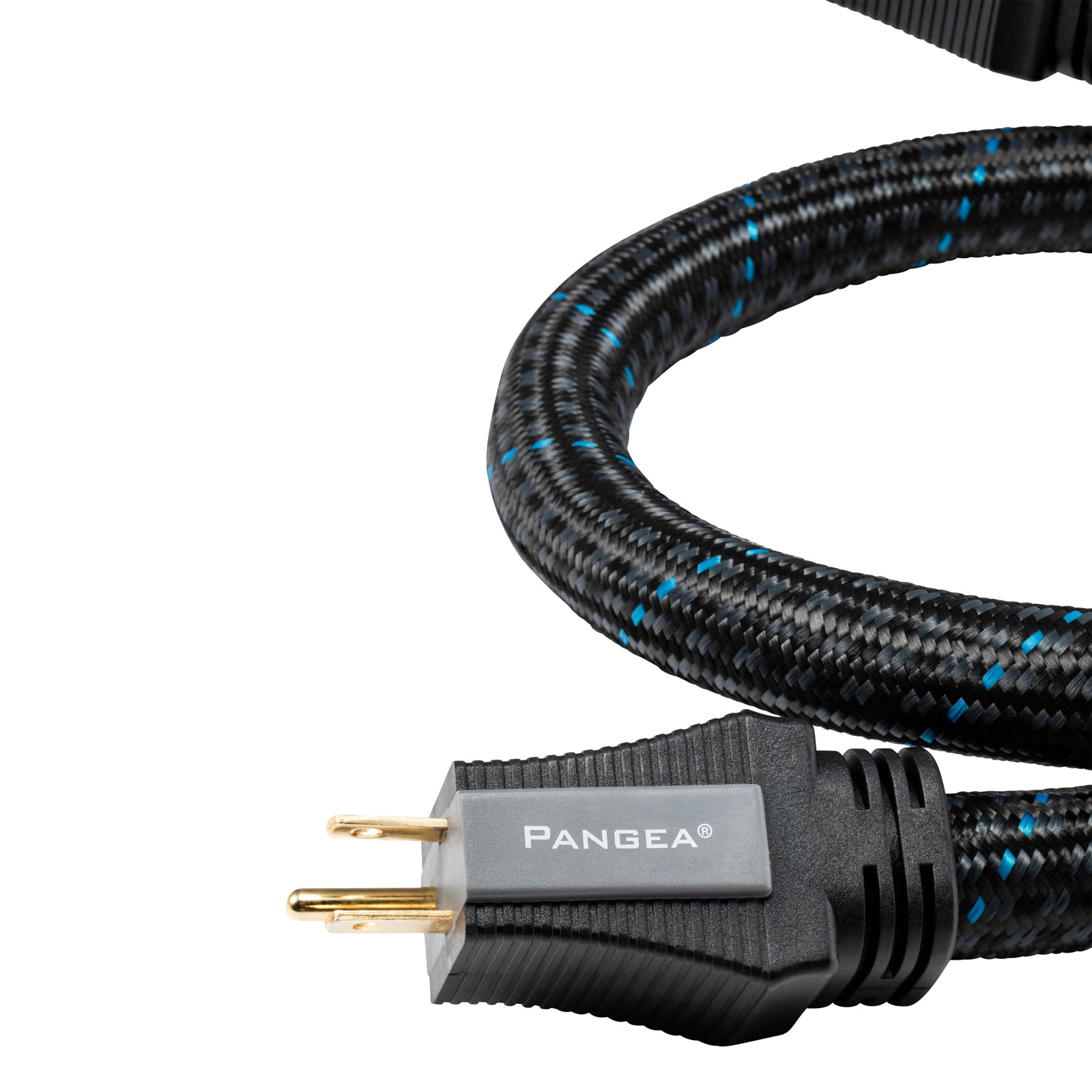
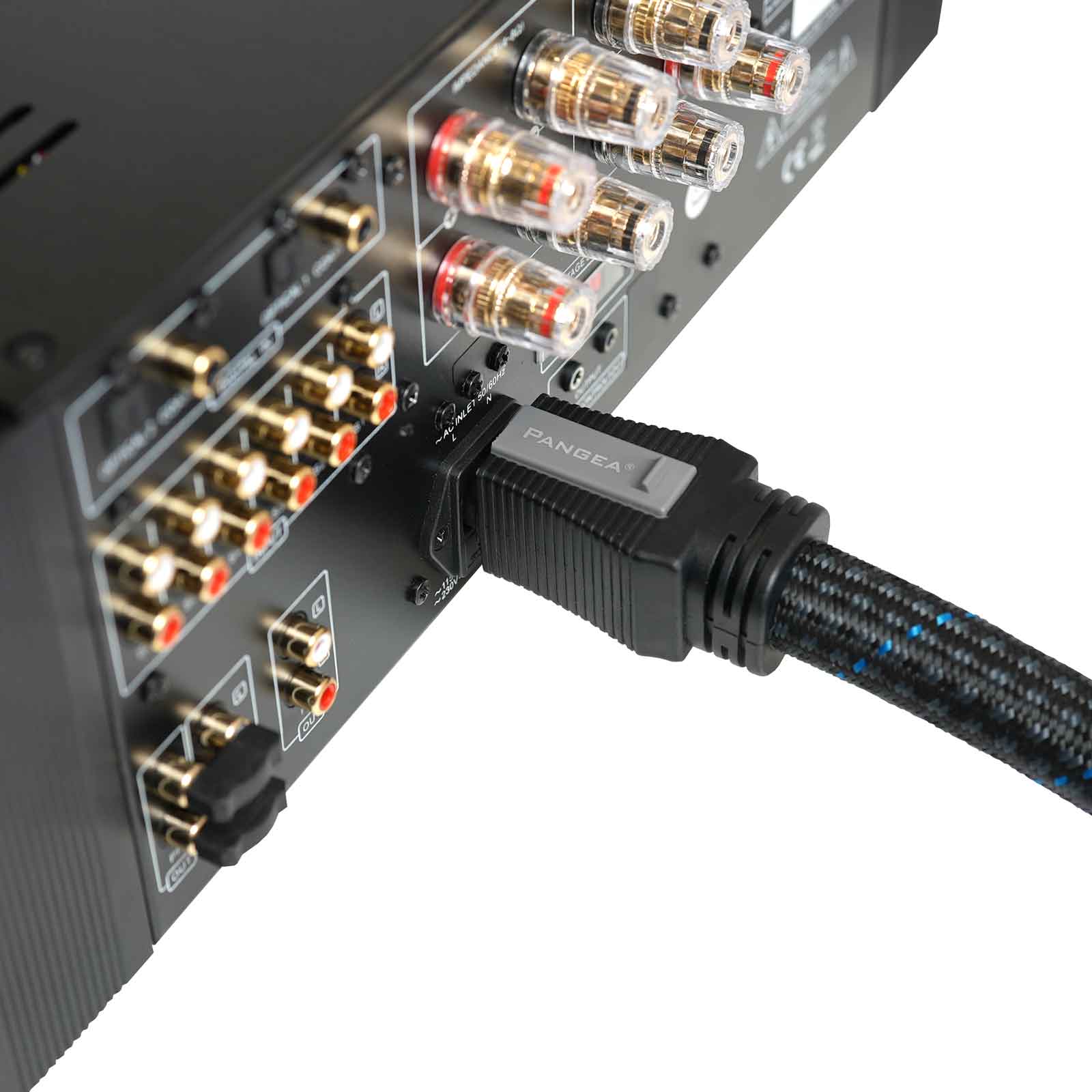
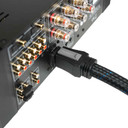
The AC-9 MkII is a heavy-gauge AC power cable built for the components in your system that demand the most current: power amplifiers, integrated amplifiers, powered subwoofers, and power conditioners. One end uses a standard NEMA 5-15P plug — the three-prong plug found on virtually every household device in North America. The other end uses an IEC C13 connector, the rectangular three-pin inlet found on most amplifiers and high-current audio components.
Power amplifiers work differently from source components like DACs or streamers. They draw large, rapidly varying amounts of current as the music demands it — a quiet passage followed by a sudden orchestral peak asks the amplifier to respond instantly. A cable that introduces resistance or restricts current delivery at those moments can limit what the amplifier is able to do. The AC-9 MkII's 7 AWG construction is designed to stay out of that equation and let the amplifier do its job.
The AC-9 MkII sits in the middle of Pangea Audio's high-current cable lineup, above the earlier AC-9 and below the Signature Edition AC-9SE MkII. It shares the same 7 AWG gauge and the same Cardas Grade One Copper conductor material as the SE — at a more accessible price point.
A Note on the Name: "AC-9" Does Not Mean 9 AWG
This is genuinely confusing, so it's worth clearing up right away. Despite being called the AC-9, this is not a 9 AWG cable. It's a 7 AWG cable.
AWG stands for American Wire Gauge, the standard measurement for conductor thickness. The counterintuitive part: a lower AWG number means a thicker wire with more current-carrying capacity. 7 AWG is significantly thicker — and more capable of carrying high current — than 9 AWG, which is in turn far heavier than the 14 AWG used in source-component cables.
The "9" in the product name is a legacy reference to the original AC-9 family. The AC-9 MkII's actual 7 AWG gauge makes it one of the heaviest power cables available at anywhere near this price, regardless of what its name implies.
What Makes the AC-9 MkII Different from a Generic Power Cable?
The original AC-9 was built with PCOCC copper — a high-grade Japanese conductor that was later discontinued. When that material went away, Pangea Audio rebuilt the AC-9 around Cardas Grade One Copper, developed by George Cardas, founder of Cardas Audio.
Cardas Grade One Copper is mined in Arizona and processed at a New England facility through a slow-draw method, with reduction annealing applied between each draw stage. Annealing is a heat-treatment process that relieves stress in the metal and further refines its crystal structure. The result is a conductor with very high purity and exceptional consistency. George Cardas has described it as "the most amazing audio conductor I have ever experienced" — a manufacturer claim, though one that comes with considerable credibility given Cardas Audio's long reputation in the industry.
The conductor combination in the AC-9 MkII includes Cardas Grade One Copper alongside OFC (Oxygen-Free Copper, 99.99% purity) and Litz wire. Litz wire is a construction technique in which individual strands are separately insulated and wound in a specific geometric pattern — engineered to keep more of the conductor's cross-section actively carrying current, particularly at the frequencies relevant to AC power delivery.
The result is a 7 AWG cable built with meaningfully better materials than a generic power cord. Whether that translates into a difference you'll hear depends on your system and your ears — and we won't promise a specific sonic result. What we can say is that the conductor quality and build are objectively in a different class from the cable that shipped in the box with your amplifier.
If you're considering the step up to the AC-9SE MkII: the SE contains substantially more Cardas Grade One Copper, adds a more elaborate seven-way multi-gauge conductor geometry, counter-spiraling for additional noise rejection, and is individually handmade. Those differences are real and reflected in the price. For many systems, the AC-9 MkII is the right answer — and for others, the SE is worth the premium. Give us a call if you'd like help deciding.
Where Does This Cable Belong in Your System?
The AC-9 MkII is designed specifically for high-current components: stereo amplifiers, monoblock amplifiers, integrated amplifiers, powered subwoofers, and power conditioners or power distribution units. These are the components in a system that draw the most current and benefit most from a heavy-gauge, well-built cable.
It's not the right cable for source components like DACs, streamers, CD players, or preamps. Those components draw modest amounts of current and benefit more from focused noise shielding than from raw current capacity. For those, Pangea's AC-14XL MkII (14 AWG, triple-shielded, source-optimized) is the better fit.
At 1.5 m (about 5 feet), this length works well for most equipment rack installations where the amplifier is mounted a shelf or two away from the wall outlet or power conditioner. If your amp sits directly next to the outlet, a 1.0 m cable is likely sufficient. If there's more distance to cover, the 2.0 m is available. As a general rule, use the shortest length that fits your installation comfortably — less cable run means less surface area for airborne interference to couple into the conductor.
This cable uses a standard 15-amp IEC C13 connector, which fits the IEC inlet found on the vast majority of audio amplifiers. If your amplifier or power conditioner has a 20-amp IEC inlet instead — a larger, slightly different shape — check the specification sheet before ordering, or give us a call and we'll confirm.
Features & Specifications
Conductor
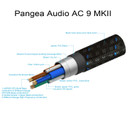
The AC-9 MkII uses a combination of Cardas Grade One Copper, 99.99% purity OFC (Oxygen-Free Copper), and Litz wire. The net gauge is 7 AWG — one of the heaviest gauges available in this price category, and well matched to the current demands of power amplifiers and subwoofers. Cardas Grade One Copper is produced through a slow-draw, reduction-annealing process that yields a very high-purity conductor with a refined crystal structure, according to George Cardas of Cardas Audio.
Shielding
The AC-9 MkII is shielded to block RFI (Radio Frequency Interference) and EMI (Electromagnetic Interference) from entering the power path. High-current components generate more electromagnetic activity than source gear, making effective shielding an important part of this cable's design. [Verify shielding layer count from product spec sheet before publishing.]
Connectors
The IEC end uses Pangea's DeathGrip™ IEC C13 connector — massive gold-plated contacts housed in a metal casing that grip your component's IEC inlet firmly and resist oxidation over time. The NEMA 5-15P wall plug uses gold-plated copper contacts and includes a screw-in/screw-out solid copper ground pin for easy ground-loop troubleshooting. Both connector bodies are two-shot molded to seal the connections against oxidation. [Verify connector specs against the AC-9 MkII product page — the DeathGrip is confirmed on the SE; verify it applies to the standard MkII as well.]
Jacket
The outer jacket is woven and designed to be as flexible as practical for a 7 AWG cable. Heavier than Pangea's source-component cables by design, but engineered to route comfortably in a typical equipment rack installation.
Available Lengths
0.6 m (about 2 ft) / 1.0 m (about 3.3 ft) / 1.5 m (about 5 ft) / 2.0 m (about 6.6 ft) [Verify full length range from Audio Advisor product listings before publishing.]
Quick-Reference Specifications
| Conductor | Cardas Grade One Copper + 99.99% OFC copper + Litz wire; net 7 AWG |
| Gauge | 7 AWG |
| Shielding | [Verify — RFI/EMI shielding; confirm layer count from spec sheet] |
| Component Connector | IEC C13 DeathGrip™ [verify]; gold-plated contacts; metal casing; two-shot molded body |
| Wall Connector | NEMA 5-15P; gold-plated copper contacts; screw-in/out solid copper ground pin; two-shot molded body [verify contact spec] |
| Available Lengths | 0.6 m / 1.0 m / 1.5 m / 2.0 m [verify] |
| Designed For | Stereo, mono, multichannel & integrated amplifiers; powered subwoofers; power conditioners |
Pairs Well With
The AC-9 MkII is for the high-current side of your system. Here are some natural companions.
- Stereo & Integrated Amplifiers — The primary use case for this cable. Browse Amplifiers at Audio Advisor.
- Monoblock Amplifiers — If you're running monoblocks, each amp benefits from its own dedicated power cable. Browse Amplifiers at Audio Advisor.
- Powered Subwoofers — Subs draw sustained, heavy current loads and are a natural fit for this cable's current capacity. Browse Subwoofers at Audio Advisor.
- Power Conditioners — Run the AC-9 MkII from the wall to the conditioner, then use lighter-gauge source-component cables from the conditioner's outlets to each DAC, streamer, or preamp. Browse Power Conditioners at Audio Advisor.
- Pangea Audio AC-9SE MkII — The Signature Edition version of this cable, with substantially more Cardas Grade One Copper, seven-way multi-gauge geometry, counter-spiraling, and individual handmade construction. The logical upgrade if you want to go further. See the full Pangea Audio line.
- Pangea Audio AC-14XL MkII — Pangea's flagship source-component power cable (14 AWG) for your DAC, streamer, or preamp. Pair it with the AC-9 MkII for a full-system Pangea upgrade. See the full Pangea Audio line.
- Pangea Audio AC-14SE MkII — The Signature Edition source-component cable, with a unique solid Cardas Grade One Copper center strand, for listeners who want the best of the Pangea line on their front end as well. See the full Pangea Audio line.
Frequently Asked Questions
What components benefit most from a heavy-gauge power cable like this one?
Power amplifiers — stereo, mono, multichannel, and integrated — are the primary candidates, along with powered subwoofers and power conditioners. These components draw large, rapidly varying amounts of current as they work. The AC-9 MkII's 7 AWG construction is specifically sized for that kind of demand. It is not designed for source components like DACs, CD players, or preamps — those benefit more from a lighter-gauge, more heavily shielded cable like Pangea's AC-14XL MkII.
This is called the "AC-9" but you say it's 7 AWG. Isn't that a contradiction?
It's a fair question — the name is genuinely confusing. The "9" in AC-9 is a legacy product family name, not a gauge measurement. The actual wire gauge of the AC-9 MkII is 7 AWG. In the AWG system, lower numbers mean thicker wire with more current-carrying capacity, so 7 AWG is actually heavier than 9 AWG would be. The AC-9 MkII is one of the thickest-gauge power cables available at this price.
What does AWG mean, and why does it matter for amplifiers?
AWG stands for American Wire Gauge, the standard for measuring wire thickness. A lower AWG number means a thicker wire with lower electrical resistance and higher current-carrying capacity. Power amplifiers draw varying, high amounts of current as they respond to music. A cable that restricts current delivery in those moments can limit what the amplifier is able to do. The AC-9 MkII's 7 AWG construction is designed to minimize that restriction.
What length do I need?
Measure the distance from your component's IEC inlet to the nearest wall outlet or power conditioner output, and add a few inches of slack for comfortable routing. As a general principle, use the shortest length that works for your installation — less cable run means less surface area for airborne interference to couple into the conductor. The 1.5 m length (about 5 feet) suits most equipment rack setups; shorter and longer options are available if needed.
How does this compare to the cable that came with my amplifier?
The cable that ships with most audio equipment — even expensive gear — is a generic, unshielded cord built to meet minimum electrical safety requirements at the lowest possible manufacturing cost. The AC-9 MkII uses Cardas Grade One Copper, OFC copper, and Litz wire in a 7 AWG construction with shielded design and purpose-built connector hardware. Whether that translates into a difference you'll notice depends on your system and your electrical environment — we won't promise a specific sonic result. The materials and engineering are objectively in a different class from what came in the box.
What is Cardas Grade One Copper, and why does it appear in a cable at this price?
Cardas Grade One Copper is a proprietary conductor material developed by George Cardas, founder of Cardas Audio. It's mined in Arizona and drawn slowly at a New England facility, with reduction annealing — a heat-treatment process — applied between each draw stage to remove impurities and refine the metal's crystal structure. George Cardas describes it as "the most amazing audio conductor I have ever experienced." That's a manufacturer claim, but a credible one given Cardas Audio's reputation in the cable industry. Pangea Audio's decision to use it in a cable at the AC-9 MkII's price point is part of what makes this cable stand out.
What's the difference between the AC-9 MkII and the AC-9SE MkII?
Both cables share the same 7 AWG gauge and use Cardas Grade One Copper. The SE MkII (Signature Edition) contains substantially more Cardas Grade One Copper, adds a more elaborate seven-way multi-gauge conductor geometry, counter-spiraling (conductors wound in opposing directions to reduce electromagnetic interference), and is individually handmade to Pangea's specifications. The AC-9 MkII offers the same foundational conductor material and heavy gauge at a lower price — the right answer for most systems, and a logical starting point before deciding whether the SE upgrade is worth it for yours.
Will this cable fit my amplifier if it uses a 20-amp IEC inlet?
The AC-9 MkII uses a standard 15-amp IEC C13 connector, which fits the IEC inlet found on the vast majority of home audio amplifiers. Some higher-powered amplifiers and power conditioners use a larger 20-amp IEC inlet instead — the connectors are not physically interchangeable. Check your amplifier's specification sheet or back panel before ordering. If you're unsure, give us a call at 800-942-0220 and we'll help you confirm the right fit.
Why Audio Advisor?
 40+ Years of Expertise — Since 1981, we’ve helped over a million music lovers find the right gear.
 60-Day Money-Back Guarantee — Take your time. Listen, enjoy, and make sure it’s right for you.
 Real Experts, Real Help — Our team is here to answer your questions at 800-942-0220, weekdays 9am–6pm EST.
 Free Shipping — On orders over $49, delivered to your door.
 Flexible Payment Options — Financing available so you can start listening now.


