 Free Shipping on US orders above $49





What You Need to Know
What Is This Cable and What Does It Do?
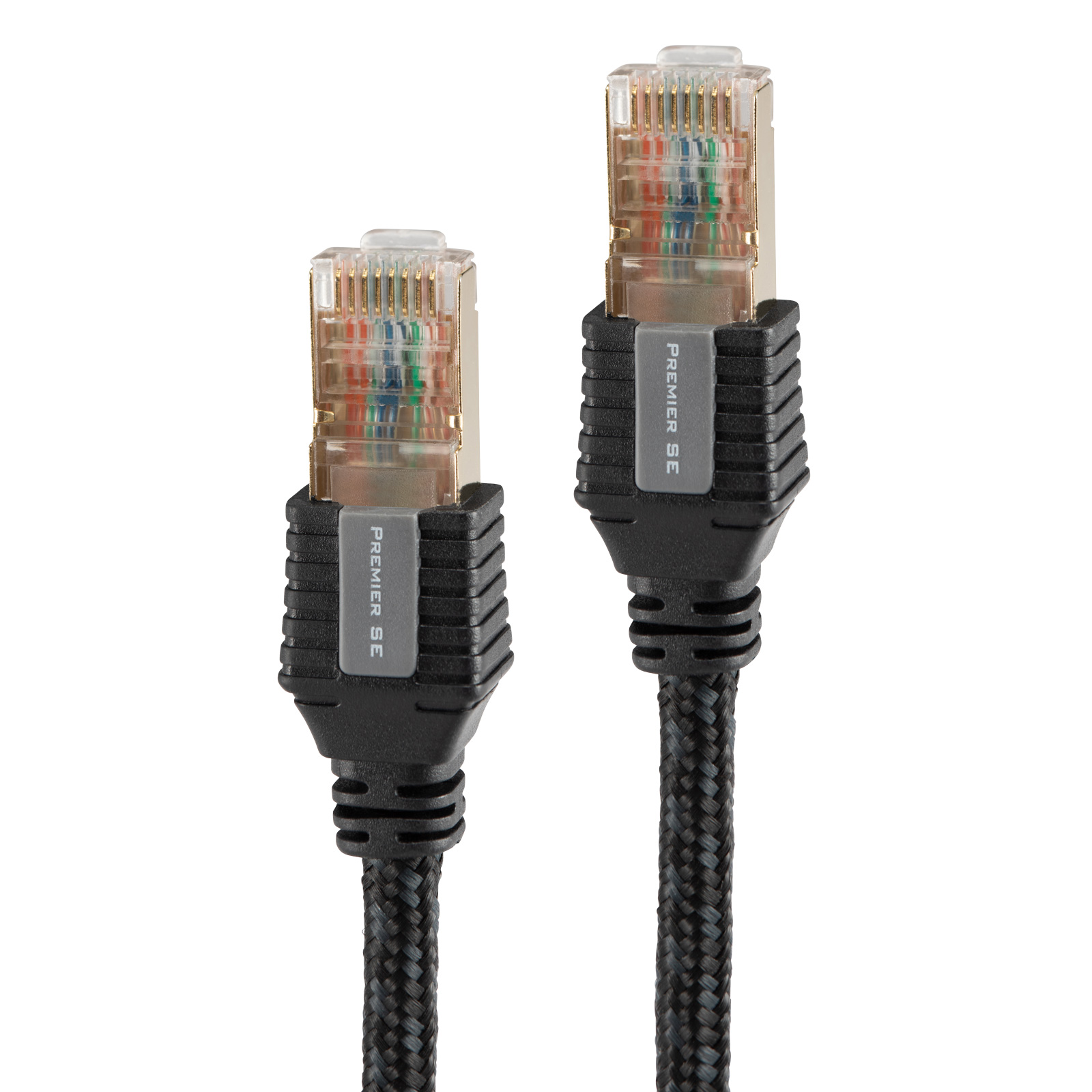
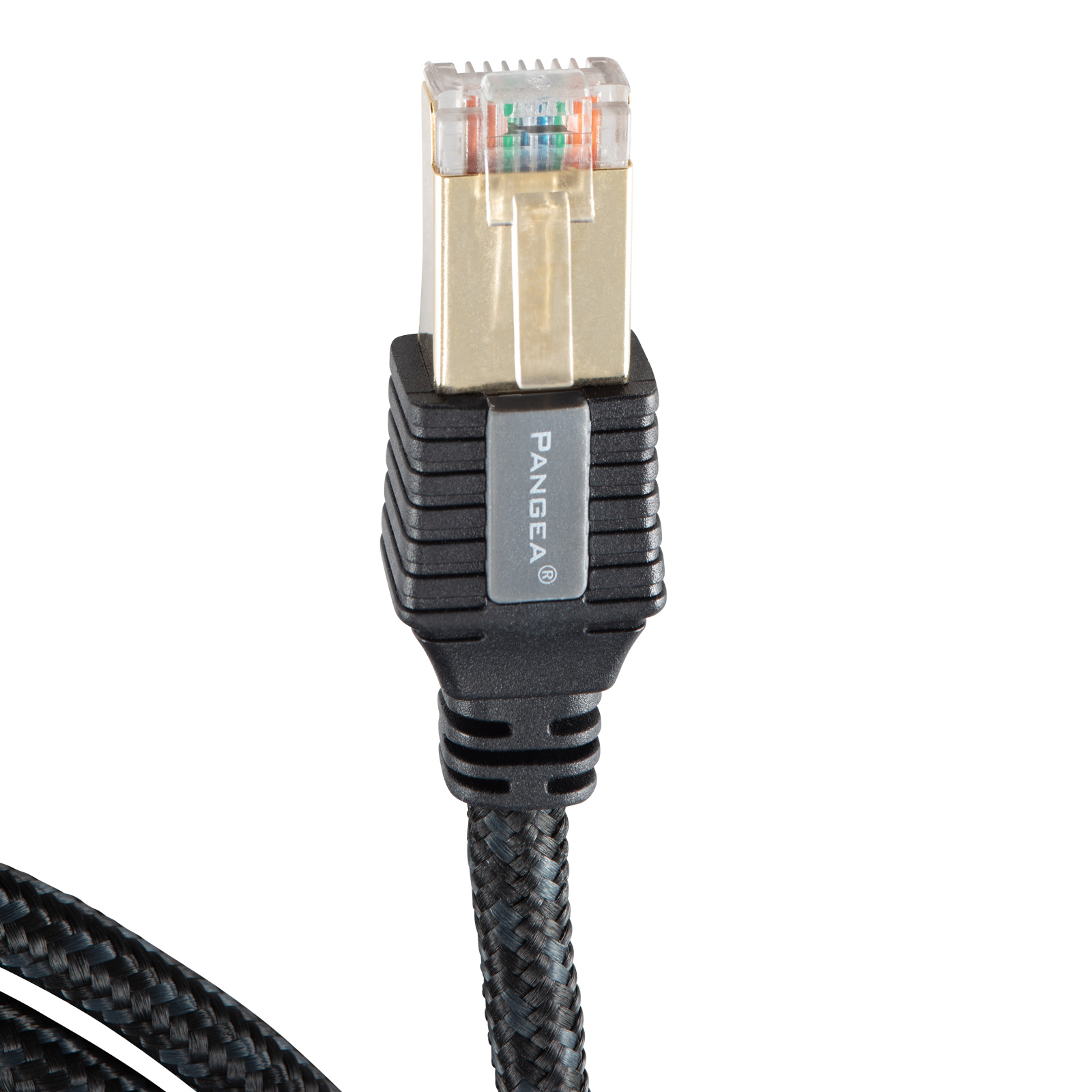
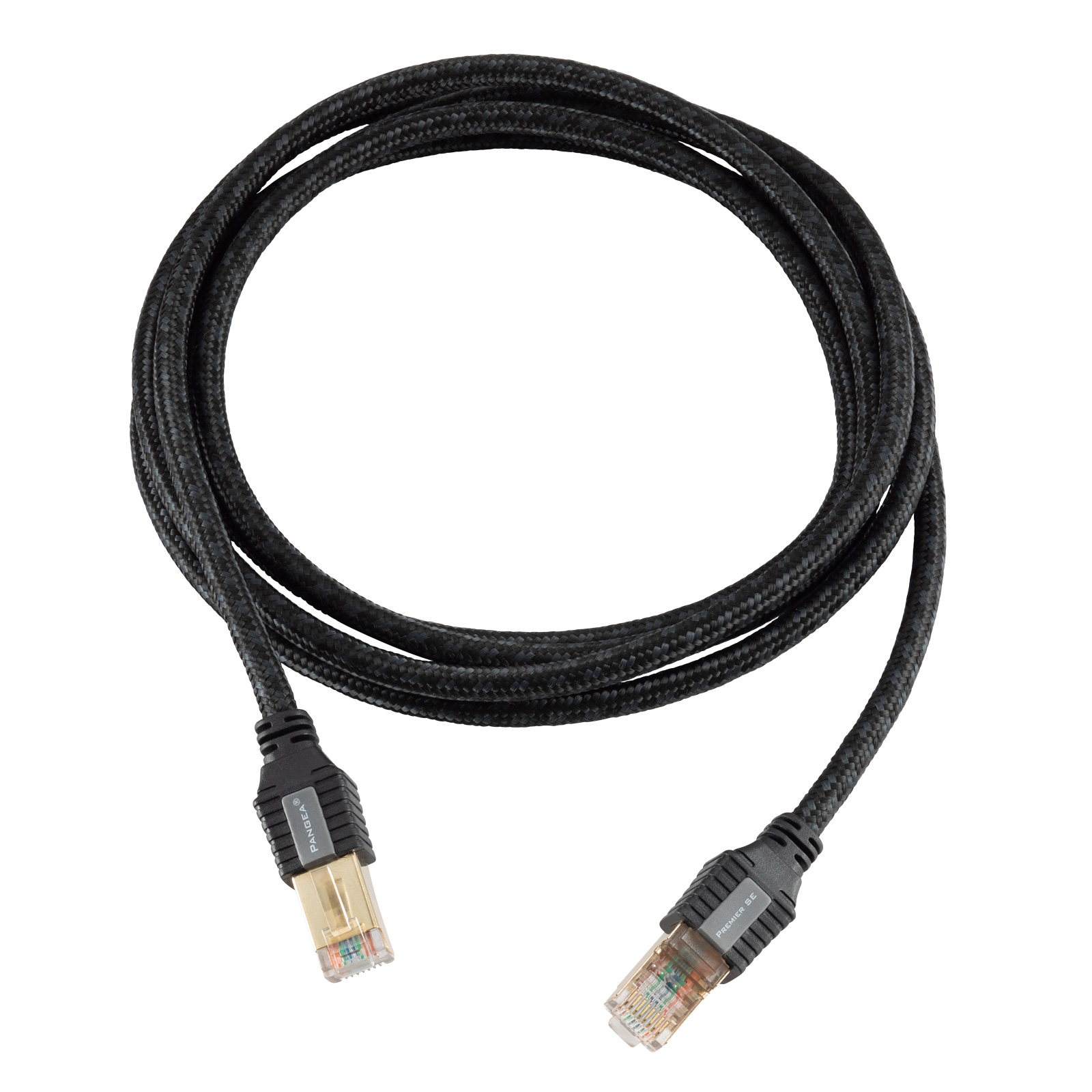
The Premier SE is a standard Ethernet cable with RJ-45 plugs on both ends — the same type you'd find on your router or computer. In a hi-fi system, it connects your network streamer, music server, or DAC to your router or network switch.
Jay Victor, Pangea Audio's cable designer, built it for hi-fi use. The Premier SE sits at the top of Pangea's Ethernet lineup. It uses Cardas Grade One Copper as the base conductor before adding a silver coating. The standard Premier uses silver-plated copper without the Cardas base.
What's Different About This One?
Most off-the-shelf Ethernet cables use plain copper wire, basic insulation, and little or no shielding. The Premier SE is built differently at every level.
The wire starts as Cardas Grade One Copper — a high-purity material mined in Arizona. It's drawn very slowly at a New England factory, with a heat-treatment step between each pull to remove impurities and refine the metal.
Jay Victor then sends the wire to a second factory for silver plating. He says: "I have found silver plating is crucial to digital cable performance, and I use it in all my digital audio designs." That's his professional opinion.
The insulation is low-loss PE (polyethylene). PE works better than the PVC plastic used in most Ethernet cables. It has lower capacitance, which means less signal distortion at high frequencies.
Each of the four wire pairs inside the cable gets its own foil shield. This stops signal from leaking between pairs — a problem called crosstalk. On top of that, three layers of overall shielding block noise from outside the cable.
An Honest Note on "Cat 7" and What That Label Does (and Doesn't) Mean
The Premier SE meets or exceeds the performance specs linked to Cat 7 and Cat 8 cable. But "Cat 7" is not an officially approved standard in the United States. The bodies that set U.S. networking standards — ANSI and TIA — never approved it.
Those organizations went straight from Cat 6A to Cat 8, skipping Cat 7 entirely. So cables labeled "Cat 7" in the U.S. are hitting a performance level, not meeting a recognized standard. The Premier SE's construction is solid. The label just doesn't carry official weight here.
One more thing: Cat 7-spec per-pair shielding works best when everything in the cable run — the cable, connectors, and both ports — is grounded. If your gear doesn't support that full ground path, you still get good build quality. You just won't get the full Cat 7 noise-rejection edge over Cat 6.
The Premier SE uses standard RJ-45 connectors. True Cat 7 spec calls for unusual proprietary plugs that don't fit consumer gear. RJ-45 is universal and works with everything. The cable's construction quality stands on its own.
Where Does This Cable Belong in Your System?
The Premier SE works with any device that has a standard RJ-45 Ethernet port. Common uses: connecting a network streamer or music server to a router or switch, or connecting a network-capable DAC to your home network.
Wired Ethernet is usually more stable than Wi-Fi for streaming audio. It's less likely to drop signal and doesn't compete with other wireless devices in the room. If your streamer can connect by wire and it's practical to do so, wired is worth using.
Use the shortest cable that comfortably reaches your device. Shorter cables pick up less interference along the way. The Premier SE comes in 0.6 m, 1.0 m, 2.0 m, and 4.0 m to fit setups from a tabletop connection to a longer rack run.
Ethernet is a digital protocol. Data packets are either received correctly or sent again — the cable can't damage audio data the way a bad analog cable can. The case for a premium Ethernet cable is mostly about noise management, not data quality.
Better shielding can reduce the electrical noise that reaches your streamer or DAC from the cable run. Whether that makes a difference depends on your gear and your room. Jay Victor's view on silver plating is his professional opinion — not a universal guarantee.
Features & Specifications
Conductors
26 AWG signal conductors start as Cardas Grade One Copper, produced through a slow-draw, annealing process at a New England factory. Jay Victor then has the wire silver-plated at a second facility. Silver applies a thin layer to each strand. Because high-frequency signals travel near a wire's surface, silver's slightly lower resistance there can help.
Insulation (Dielectric)
Low-loss PE (polyethylene) insulation. PE has lower capacitance than the PVC plastic used in most Ethernet cables. Lower capacitance means less signal distortion at high frequencies.
Shielding
Each of the four wire pairs inside the cable has its own foil shield. This stops signal leakage between pairs, a problem called crosstalk. On top of that, three layers of overall shielding block EMI and RFI from outside. Full Cat 7 noise-rejection benefit requires a grounded connection throughout the entire cable run.
Connectors
Standard RJ-45 plugs on both ends — the universal Ethernet connector used by all routers, switches, streamers, computers, and DACs. No proprietary hardware; works with all standard Ethernet ports.
Performance Level
Meets or exceeds the bandwidth specs published for Cat 7 and Cat 8. Note: Cat 7 and Cat 8 are not ANSI/TIA-approved standards in North America. The Premier SE's build quality is real. The category label reflects a performance level, not an official U.S. standard.
Available Lengths
0.6 m (about 2 ft) / 1.0 m (about 3.3 ft) / 2.0 m (about 6.6 ft) / 4.0 m (about 13 ft) — verify current Audio Advisor inventory for all available lengths.
Quick-Reference Specifications
| Cable Type | Ethernet — RJ-45 to RJ-45 |
| Conductor | 26 AWG silver-plated Cardas Grade One Copper |
| Insulation | Low-loss PE (Polyethylene) |
| Shielding | Individual foil shield on each twisted pair + triple overall cable shielding (EMI/RFI rejection) |
| Connectors | Standard RJ-45 (both ends); compatible with all Ethernet equipment |
| Performance Level | Meets or exceeds Cat 7 & Cat 8 published bandwidth specs (Cat 7/8 not ANSI-approved in North America) |
| Available Lengths | 0.6 m / 1.0 m / 2.0 m / 4.0 m [verify full range] |
| Designed For | Network streamers, music servers, network-connected DACs, and other wired-Ethernet AV components |
| Warranty | 5 years (through authorized dealer) |
Pairs Well With
Building a wired streaming setup? Here are some natural companions for the Premier SE Ethernet Cable.
- Streamers & Network Players — The primary use case for this cable. A wired Ethernet connection is more stable and consistent than Wi-Fi for critical streaming. Browse Streamers & Network Players.
- Network-Connected DACs — An increasing number of standalone DACs include built-in streaming modules with Ethernet inputs. Browse DACs at Audio Advisor.
- Network Switches & Hubs — Audiophile-grade network switches designed for hi-fi use are a natural companion. Browse Ethernet Cables & Accessories.
- Pangea Audio Premier Ethernet Cable — Pangea's standard-tier Ethernet cable, with silver-plated copper conductors at a lower price point. A good option for longer runs or secondary connections. See the full Pangea Audio line.
- Pangea Audio AC-14XL MkII Power Cable — If you're upgrading the Ethernet connection to your streamer, upgrading its power cable is a logical next step. See the full Pangea Audio line.
- Power Conditioners — A clean AC environment for your streamer and DAC is complementary to a clean network connection. Browse Power Conditioners at Audio Advisor.
Frequently Asked Questions
What does an Ethernet cable do in an audio system, and why would I upgrade one?
An Ethernet cable connects your streamer, music server, or DAC to your router or switch. It carries your music data from the network to your playback gear. Most streamers come with a basic patch cable that gets the job done but doesn't do much beyond that.
The Premier SE upgrades to silver-plated Cardas Grade One Copper conductors, low-loss PE insulation, and Cat 7-spec shielding on each wire pair. The main reason to upgrade is noise management — better shielding keeps more electrical noise away from your gear. Whether you'll hear a difference depends on your system and room.
Ethernet is a digital protocol with error correction. Does cable quality actually matter?
This is a fair question, and it's worth being honest about. Ethernet has built-in error detection — packets are either received correctly or sent again. The cable doesn't damage audio data the way a bad analog cable can.
The argument for a premium Ethernet cable is about noise, not data. A better-shielded cable can reduce the electrical noise reaching your DAC or streamer. Jay Victor says silver plating is key to digital cable performance — that's his professional view. Other engineers see it differently. We're being straight with you about that.
What does "Cat 7" mean, and why does the page say it's not an approved standard?
In the U.S., Ethernet cable categories are set by ANSI and TIA — the organizations that approve networking standards here. Cat 7 was defined by an international body but never adopted by ANSI or TIA. They went straight from Cat 6A to Cat 8, skipping Cat 7 entirely.
So "Cat 7" in the U.S. means a cable hits a certain performance level — not that it meets a recognized U.S. standard. The Premier SE's construction is real and solid. We just want you to know what the label actually means before you buy.
What is the note about "contiguous ground" for Cat 7-spec shielding?
Cat 7-spec per-pair shielding works best when every link in the cable run — the cable, the connectors, and both ports — is grounded. This creates a complete, unbroken ground path.
Most home routers and consumer streamers don't fully support this. If yours don't, the individual pair shielding still adds real build quality and keeps wire pairs separated. But the full Cat 7 noise-rejection benefit over Cat 6 needs that complete ground path to be in place.
If your gear supports shielded Ethernet — many audiophile network switches do — you'll get the most out of this cable. Not sure? Call us at 800-942-0220 and we'll help you check.
What length do I need?
Measure the distance from your network port to your streamer or DAC, then add a few inches of slack. Use the shortest cable that fits your setup comfortably. Shorter cables have less surface area to pick up interference along the run.
The Premier SE comes in 0.6 m, 1.0 m, 2.0 m, and 4.0 m. If your streamer sits right next to your router or switch, 0.6 m or 1.0 m is usually the right call. If they're further apart, the 2.0 m or 4.0 m lengths give you the reach you need.
How does this compare to a less expensive Ethernet cable?
A typical budget Ethernet cable uses plain copper wire, PVC insulation, and little or no shielding. The Premier SE uses silver-plated Cardas Grade One Copper, low-loss PE insulation, individual pair shielding, and triple overall shielding. Those are real, measurable differences in how the cable is built.
Whether they make a difference you can hear is something we can't say for certain. Ethernet's error correction keeps data intact even on basic cables in most homes. The upgrade is about build quality and engineering, not a guaranteed sonic result.
What is the difference between the Premier SE and the Pangea Premier Ethernet Cable?
Both cables use silver-plated conductors, low-loss PE insulation, individual pair shielding, and triple overall shielding. The key difference is the base conductor material.
The Premier SE starts with Cardas Grade One Copper before adding the silver coating. The standard Premier uses silver-plated copper without the Cardas base. If you want the top conductor in Pangea's Ethernet lineup, the SE is the one. For longer or secondary runs at a lower cost, the standard Premier is a solid choice.
Why Audio Advisor?
 40+ Years of Expertise — Since 1981, we’ve helped over a million music lovers find the right gear.
 60-Day Money-Back Guarantee — Take your time. Listen, enjoy, and make sure it’s right for you.
 Real Experts, Real Help — Our team is here to answer your questions at 800-942-0220, weekdays 9am–6pm EST.
 Free Shipping — On orders over $49, delivered to your door.
 Flexible Payment Options — Financing available so you can start listening now.
Want to learn more about wired vs. wireless streaming, network setup for hi-fi, and how your streaming chain affects audio quality? Visit our Learning Center for guides, tips, and expert advice on getting the most from your digital audio setup.


