Free Shipping on US orders above $49






What You Need to Know
What Is “DC on the Mains,” and Why Is It Making My Amp Hum?
The AC power coming out of your wall is supposed to be a perfectly symmetrical sine wave — alternating equally between positive and negative peaks at 60 Hz. In practice, it rarely is. Most modern household appliances draw current asymmetrically: dimmer switches, hair dryers, some LED drivers, cheap switch-mode power supplies, and half-wave-rectified devices pull harder on one half of the AC cycle than the other. The result is a small but measurable DC offset riding on top of your AC — typically less than 500 millivolts, but more than enough to cause real audible problems.
Here is why that small DC offset matters. Your amplifier almost certainly uses a toroidal power transformer. Toroidals are prized in audio because they have very low stray magnetic fields, they run efficiently, and they don’t radiate noise into nearby circuits. But toroidals are also famously sensitive to DC on the line. Even a few hundred millivolts of DC offset can push the transformer’s magnetic core toward saturation — and a saturated toroidal mechanically vibrates. You hear that vibration as a buzz or hum coming directly from the amplifier’s chassis, separate from anything coming out of your speakers. Efficiency drops, heat goes up, and sonic performance degrades in ways that are harder to measure but easy to hear: softer dynamics, a slight haze over the midrange, less precise imaging.
This is not a hypothetical problem. If you own a big Class A/B integrated amp or a pair of power amps with serious toroidals in them and you have ever noticed them humming more in one house than another, or worse at certain times of day, you have almost certainly been listening to DC on the mains.
What the Audiolab DC Block Does About It
The DC Block is a simple, purpose-built device that sits between your wall outlet and your amplifier (or your whole rack, for the DC Block 6) and removes the DC offset from the AC line. It rebalances the waveform so the positive and negative halves are symmetrical again. With the DC gone, your toroidal transformer stops saturating, the mechanical hum drops away, and the amp’s power supply returns to operating efficiently.
The DC Block also includes a high-performance audio-class filter that attenuates RFI/EMI on the AC line — both common-mode noise (airborne interference from Wi-Fi, cell phones, Bluetooth devices) and differential-mode noise (grunge fed back onto the line by switch-mode power supplies, LED drivers, and other modern household loads). That second job is a useful bonus on top of the DC-offset correction. In our experience, a good power conditioner or DC blocker will almost always noticeably improve the sound of any high-end audio system.
What the DC Block Is Not
We want to be clear about this because it matters for how you set up your system. The Audiolab DC Block is not a surge protector. It has no MOVs, no joule rating, no transient voltage suppression circuit. It will not protect your equipment from a lightning strike or a major line surge. If you need comprehensive surge protection, you want an actual power conditioner (AudioQuest Niagara, Furman Elite, and similar) — or you can run the DC Block downstream of a dedicated surge protector for the best of both worlds.
What the DC Block does, it does exceptionally well in its specific lane: it corrects DC offset on the AC line and filters RFI/EMI. It’s a targeted tool for a real, measurable, audible problem. Used where it belongs, it produces a genuinely noticeable improvement. Used as a replacement for proper surge protection, it isn’t the right tool.
What Makes the DC Block 6 the Whole-System Answer
The single-chassis Audiolab DC Block fixes the DC-offset problem for one amplifier at a time. That’s perfect if one amp is the thing that hums. But a reference system isn’t just an amplifier — it’s an integrated or preamp-power-amp, a streamer or DAC, a CD transport, a turntable with its own outboard supply, maybe a phono stage, maybe a powered subwoofer. Every one of those components has a power supply that benefits from clean, DC-free AC. Stringing six single DC Blocks behind your rack would work, but it’s expensive, untidy, and impractical.
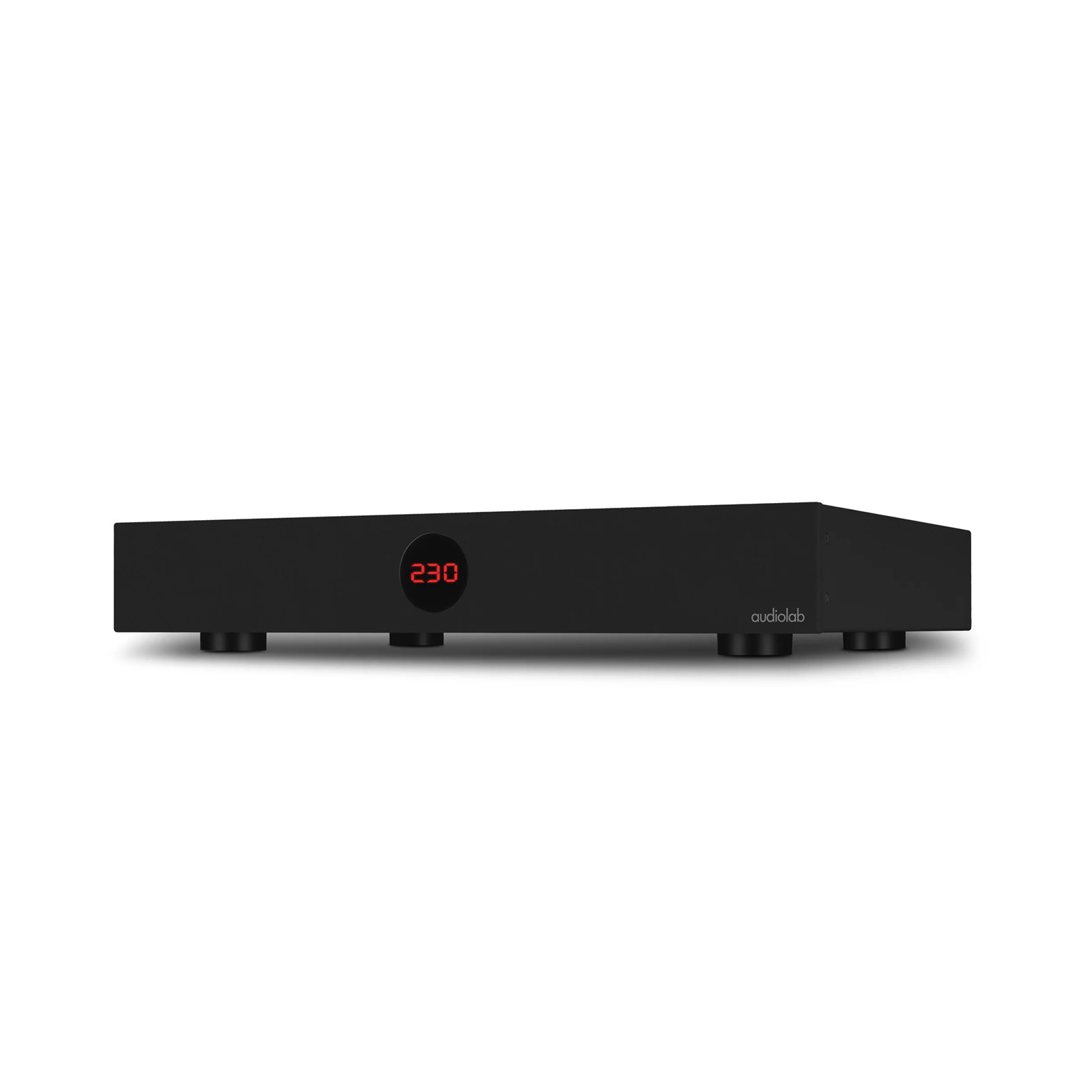
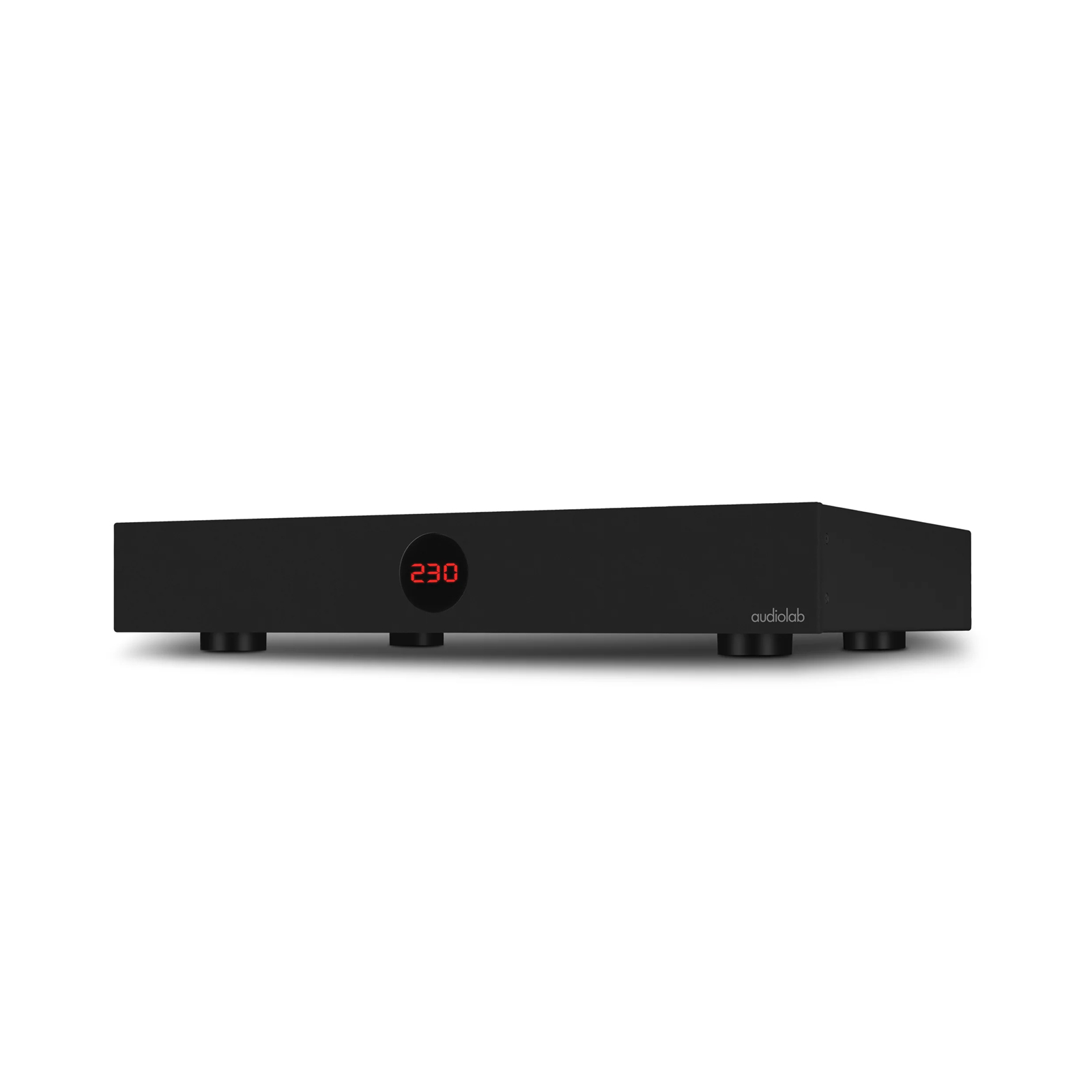
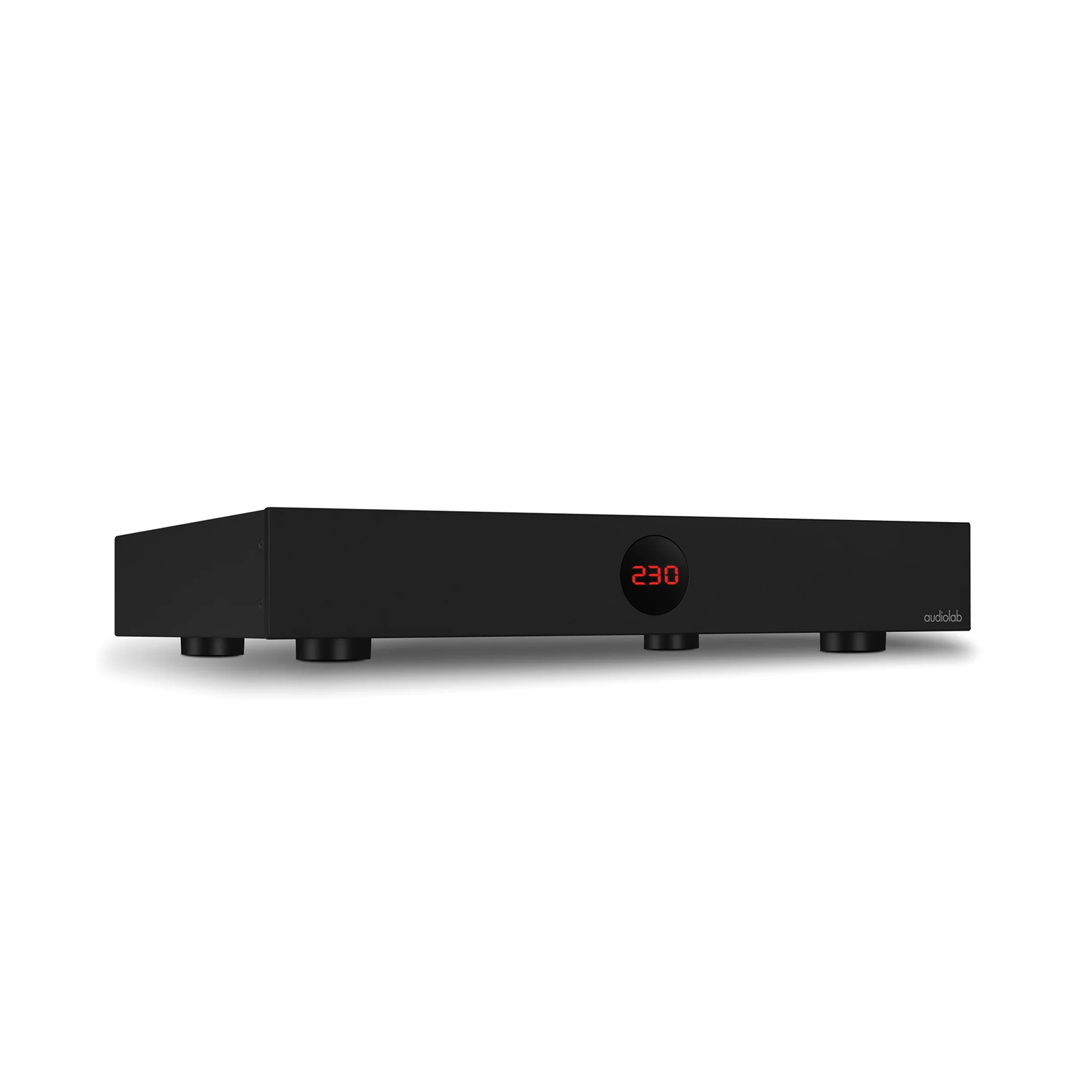
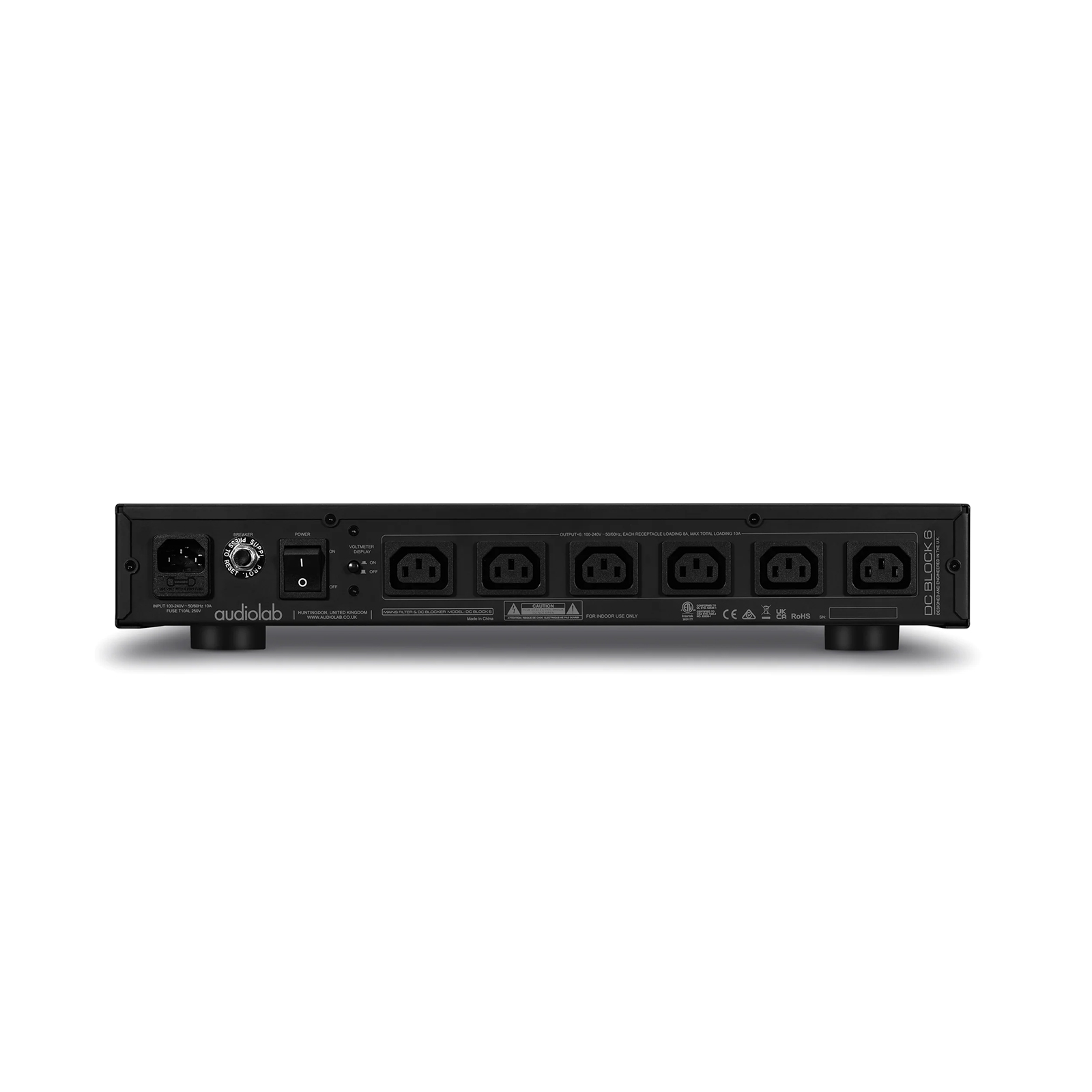
The DC Block 6 is the better answer. It does everything the single DC Block does — DC removal, common-mode and differential-mode RFI/EMI filtering — but in a rack-width chassis with six independent IEC outlets, one set of front-panel controls, and a box of IEC cables included so you can wire up the whole rack in an afternoon.
Four things that set the DC Block 6 apart from the single unit:
- Six independent outlets, DC blocking and filtering on every one. Every component plugged into the DC Block 6 sees the same clean, DC-free, RFI-filtered AC as if it had its own single DC Block in front of it.
- OLED front-panel voltmeter. Shows incoming line voltage on a simplified OLED display. Useful for spotting brownout conditions and catching utility-side voltage drift. The display can be switched off for discreet placement.
- Sized and styled to match a hi-fi rack. 17.4 inches wide (standard audiophile rack width) and 3.1 inches tall. Available in black or silver.
- Six IEC cables plus a mains cord in the box. No extra cable purchases to get running.
One practical number to remember: the DC Block 6 is rated for a total combined load of 10 amps, with each individual outlet rated to 8 amps. That’s enough to feed a typical integrated-amp-based system, a moderate stereo-separates system, or a reference two-channel rack.
Connections and Layout
- 6 × IEC C13 output outlets, independently wired, each with DC blocking and RFI/EMI filtering.
- 1 × IEC C14 mains input, single dedicated connection from your wall outlet.
- OLED front-panel voltmeter display showing incoming AC voltage. Display can be switched off.
- Includes a complete set of cables in the box: six IEC C14-to-C13 cables plus one mains power cord.
Frequently Asked Questions
Will the DC Block help my system?
The clearest signal that you have DC on the mains and will benefit audibly from a DC blocker is a mechanical hum coming from your amplifier’s chassis — a buzz you can hear when the room is quiet, even with the volume all the way down or the amp in standby. That’s the signature symptom. If your amp doesn’t hum and your system already sounds clean, the improvement will be more subtle — a small lift in dynamics and clarity from the RFI/EMI filtering alone. If your amp does hum, the DC Block can make that hum disappear entirely.
Which DC Block model should I buy?
If you have one big amplifier that hums and a modest rack of other gear, the single DC Block is the surgical, affordable answer. If you want to treat your entire system and replace an ordinary power strip with something purpose-built for audio, the DC Block 6 feeds up to six components from one rack-width chassis with DC removal and mains filtering on every outlet.
How does the IEC connection work?
Installation is straightforward: unplug your component’s power cable from the wall, plug the DC Block’s cable into the wall, and plug your component’s cable into the DC Block’s IEC outlet. No tools, no rewiring, no permanent installation.
Isn’t this just an expensive ferrite choke?
No. A ferrite bead filters high-frequency common-mode noise but does nothing about DC offset. The DC Block uses a dedicated DC-blocking circuit — essentially a pair of back-to-back capacitors with a bleeder network — that passes AC through unchanged while preventing any DC component from reaching your amplifier. The RFI/EMI filtering is a separate stage. If your amplifier is humming because of DC on the line, no amount of ferrite will solve it — you need the DC-blocking circuit.
What’s the warranty?
Audiolab backs the DC Block with a 3-year parts and labor warranty when you register your product, or a 1-year limited warranty without registration. Audio Advisor is an authorized Audiolab dealer, so your warranty is in place when you buy from us.
Why Buy the Audiolab DC Block 6 from Audio Advisor?
40+ Years of Expertise — Audio Advisor has helped over one million audiophiles build better-sounding systems since 1981.
60-Day Money-Back Guarantee — Listen in your own room, on your own system, for 60 days. If it’s not right, send it back.
Real Experts, Real Help — Our staff has decades of combined experience. Call us: 800-942-0220, weekdays 9am–6pm EST.
Free Shipping on orders over $49.
Flexible Payment Options — Affirm financing available at checkout.
Want to learn more about AC power and your audio system? Visit our Learning Center for guides, tips, and expert advice on power quality, system setup, and troubleshooting common hum and noise issues.