Free Shipping on US orders above $49


What You Need to Know
What the iPower Elite Is, and Why It Matters
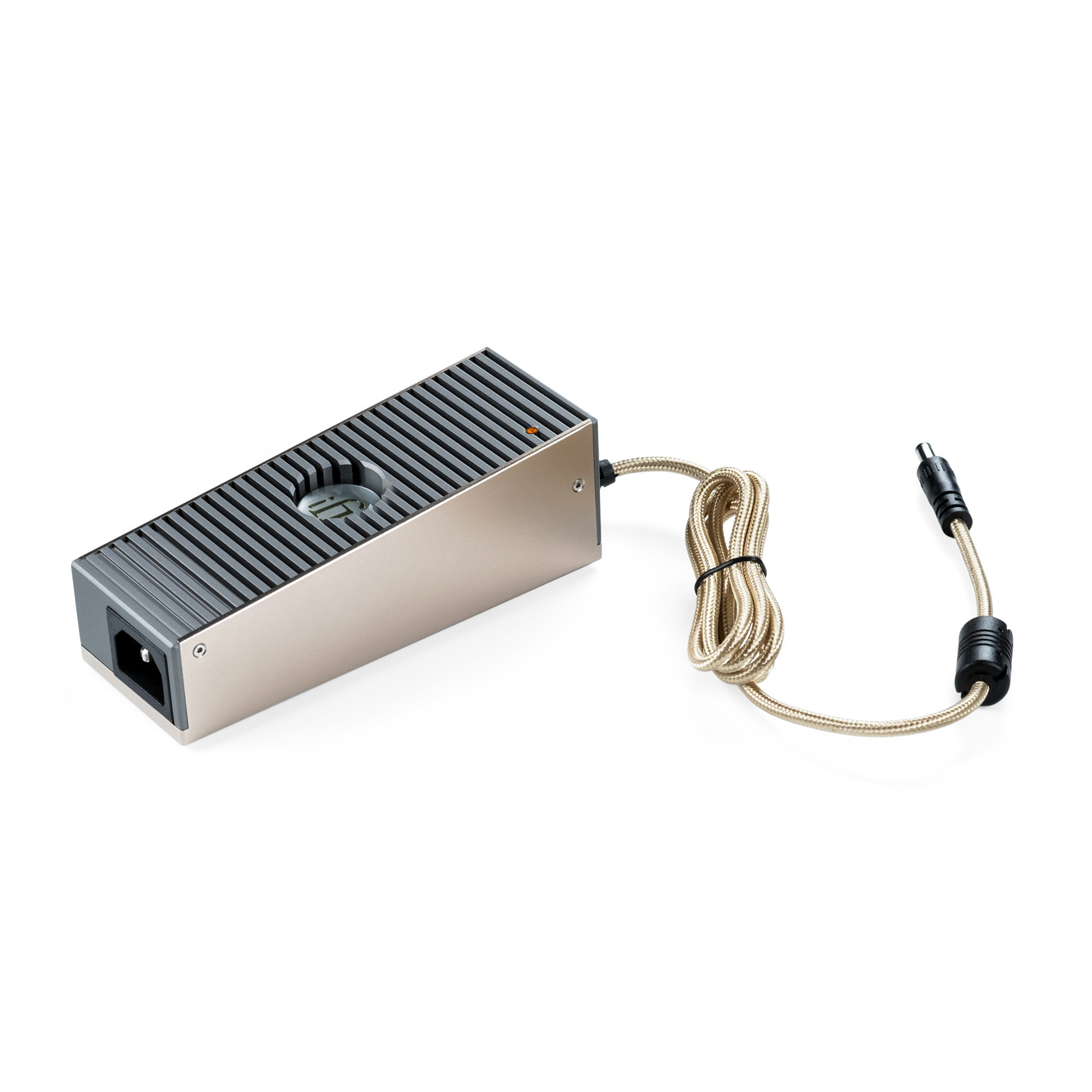
This is not an AC power conditioner. This is a DC power supply — the small box-on-a-cable that plugs into your wall and produces low-voltage DC current to feed a streamer, DAC, headphone amp, phono stage, or other small component. Almost every piece of “wall-wart”-powered audio gear ships with a generic switch-mode supply that costs the manufacturer a few dollars to source. Those generic supplies do their basic job — they convert AC into DC — but they do it noisily, with hash and ripple riding on top of the DC output that ends up directly inside your component’s power-supply rails.
The iPower Elite replaces that generic wall-wart with a much quieter one. It does the same job — AC in, DC out — but with iFi’s Active Noise Cancellation II circuit working continuously to push the noise floor down to roughly 1 microvolt. For comparison, a typical generic wall-wart sits around 1,000 microvolts (1 millivolt) of audio-band noise, and even a well-engineered audiophile linear power supply typically lands around 100 microvolts. The iPower Elite operates a thousand times quieter than the generic supply your component shipped with, and roughly a hundred times quieter than a typical audiophile linear supply.
What you hear when you swap a noisy supply for the iPower Elite is consistent across genres: a darker background, more low-level detail emerging from quiet passages, tighter and more controlled bass, and a sense that the music sits more clearly in space. In our experience, a good power conditioner or low-noise power supply will almost always noticeably improve the sound of any high-end audio system.
iFi describes the goal as “battery-quiet power without the hassle” — meaning you get the silence of a battery-powered component without the inconvenience of charging, swapping, or running down the battery during a long listening session. That description is fair. The iPower Elite isn’t quite as quiet as a freshly charged audiophile battery, but it gets close, and it never runs out.

What the 24-Volt iPower Elite Is For
24 volts is the highest voltage in the iPower Elite range — and it’s used for components that need more wattage than a 12V or 15V supply can deliver. The 24V iPower Elite supplies up to 2.5 amps, which works out to a continuous 60 watts of clean DC. Typical applications:
- Powered desktop monitor speakers — many small active monitors and powered nearfield speakers (Genelec, Adam, KEF LSX, certain JBL and Edifier models) take a 24V external supply. The iPower Elite gives them dramatically cleaner power than the bundled wall-wart.
- Larger headphone amplifiers — desktop amps with more output stages or balanced topologies that exceed what 15V can provide. Several Schiit, iFi, and high-current Class A desktop amplifiers fall into this category.
- Integrated streamer/amplifier products — small all-in-one units (some NAD, Bluesound, and dedicated streamer/amp combos) that take a 24V supply rather than running an internal AC transformer.
- High-current DACs and DAC/preamp combos — the larger, more elaborate desktop DACs whose internal rails benefit from the 60-watt headroom.
- Audiophile power-hungry network bridges and dedicated streamer hardware that specifies 24V input.
One practical note on the 24V version: because it’s the highest voltage in the line, it’s also the most damaging if accidentally connected to a lower-voltage device. Confirm your component’s voltage requirement before plugging in. A 24V supply connected to a 12V device will fry the device immediately. The Critical Compatibility section below covers this in detail; we mention it again here because it’s the most common cause of damaged-component returns specifically on the 24V variant.
The Technology Inside the iPower Elite
How Active Noise Cancellation II Works
The technology iFi calls Active Noise Cancellation II works on the same principle as the noise-cancelling headphones on a long flight. Inside the iPower Elite, a sensing circuit monitors the noise on the DC output in real time. A second circuit generates an inverse copy of that noise — same shape, opposite phase — and sums it back into the output. The two waveforms cancel each other where they meet, leaving a quieter signal than either passive filtering or simple regulation can deliver on its own.
This active cancellation handles low- and mid-frequency noise — the part of the spectrum where conventional filters struggle and where audible musical effects are most pronounced. Higher-frequency RF and EMI are handled by passive filter stages elsewhere in the iPower Elite’s circuit. The combination of active and passive noise reduction across the full audio-relevant bandwidth is what gets the iPower Elite’s noise floor down to that ~1 microvolt figure.
The other circuit improvements that contribute: a 60-watt high-performance adaptive multi-mode controller optimized for low standby power, a frequency-shuffling technique that smears EMI across a wider band rather than concentrating it at fixed switching harmonics, a 400% larger input capacitance reservoir than the iPower X (the step below it in the iFi line), an oversized power MOSFET, a low-leakage transformer, and an RF-aware PCB layout that keeps switching noise from radiating into adjacent traces.

Build, Chassis, and Heat Handling
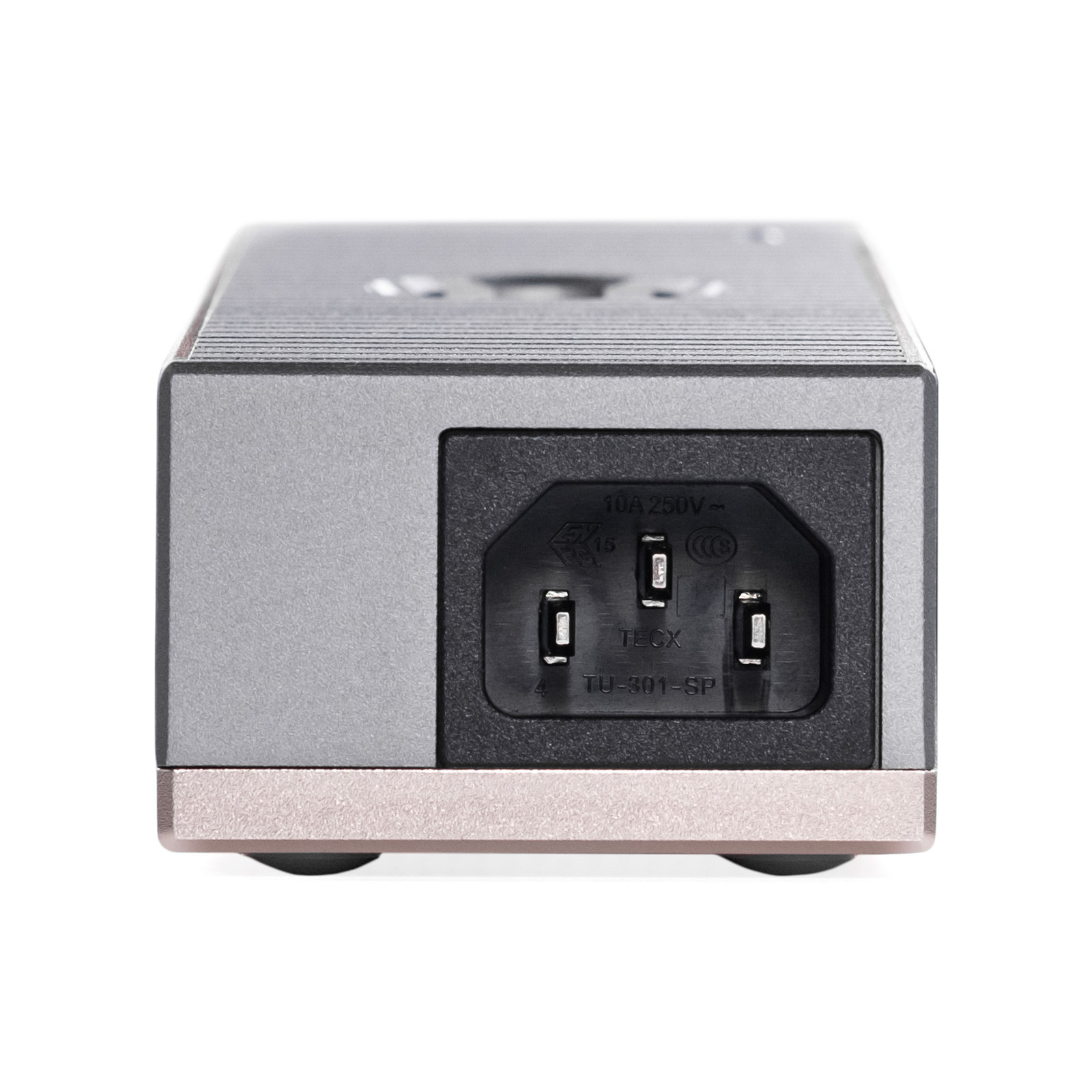
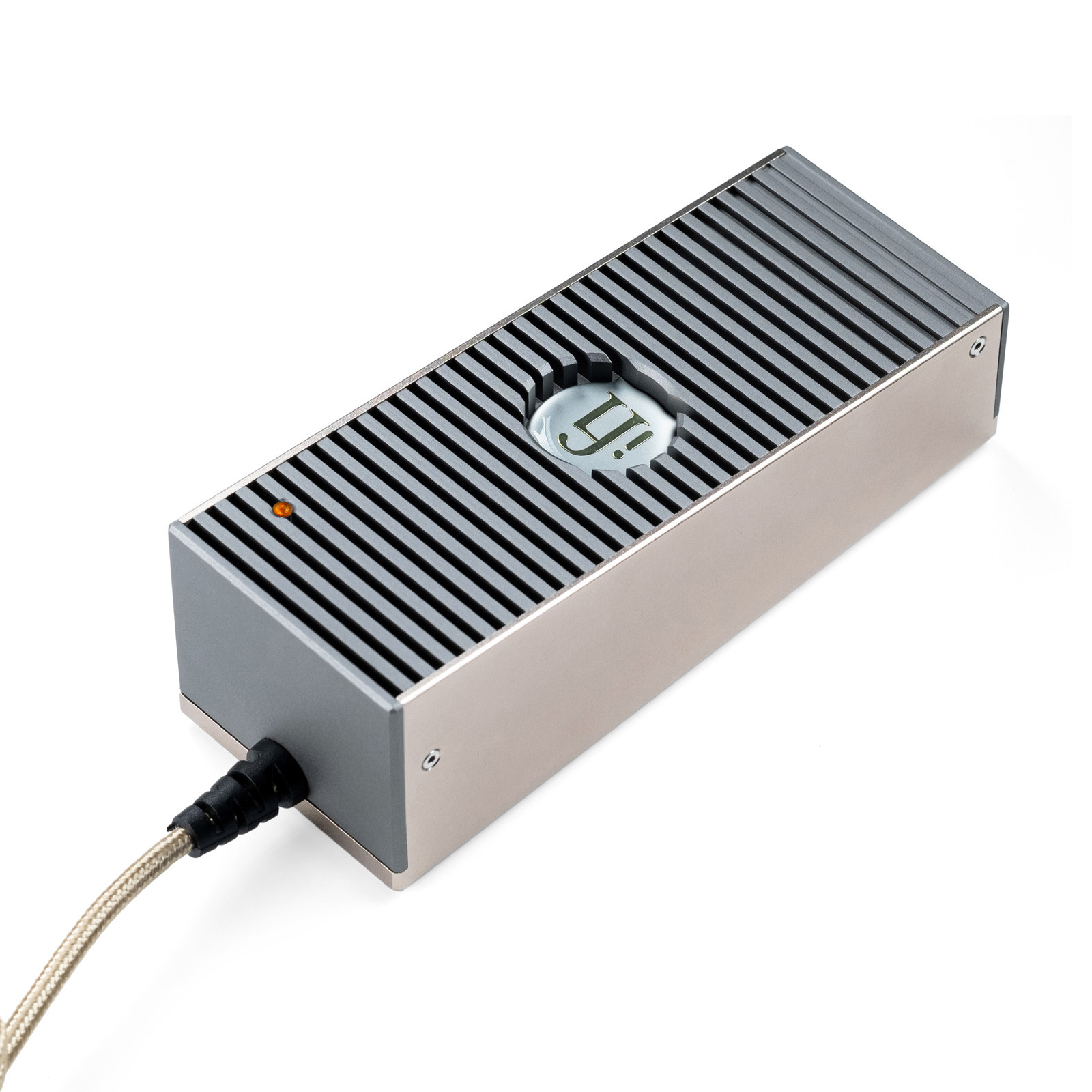
The iPower Elite ships in a single-piece extruded aircraft-grade aluminum chassis that doubles as a heatsink. At 5.8” × 2.2” × 1.3” and 1.2 pounds, it’s noticeably more substantial than a typical wall-wart but still small enough to tuck behind your equipment rack or beside the component it powers. The aluminum body shields the internal circuitry from external RF interference and dissipates the modest heat the supply generates during operation. There’s no fan, no exposed circuit board, no plastic shell.

See It Explained — iFi’s Overview Video
iFi’s own short overview of the iPower Elite, covering the design priorities and the differences versus a standard wall-wart:
Before You Buy
Critical: Matching the iPower Elite to Your Component
Before you buy, please verify three things about the component you intend to power:
- Voltage. Your component’s DC input requirement must match the iPower Elite voltage exactly. The iPower Elite is a fixed-voltage supply — there’s no switch or adjustment. Plugging a 24V supply into a 12V device will damage the component immediately. Check the label on your component, the spec sheet, or the original wall-wart for the correct voltage. If your component requires a voltage other than 5V, 12V, 15V, or 24V, the iPower Elite is not the right product.
- Current capacity. Your component’s current draw must not exceed the iPower Elite’s rating for that voltage. The 5V version supplies up to 5A, the 12V supplies up to 4A, the 15V supplies up to 3.5A, and the 24V supplies up to 2.5A. Any of these is generous for typical streamer/DAC/headphone-amp use, but verify against your component’s spec sheet, especially for higher-current devices like small-NUC streamers and powered USB hubs.
- Plug type and polarity. The iPower Elite ships with a 5.5 × 2.1mm center-positive plug. This is the most common DC plug type used in audio gear — most audiophile DACs, headphone amps, streamers, and phono stages designed for an external supply use exactly this connector. If your component uses a different plug size, an inexpensive DC barrel adapter from a parts supplier will solve it. If your component is center-negative (less common, but found in some pro-audio gear), you’ll need a polarity-reversing adapter. Plugging a center-positive supply into a center-negative jack — or vice versa — will damage your component. When in doubt, call us at 800-942-0220 before ordering and we’ll help you confirm compatibility.
None of this is unique to the iPower Elite — it applies to any aftermarket DC supply. We mention it here because it’s the single most common source of buyer confusion in this product category, and a $5 spec check before you order saves a $2,000 mistake after.
Frequently Asked Questions
Will swapping the wall-wart actually make a difference I can hear?
For most listeners on a moderately revealing system, yes — and often surprisingly so on the most sensitive components. The biggest gains tend to show up on streamers, network bridges, and small DACs whose internal power-supply rails are short and lightly filtered. On those components, the iPower Elite often produces a clearly quieter background and more detail in low-level musical content. On components with a robust internal linear supply (a higher-end DAC with its own toroidal transformer and well-regulated rails, for example), the difference is usually smaller. The iPower Elite has a 60-day return policy through Audio Advisor; if you can’t hear the improvement on your system, send it back.
How does this compare to a “linear power supply” (LPS)?
Linear power supplies are the traditional alternative to switch-mode wall-warts in audiophile circles — they use a heavy transformer plus passive regulation rather than the high-frequency switching topology of an SMPS. A good LPS typically lands around a 100-microvolt audio-band noise floor, which is much quieter than a generic wall-wart but still about 100 times noisier than the iPower Elite. The iPower Elite gets there by combining careful switch-mode design with active cancellation rather than relying on a heavy transformer alone. Result: lighter, smaller, more efficient, and quieter than a typical audiophile LPS in the same price range. There are higher-end dedicated LPS designs (R-core or choke-input topologies costing $500–$2,000+) that match or beat the iPower Elite on noise — but they cost considerably more, run warmer, and are bulkier.
Can I use one iPower Elite for multiple components?
No. The iPower Elite is designed to feed one component at a time through its single DC output cable. If you want to clean up the supplies on multiple components, you need a separate iPower Elite for each one (one per device, matched to that device’s voltage). This is the same way the original wall-wart worked — one supply, one component. If you’re upgrading a streamer + DAC + phono stage all at once, plan on three separate iPower Elites.
Does the iPower Elite run hot? Can I leave it on 24/7?
The iPower Elite runs warm to the touch under normal load — that’s the heatsink chassis doing its job. It is designed for continuous operation and is the kind of supply you set up once and leave running. If you’re powering a streamer or networked component that benefits from staying warm and stable (digital sources often sound their best after 15–30 minutes of warm-up), there’s no reason to turn the iPower Elite off between listening sessions.
What’s the warranty?
iFi backs the iPower Elite with a 12-month limited warranty from date of purchase. The warranty is only valid on units purchased from authorized iFi dealers. Audio Advisor is an authorized iFi dealer, so your warranty is in place when you buy from us.
Why Buy the iPower Elite from Audio Advisor?
40+ Years of Expertise — Audio Advisor has helped over one million audiophiles build better-sounding systems since 1981.
60-Day Money-Back Guarantee — Listen in your own room, on your own system, for 60 days. If it’s not right, send it back.
Real Experts, Real Help — Our staff has decades of combined experience. Call us: 800-942-0220, weekdays 9am–6pm EST.
Free Shipping on orders over $49.
Flexible Payment Options — Affirm financing available at checkout.
Want to learn more about clean power and your audio system? Visit our Learning Center for guides, tips, and expert advice on power-supply upgrades, troubleshooting noise issues, and building a quieter system.