 Free Shipping on US orders above $49









What You Need to Know
What Is This Cable and What Does It Do?
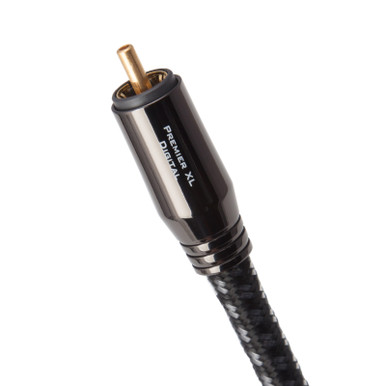
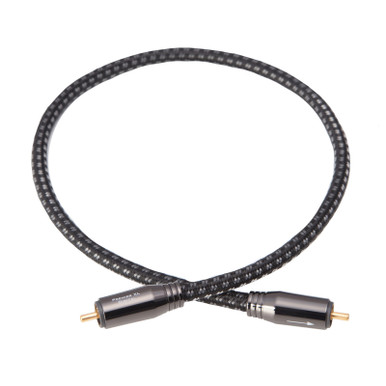
This is a coaxial digital cable. It carries a digital audio signal — not analog — from one component to another. One RCA plug goes into the digital output on your source. The other goes into the digital coaxial input on your DAC or AV receiver. RCA connectors are the round, single-pin plugs found on most home audio gear.
The format this cable carries is called S/PDIF — short for Sony/Philips Digital Interface. It is the most widely used standard for sending digital audio over a coaxial cable. CD players, disc transports, streamers, and many cable or satellite receivers all use it.
The Premier XL sits at the top of the Pangea coaxial cable family. It uses the best conductors and connectors Pangea builds into any of its digital cables.
What Makes This Cable Different?
The signal conductor is 18-gauge Cardas Grade One Copper with a 6% silver coating. Cardas Grade One Copper is drawn slowly and annealed — a heating and cooling process — to produce very pure, uniform copper. Pure copper carries a signal with less resistance and fewer interruptions than standard commercial wire.
The silver coating matters because of something called the skin effect. At high frequencies — like the ones used in digital audio — signals tend to travel along the outer surface of a conductor rather than through the middle. Silver is one of the best conductors on the planet. A thin layer on the outside of each wire puts the best material right where the signal travels.
Precision 75-ohm impedance is also built into the cable's construction. Impedance — measured in ohms — is a property of the cable that affects how a signal travels through it. The S/PDIF standard requires 75 ohms. When the cable's impedance matches the standard, the signal travels cleanly. A mismatch can cause tiny signal reflections that degrade the data arriving at your DAC.
Why Not Just Use a Regular RCA Cable?
This is a fair question. The plugs look the same. But a standard analog RCA interconnect is not built to 75-ohm impedance. Using one for a digital coaxial connection can cause impedance mismatches. Whether you hear a difference depends on your system and cable length — but using a cable built specifically for the job is the right approach.
Where Does This Cable Belong in Your System?
This cable goes between any device with a coaxial digital output and any device with a coaxial digital input. Common uses include connecting a CD or SACD transport to a standalone DAC, a streamer to a receiver, or a cable box to an AV receiver.
The 0.6-meter length — just under two feet — is ideal when your source and DAC sit close together on the same shelf or rack. Shorter cables have less surface area for outside interference to couple into. If your components are farther apart, this cable is also available in longer lengths.
This cable uses RCA connectors on both ends. It will not work with components that require BNC connectors without an adapter. If you are not sure which type your equipment uses, give us a call at 800-942-0220 and we will help you check.
Features & Specifications
Conductor
The signal conductor is 18-gauge Cardas Grade One Copper with a 6% silver coating. Cardas Grade One Copper goes through a slow-draw, annealing process that results in very pure, consistent copper for a clean signal path.
Impedance
The cable is built to a 75-ohm characteristic impedance. This matches the S/PDIF standard exactly. Proper impedance matching keeps the digital signal traveling cleanly from one end to the other, with no reflections bouncing back through the cable.
Connectors
Both ends use RCA connectors with gold-plated contacts. Gold does not corrode over time, so the connection stays clean and solid for years. The connector housings are solidly built for long-term reliability through regular use.
Available Lengths
The Premier XL Coaxial Digital Cable is available in multiple lengths. The 0.6-meter length on this page is the shortest option and the right choice when source and DAC sit close together. Longer lengths are available if you need more reach. As a general rule, use the shortest cable that comfortably fits your setup.
Quick-Reference Specifications
| Cable Type | Coaxial digital (S/PDIF), RCA to RCA |
| Signal Conductor | 18 AWG Cardas Grade One Copper with 6% silver coating |
| Characteristic Impedance | 75 ohms (S/PDIF standard) |
| Connectors | RCA both ends; gold-plated contacts |
| Length (this SKU) | 0.6 meter (~2 feet) |
Pairs Well With
Building your system? Here are the natural partners for a coaxial digital cable.
- CD & SACD Players and Transports — The most common source for a coaxial digital output. Browse CD & SACD Players at Audio Advisor.
- DACs (Digital-to-Analog Converters) — The destination for this cable. A DAC takes the digital signal and converts it to analog for your amplifier. Browse DACs at Audio Advisor.
- Streamers & Music Servers — Many streamers offer a coaxial digital output alongside USB and optical. Browse Music Streamers at Audio Advisor.
- Integrated Amplifiers with Built-In DACs — Many integrated amps include a coaxial digital input. Browse Integrated Amplifiers at Audio Advisor.
- AV Receivers — AV receivers use coaxial digital inputs for connecting disc players and cable boxes. Browse AV Receivers at Audio Advisor.
- Pangea Audio Premier XL USB Cable — If you also stream from a computer or laptop, Pangea's Premier XL USB cable uses the same Cardas Grade One Copper conductor philosophy. See the full Pangea Audio line.
- Pangea Audio AC-14XL MkII Power Cable — Upgrading the digital signal path pairs naturally with upgrading the AC power feeding your source components. See the full Pangea Audio line.
- Power Conditioners — Clean AC power helps every component in your system perform at its best. Browse Power Conditioners at Audio Advisor.
Frequently Asked Questions
What is a coaxial digital cable, and how is it different from a regular RCA cable?
A coaxial digital cable carries a digital audio signal using the S/PDIF standard. The plugs look the same as analog RCA connectors, but the cable inside is built to a specific 75-ohm impedance that analog RCA cables are not. Using an analog cable for a digital coaxial connection can cause impedance mismatches. Whether that affects performance depends on the system — but using a cable built for the job is always the right call.
What does 75-ohm impedance mean, and why does it matter?
Impedance is a property of a cable that affects how signals travel through it. Think of it like the diameter of a pipe — a mismatch between the pipe and what connects to it causes problems. S/PDIF digital audio requires a 75-ohm cable. When the impedance matches, the signal flows cleanly. When it doesn't, small reflections can occur inside the cable and affect the data reaching your DAC.
What is the skin effect, and why does the silver coating matter?
At high frequencies — including the frequencies used to carry digital audio — signals tend to travel along the outer surface of a conductor rather than through the center. This is called the skin effect. The Premier XL's 6% silver coating places an excellent conductor right at that outer surface. Silver has very low electrical resistance, which helps the signal travel smoothly.
What audio formats can a coaxial digital cable carry?
A coaxial S/PDIF cable can carry standard PCM audio up to 24-bit/192kHz stereo. It also carries standard Dolby Digital and DTS surround formats from a disc player or cable box to an AV receiver. It cannot carry lossless multi-channel formats like Dolby TrueHD or DTS-HD Master Audio — those require HDMI. For stereo and standard surround audio, coaxial digital is a reliable and widely supported standard.
How long a cable do I need?
Pick the shortest cable that comfortably reaches between your source and DAC or receiver without pulling tight. The 0.6-meter length is a great choice when both components sit on the same shelf. If they are farther apart — on different shelves or across a rack — a longer length will be the better fit. Give us a call at 800-942-0220 and we can help you figure out the right length.
Can I use this cable with optical (TOSLINK) inputs?
No. Coaxial digital and optical (TOSLINK) are both S/PDIF formats, but they use different connectors and different types of signal. Coaxial sends an electrical signal over a copper wire. Optical sends a light signal through a fiber cable. This Premier XL is a coaxial cable only. If your equipment only has optical inputs, you would need a TOSLINK cable instead.
How does this compare to a cheaper coaxial cable?
A basic coaxial cable is built to move a digital signal from point A to point B — and that is all. The Premier XL adds Cardas Grade One Copper conductors, a 6% silver coating, and precision 75-ohm construction. Those are verifiable, objective differences in materials and build. Whether they translate to an audible improvement in your specific system is something we cannot promise, and we won't. But the engineering is genuinely more rigorous.
Why Audio Advisor?
 40+ Years of Expertise — Since 1981, we’ve helped over a million music lovers find the right gear.
 60-Day Money-Back Guarantee — Take your time. Listen, enjoy, and make sure it’s right for you.
 Real Experts, Real Help — Our team is here to answer your questions at 800-942-0220, weekdays 9am–6pm EST.
 Free Shipping — On orders over $49, delivered to your door.
 Flexible Payment Options — Financing available so you can start listening now.
Want to learn more about digital audio connections and how to get the best from your source and DAC? Visit our Learning Center for easy guides, tips, and advice from our team.


