 Free Shipping on US orders above $49








What You Need to Know
What Is the X-P700, and What Does It Do?
A preamplifier is the control center of a separates-based hi-fi system. It takes all your sources — turntable, CD player, streamer, digital music files — and handles input selection, volume control, and signal routing before passing the result to a power amplifier, which drives your speakers. In a well-designed separates system, a good preamplifier can make a meaningful difference: it keeps the signal clean, provides proper gain staging, and gives you the flexibility to connect everything you own.
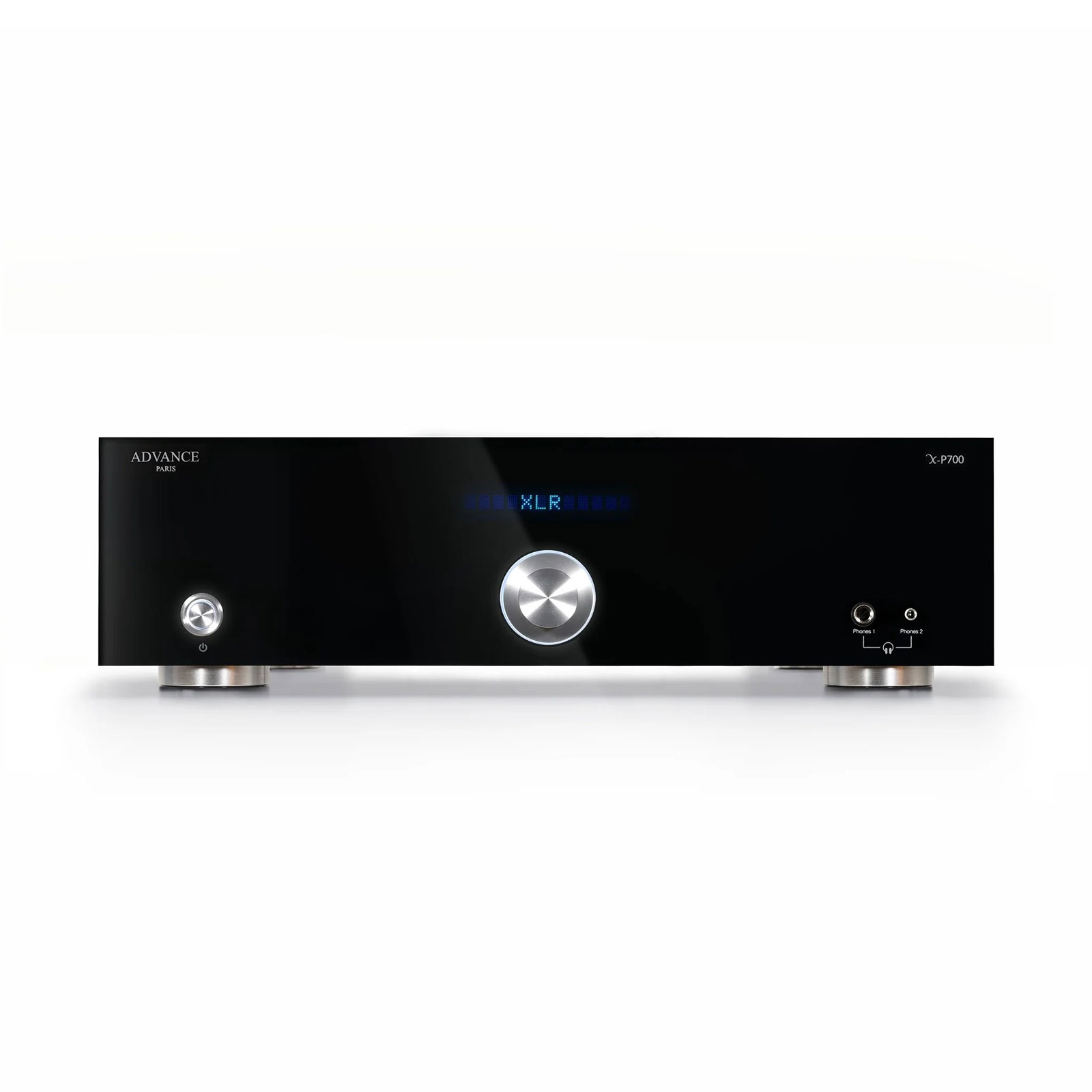
The Advance Paris X-P700 is Advance Paris’s flagship stereo preamplifier in the Classic Line, succeeding the X-P500. What makes it notable is how much it includes at its price point: a dual-mono architecture, a built-in Burr Brown DAC for digital sources, a full MM/MC phono stage for turntables, dual front-panel headphone outputs with independent gain adjustment, and a choice of two distinct amplification modes you can switch between based on your preference. That last feature — the ability to select between Class A and Discrete output modes — is genuinely rare in a preamplifier at any price.
Two Amplification Modes — One Preamplifier
The X-P700’s most distinctive engineering feature is its selectable output mode. Most preamplifiers use a fixed circuit topology — you get what you get. The X-P700 gives you a choice between two different approaches, and each has a meaningfully different character.
Class A Mode uses bipolars in a double-cascade circuit configuration. According to Advance Paris, this design is “close to a tube gradient” — meaning it aims to bring the warmth and natural character often associated with tube preamps into a solid-state design. If you like a full-bodied, smooth presentation, this mode is worth exploring.
Discrete Mode uses a JFET differential input stage and current mirror, biased in Class AB. This is a more traditional solid-state approach: precise, fast, and accurate. If you want transparency and neutrality above all else, this is the mode to start with.
You can switch between them to find what works best with your power amplifier and speakers. This kind of built-in flexibility is genuinely uncommon and adds meaningful long-term value as your system evolves.
Built for Complete Systems — Everything Connects
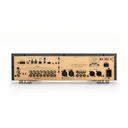
The X-P700 is designed to be the single preamplifier for a complete high-end system, and its connectivity reflects that ambition. On the analog side, there are nine inputs including one balanced XLR and a full MM/MC phono stage — so you can connect a turntable directly without needing a separate phono preamp. The phono stage supports both MM and MC cartridges, with adjustable gain (48dB or 64dB) and selectable capacitance (100pF, 200pF, or 320pF) for precise cartridge matching via rear-panel switches.
The digital section is equally comprehensive. A Burr Brown PCM1796 DAC — a 24-bit/192kHz converter well-regarded in audiophile circles — handles all digital inputs: two optical, one coaxial, one USB-B (using an XMOS XU208 asynchronous USB chip for computer audio), and one USB-A for playback directly from a flash drive. The USB-B input, in particular, makes the X-P700 a viable hub for a computer-based audio system.
Outputs are equally thoughtful. In addition to balanced XLR and unbalanced RCA main outputs, the X-P700 provides a high-pass output for bi-amp configurations, and two subwoofer outputs with a selectable crossover frequency of either 75Hz or 150Hz. According to Advance Paris, the 150Hz setting works well for smaller speakers, while 75Hz suits speakers capable of handling lower frequencies or subwoofers designed for deep bass.
The X-P700 also accepts the optional X-FTB01 (aptX) or X-FTB02 (aptX HD) Bluetooth modules via its proprietary expansion port, adding wireless streaming capability if desired.
What Do Reviewers Say?
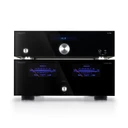
HomeTheaterHifi.com reviewed the X-P700 alongside the Advance Paris X-A160 EVO power amplifier in August 2025, using a range of sources including an Auralic Aries G1 streamer, PS Audio PerfectWave CD Transport, Eversolo DMP-A8 DAC/streamer, and a Music Hall Classic turntable connected to the phono input. The reviewer drove Revel Ultima Studio loudspeakers throughout. Overall assessment was strongly positive: the review praised the X-P700’s comprehensive connectivity, the above-average phono stage quality for the category, the flexibility of the Class A and Discrete output modes, and headphone performance described as “notably outperforming most other non-headphone-specific devices.” The review noted one limitation: Bluetooth is not built in and requires the optional X-FTB01/02 module as an additional purchase.
— HomeTheaterHifi.com, August 11, 2025
Who Is This Best For?
 You’re building a separates system and want a single preamplifier that handles analog sources, digital sources, a turntable, and headphones without compromise.
You own or plan to own a turntable with an MM or MC cartridge and don’t want to pay for a separate phono preamp on top of your preamplifier.
You want the flexibility to tune your system’s character — switching between Class A and Discrete modes to find the presentation that works best with your speakers and power amplifier.
You use the X-P700 with a subwoofer or subwoofers and need a preamplifier with integrated crossover management built in.
You listen seriously on headphones and want front-panel dual jacks with independent gain control — rather than the afterthought headphone outputs found on many preamps.
How Does It Connect to Your System?
The X-P700 is a preamplifier in a separates system — it requires a power amplifier to drive speakers. Keep that in mind if you’re coming from an integrated amplifier. Advance Paris pairs the X-P700 with their X-A160 EVO, X-A220 EVO, X-A600, and BX2 power amplifiers, but it works with any audiophile-grade power amplifier. The balanced XLR main output (4V) or unbalanced RCA main output (2V) feeds your power amplifier directly.
For subwoofer integration, connect a subwoofer to either of the two sub-out RCA outputs and set the crossover frequency to 75Hz or 150Hz from the menu. The high-pass output can feed a second power amplifier in a bi-amp configuration.
For Bluetooth wireless streaming, you’ll need to add the optional X-FTB01 (aptX) or X-FTB02 (aptX HD) Bluetooth module — it plugs into the proprietary expansion port on the rear panel. Bluetooth is not included standard.
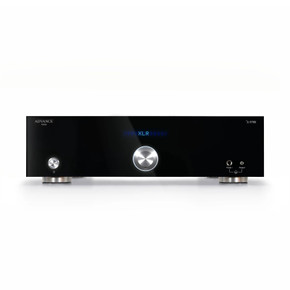
Control is handled by a single front-panel rotary knob (push to confirm selections), covering input switching, volume, tone adjustments, balance, and loudness compensation. A full-function remote control is included.
What’s in the Box
- Advance Paris X-P700 stereo preamplifier
- Remote control
- Power cable
- User documentation (available in French, English, and German)
Note: Interconnect cables and power amplifier are not included. Bluetooth module (X-FTB01 or X-FTB02) is optional and sold separately. Verify exact packing contents with manufacturer or Audio Advisor prior to purchase.
Pairs Well With
- Power Amplifiers — The X-P700 is designed to be paired with a dedicated power amplifier. Advance Paris recommends their own X-A160 EVO, X-A220 EVO, X-A600, and BX2 power amplifiers. Browse our power amplifier collection for options across brands and price points.
- Turntables — The X-P700’s built-in MM/MC phono stage is ready for a turntable right out of the box. Browse our turntable selection including cartridges compatible with both MM and MC inputs.
- The Advance Paris X-FTB02 Bluetooth Module — Add wireless aptX HD streaming to the X-P700 with the X-FTB02 plug-in module (sold separately). The X-FTB01 (aptX only) is also compatible.
- Loudspeakers — Building your separates system from the ground up? Explore our loudspeaker collection for bookshelf and floorstanding options across a wide range of budgets.
- Interconnect Cables — You’ll need balanced XLR or unbalanced RCA cables between the X-P700 and your power amplifier. Browse our interconnect cable selection.
Features & Specifications
Dual-Mono Architecture with Direct Path Signal Routing
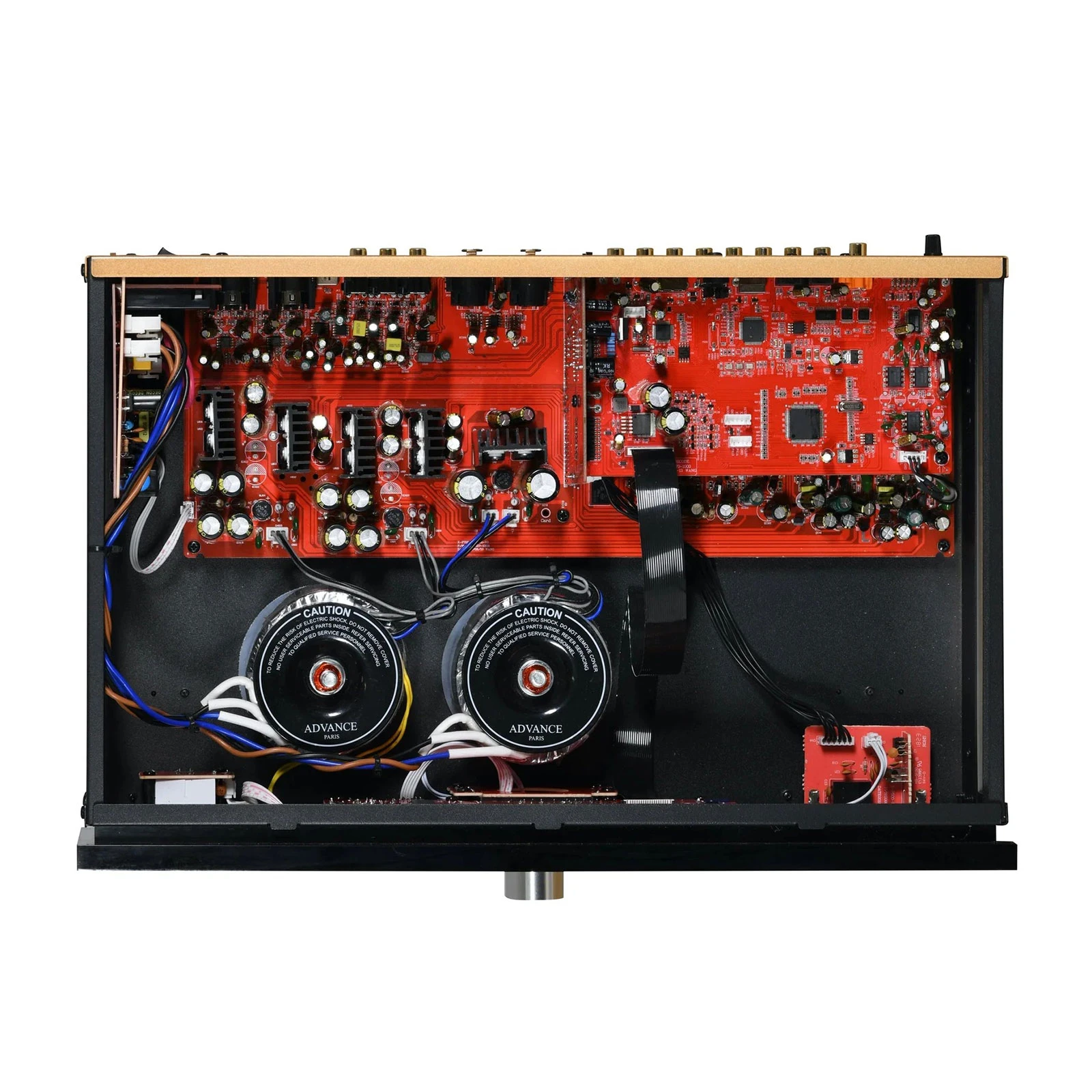
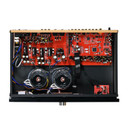
The X-P700 uses separate circuit boards, power supplies, and components for the left and right channels — a “dual-mono” layout that minimizes crosstalk (signal bleed between channels) and keeps the stereo image precise and well-separated. According to Advance Paris, the circuit also employs Direct Path design, keeping the signal route as short as possible to preserve detail.
Selectable Class A or Discrete Output Mode
You can choose between two amplification topologies. Class A mode uses bipolars in a double-cascade design that Advance Paris describes as “close to a tube gradient” — a warmer, fuller character. Discrete mode uses a JFET differential input and current mirror in Class AB for a more traditional, neutral solid-state presentation. Switch between them via the menu to find what works best with your system.
Burr Brown PCM1796 DAC — 24-Bit / 192kHz
All digital inputs route to a Burr Brown PCM1796 converter, a well-regarded 24-bit/192kHz DAC chip. Signal-to-noise ratio exceeds 103 dB (unbalanced) and 123 dB (balanced). The USB-B input uses an XMOS XU208 asynchronous processor for stable, jitter-resistant computer audio playback.
MM/MC Phono Stage with Adjustable Gain and Capacitance
The phono stage supports both MM (moving magnet) and MC (moving coil) cartridges. Adjustable gain of 48dB or 64dB lets you match a wide range of cartridges, and capacitance is selectable at 100pF, 200pF, or 320pF via rear-panel switches. MM input sensitivity is 2.5mV. According to the HomeTheaterHifi.com review (August 2025), this phono stage “ranks above average for its category.”
Comprehensive Input Connectivity
Nine analog inputs include one balanced XLR, seven unbalanced RCA, and one MM/MC phono. Four digital inputs: two optical Toslink, one coaxial RCA, one USB-B (XMOS), and one USB-A for direct flash drive playback. A proprietary expansion port accepts the optional X-FTB01 or X-FTB02 Bluetooth module.
Flexible Output Section with Subwoofer Integration
Main outputs: balanced XLR (4V) and unbalanced RCA (2V). Additional outputs: one high-pass RCA for bi-amp configurations, and two subwoofer RCA outputs with selectable crossover frequency (75Hz or 150Hz). According to Advance Paris, the 75Hz setting works best with speakers that can handle lower frequencies, while 150Hz suits smaller speakers or subwoofers with limited extension.
Dual Front-Panel Headphone Outputs with Independent Gain Control
Two front-mounted headphone jacks — a 6.35mm and a 3.5mm — each with independently adjustable gain (+6, 0, or -4 dB) and switchable output impedance (0 or 100 ohms). The 0-ohm setting suits low-impedance headphones; 100 ohms adds damping for headphones that benefit from a higher output impedance. According to the HomeTheaterHifi.com review (August 2025), headphone performance “notably outperformed most non-headphone-specific devices.”
Dual Toroidal Power Transformers
Two high-capacity toroidal transformers feed separate, regulated dual-mono power supplies. Toroidal transformers are preferred in audio equipment for their low magnetic interference and efficient power delivery. The dual-mono power supply ensures the left and right channel circuits operate independently all the way from the wall.
Tone Controls with Bypass, Balance, Loudness
Bass and treble tone controls are available for system matching, with a bypass option that removes them from the signal path entirely when preferred. Balance and loudness compensation are also available. A single rotary knob with push-button confirmation controls all functions; a full-function remote control is included.
Quick-Reference Specifications
| Output Level — Unbalanced | 2V (RCA) |
| Output Level — Balanced | 4V (XLR) |
| Frequency Response | 20 Hz – 45 kHz (±3 dB) |
| THD | <0.007% |
| Input Impedance | 47 kΩ |
| Channel Separation | >80 dB (unbalanced) / >130 dB (balanced) |
| DAC | Burr Brown PCM1796, 24-bit / 192 kHz |
| DAC S/N Ratio | >103 dB (unbalanced) / >123 dB (balanced) |
| USB-B Processor | XMOS XU208-128 (asynchronous) |
| Phono Input (MM) | 2.5 mV; gain 48 dB or 64 dB; capacitance 100P / 200P / 320P (pF) |
| Analog Inputs | 9 total: 1× balanced XLR, 7× unbalanced RCA, 1× MM/MC phono |
| Digital Inputs | 2× optical Toslink, 1× coaxial RCA, 1× USB-B (XMOS), 1× USB-A |
| Main Outputs | 1× balanced XLR pair, 1× unbalanced RCA pair |
| Additional Outputs | 1× high-pass RCA, 2× subwoofer RCA (crossover 75 Hz or 150 Hz selectable) |
| Headphone Outputs | 2× front-panel: 6.35mm + 3.5mm; independent gain (+6 / 0 / −4 dB) and impedance (0Ω or 100Ω) per jack |
| Output Modes | Class A (bipolar double-cascade) or Discrete (JFET differential, Class AB) — selectable |
| Power Supply | Dual high-capacity toroidal transformers, dual-mono regulated |
| AC Input | 115V or 230V; max 30W |
| Dimensions (H × W × D) | 12 cm × 43 cm × 28 cm (4.7” × 16.9” × 11.0”) |
| Net Weight | 6.7 kg (14.8 lbs) |
| Front Panel | 10mm black methacrylate; single rotary knob with push-button |
| Remote Control | Included |
Frequently Asked Questions
Frequently Asked Questions
What is a preamplifier, and do I need one?
A preamplifier is the signal routing and control center in a separates-based hi-fi system. It takes all your sources — turntable, CD player, streamer, digital files — selects between them, controls the volume, and sends the signal to a power amplifier, which drives your speakers. You need a preamplifier if you’re building a separates system (separate preamp and power amp). If you have an integrated amplifier, that already includes both a preamp and power amp in one box.
What is the difference between Class A and Discrete mode?
Class A mode uses bipolars in a double-cascade circuit that Advance Paris describes as having a character “close to a tube gradient” — warmer, smoother, and more full-bodied. Discrete mode uses a JFET differential input with a current mirror, biased in Class AB: more neutral, precise, and traditional solid-state in character. Both are genuinely different-sounding approaches. The ability to switch between them is unusual for a preamplifier at this price point, and it means you can tune the X-P700’s character to match your power amplifier and speakers.
Can I connect a turntable directly to the X-P700?
Yes. The X-P700 includes a full MM/MC phono stage, so you can plug a turntable directly into the dedicated phono input without needing a separate phono preamplifier. It supports both MM (moving magnet) and MC (moving coil) cartridges, with selectable gain (48dB or 64dB) and capacitance settings (100pF, 200pF, or 320pF) via rear-panel switches for precise cartridge matching.
Does the X-P700 work with a subwoofer?
Yes, and the subwoofer integration is quite well thought-out. There are two dedicated subwoofer RCA outputs with a built-in crossover — selectable at 75Hz or 150Hz from the menu. The 75Hz setting is generally better for subwoofers designed for deep bass extension; 150Hz works better for smaller speakers that roll off above 100Hz or for subwoofers with limited low-frequency reach. There’s also a high-pass output for driving a second power amplifier in a bi-amp configuration.
Does the X-P700 include Bluetooth?
Not built in, but it’s available as an option. The X-P700 has a proprietary Bluetooth expansion port on the rear panel that accepts the Advance Paris X-FTB01 (aptX) or X-FTB02 (aptX HD) Bluetooth modules, sold separately. This was noted as a drawback in the HomeTheaterHifi.com review (August 2025), which felt it would have added versatility if included as standard. If wireless streaming is important to you, factor in the additional cost of the module.
What digital sources can I connect?
The X-P700 accepts four types of digital input: two optical Toslink (for CD players, streamers, or televisions with optical out), one coaxial RCA (for CD players and streamers), one USB-B using an XMOS XU208 asynchronous processor (for direct connection to a computer or dedicated streaming device), and one USB-A for playback directly from a USB flash drive or storage device. All digital inputs route to the built-in Burr Brown PCM1796 DAC.
How does the dual headphone output work?
The X-P700 has two front-panel headphone jacks — a 6.35mm (standard quarter-inch) and a 3.5mm (mini jack). Each jack has its own independently adjustable gain (+6, 0, or -4dB) and switchable output impedance (0 ohms or 100 ohms). The 0-ohm setting drives low-impedance headphones directly with maximum control. The 100-ohm setting suits some headphones that sound better with a bit of output impedance — a characteristic more common with tube headphone amplifiers. The HomeTheaterHifi.com review (August 2025) rated X-P700 headphone performance as notably strong for a non-headphone-specific device.
What power amplifiers pair well with the X-P700?
Advance Paris recommends their own X-A160 EVO, X-A220 EVO, X-A600, and BX2 power amplifiers as natural partners. The X-P700 was reviewed alongside the X-A160 EVO by HomeTheaterHifi.com in August 2025. That said, the X-P700’s balanced XLR output makes it compatible with virtually any audiophile-grade power amplifier. If you’d like help matching it to a power amp, give us a call at 800-942-0220 and we’ll help you find a good match.
Why Buy from Audio Advisor?
 40+ Years of Expertise — Since 1981, we’ve helped over a million music lovers find the right gear.
 60-Day Money-Back Guarantee — Take your time. Listen, enjoy, and make sure it’s right for you.
 Real Experts, Real Help — Our team is here to answer your questions at 800-942-0220, weekdays 9am–6pm EST.
 Free Shipping — On orders over $49, delivered to your door.
 Flexible Payment Options — Financing available so you can start listening now.
Want to learn more about building a separates-based hi-fi system or choosing a preamplifier? Visit our Learning Center for guides, tips, and expert advice.


