Free Shipping on US orders above $49






What You Need to Know
What Is a Tube Buffer — and Why Would You Want One?
A tube buffer is one of the simplest and most elegant components in audio. It sits between your source (a DAC, streamer, CD player, or turntable with phono preamp) and your amplifier. It doesn't amplify the signal — the gain is just 1 dB, which is essentially unity. What it does is condition the signal by passing it through a vacuum tube circuit before it reaches your amp.
Why does that matter? Two reasons. First, tubes produce even-order harmonics — the same kind of harmonics that acoustic instruments generate naturally. This gives the sound a subtle warmth and body that many listeners find more engaging and more musical, especially with digital sources that can sometimes feel a bit lean or clinical. Second, a tube buffer acts as an impedance-matching stage. It presents a very high input impedance (470,000 ohms) to your source and a very low output impedance (under 33 ohms) to your amplifier, which means it makes the electrical handoff between components cleaner and more efficient. The result is often a smoother, more open presentation — even before you consider the tube character.
The Legacy: Nearly 50,000 Sold
Musical Fidelity isn't new to tube buffers. The original X-10D tube buffer, launched in the 1990s, became one of the most popular audio accessories ever made. Musical Fidelity sold nearly 50,000 units worldwide. The X-10D earned a loyal following because it worked — it was simple, affordable, and made digital sources sound noticeably more musical without adding complexity to the system. The X-Tube is the modern successor, built into a newly redesigned X-profile aluminum chassis with an internal power supply (the original required an external wall-wart power supply).
How It Works
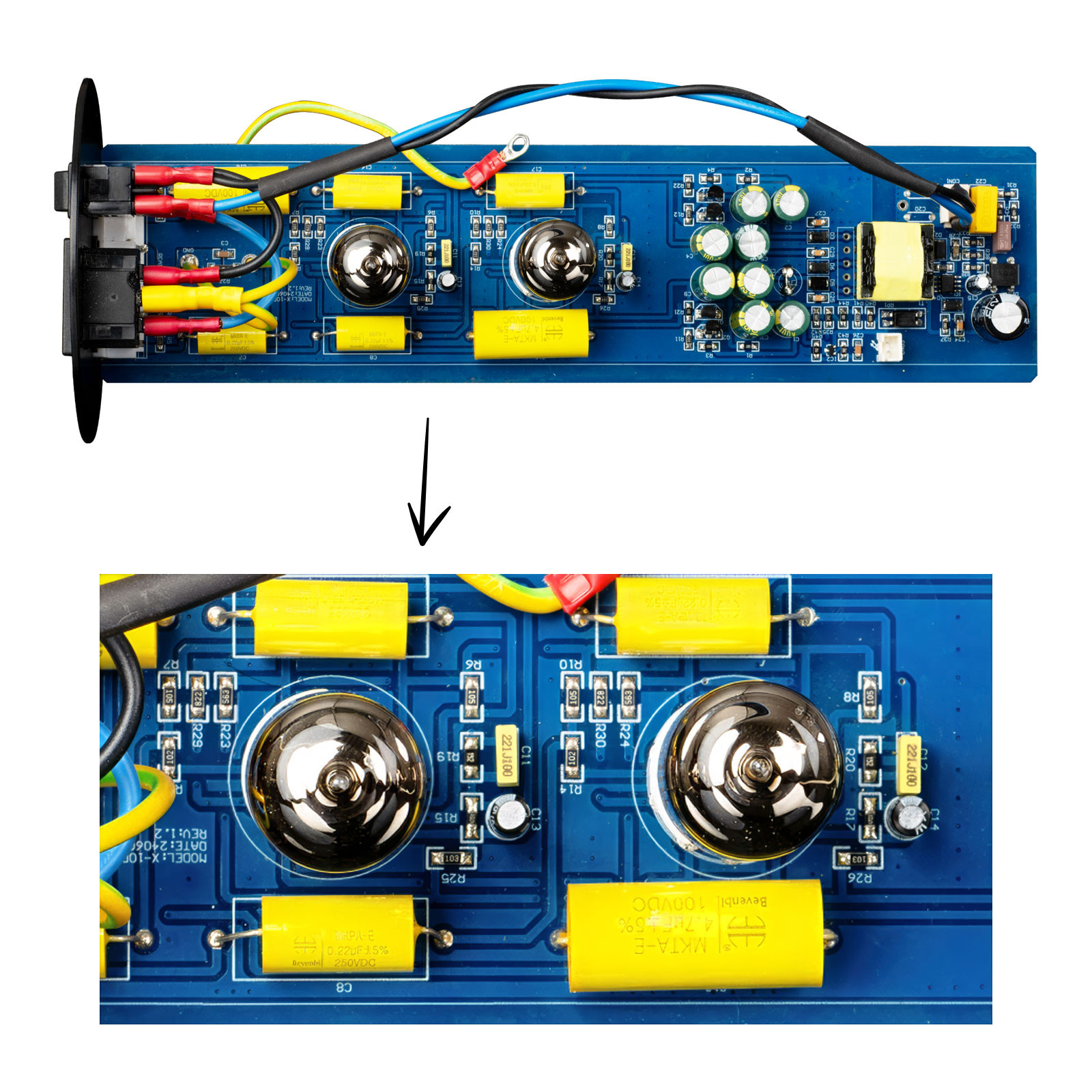
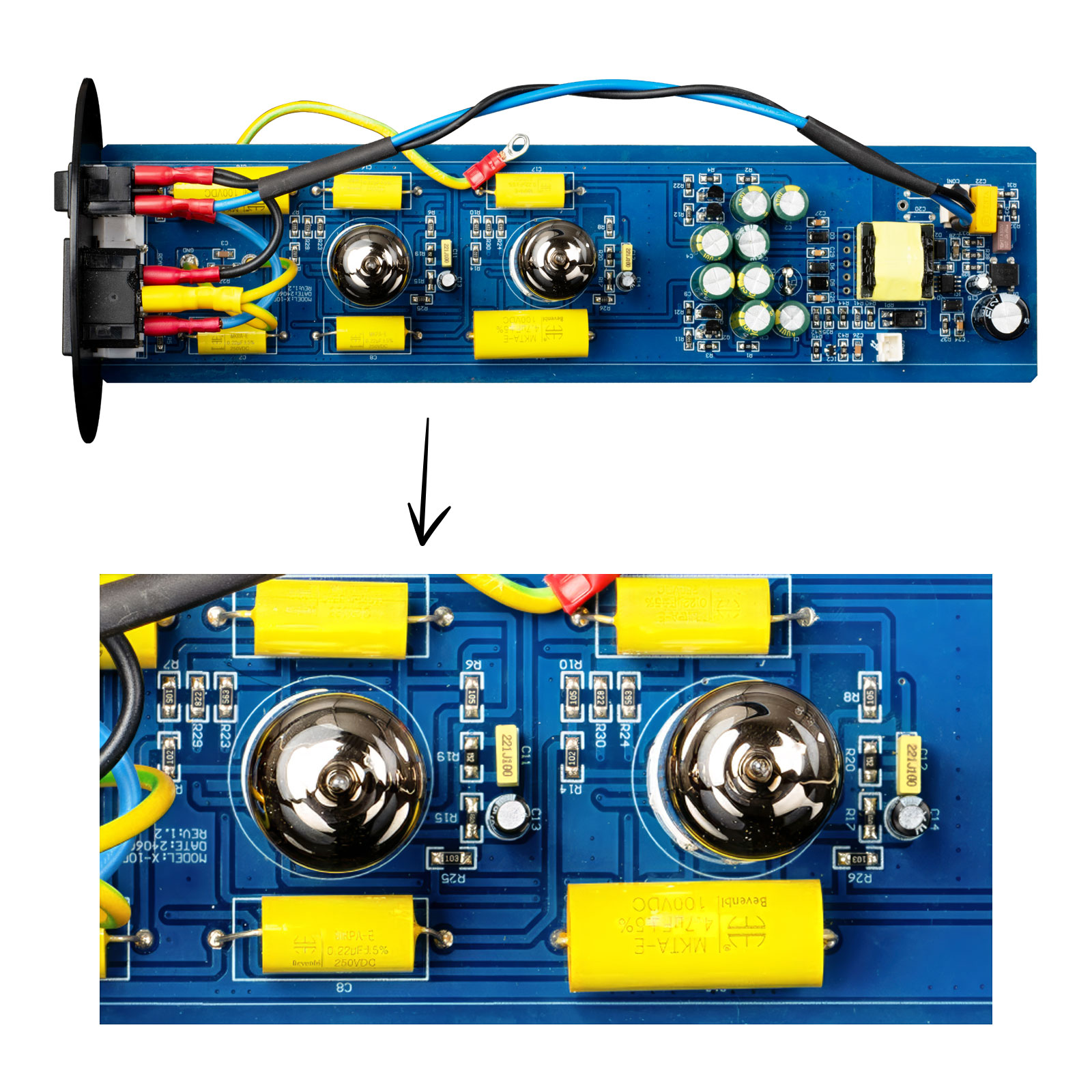
Inside the X-Tube are two 6922/E88CC triode tubes running in pure Class A. Class A means the tube is always conducting — it doesn't switch on and off with the signal — which is the simplest and most linear way to amplify (or in this case, buffer) an audio signal. Both tubes process the full stereo signal in a single-ended configuration. The circuit is designed to preserve every detail of the input signal while adding only the subtle harmonic character that tubes naturally produce.
Musical Fidelity's measurements back this up: distortion is below 0.003% across the full audible range, the signal-to-noise ratio exceeds 96 dB, and the frequency response extends from 20 Hz to 80 kHz with less than 0.3 dB of deviation. In practical terms, the X-Tube adds tube character without adding audible noise, distortion, or frequency response changes. What you hear is the harmonic richness — not artifacts.
Who Is the X-Tube Best For?
- You love your current system but find digital sources occasionally sound a bit thin, clinical, or fatiguing — and you want to add a touch of warmth without replacing any components.
- You're curious about tube sound but don't want to commit to a full tube amplifier. The X-Tube lets you dip your toes in for $599.
- You have a budget DAC or streamer (like a WiiM or Eversolo) that sounds great for the money but could use a bit more body and midrange richness.
- You run a home theater system and want to elevate the front left/right channels for serious stereo music listening by placing the X-Tube between your receiver's preamp outputs and a dedicated stereo power amp.
- You have a system where the source and amplifier don't play well together electrically — the X-Tube's impedance-buffering capability can resolve impedance mismatches that cause brightness, thinness, or loss of bass.
How Does It Connect?
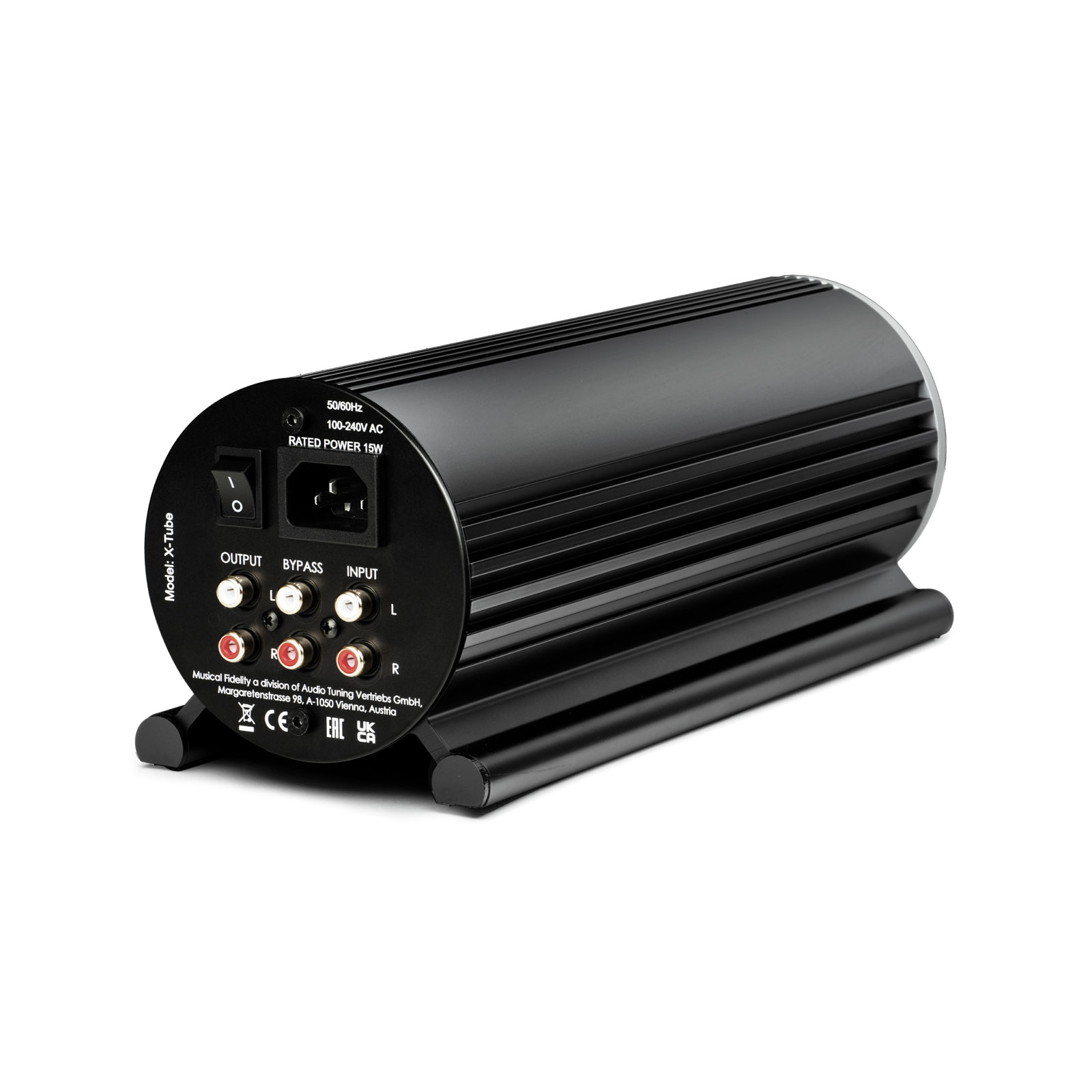
Setup couldn't be simpler. The X-Tube has three RCA jacks on the back:
- Input (RCA) — Connect the output of your source component (DAC, streamer, CD player, phono preamp) here.
- Output (RCA) — Connect this to the input of your integrated amplifier or power amplifier.
- Bypass (RCA) — A direct pass-through that skips the tube circuit entirely. Useful for A/B comparison or if you want to leave the X-Tube in the chain but bypass the tube processing.
Power comes from a standard IEC inlet on the back — the same kind of power cord your amplifier uses. No external power supply, no wall wart, no clutter. The X-Tube accepts 100–230V AC at 50/60 Hz, so it works anywhere in the world.
One important note: the X-Tube is a single-ended (RCA) device only. It does not have balanced XLR connections. If your source and amplifier use balanced connections, you'll need RCA-to-XLR adapters or a system path that includes RCA stages. If you're not sure how the X-Tube fits into your specific setup, give us a call — we can walk you through it.
What the Critics Are Saying
Stereophile — Sam Tellig — Review of the Original X-10v3 Predecessor
While this review covers the earlier X-10v3 model (not the current X-Tube), Stereophile's Sam Tellig explored the concept of the Musical Fidelity tube buffer at length, helping establish the product category. The X-Tube is the direct modern successor to that design, updated with a new chassis and internal power supply.
Pairs Well With
The X-Tube works with virtually any source-to-amplifier connection. Here are some popular pairings.
- DACs & Streamers — Place the X-Tube between your DAC's RCA output and your amplifier for a warmer, more musical presentation. Browse our Streamers & DACs.
- Integrated Amplifiers — The X-Tube pairs naturally with any integrated amp that has RCA inputs. Browse our Integrated Amplifiers.
- CD Players — Digital sources are where the X-Tube's tube warmth makes the most noticeable difference. Browse our CD Players.
- RCA Interconnects — You'll need two pairs of RCA cables — one from your source to the X-Tube, and one from the X-Tube to your amp. Browse our RCA Interconnects.
- Turntables & Phono Preamps — Place the X-Tube after your phono preamp (not directly after the turntable) for a richer vinyl experience. Browse our Turntables.
Features & Specifications
Audio Performance
- Pure Class A Triode Circuit — Two 6922/E88CC triode tubes running in Class A, the simplest and most linear amplifier topology. Class A circuits are always on — no crossover distortion, no switching artifacts — just smooth, continuous signal processing.
- Even-Order Harmonic Enrichment — Vacuum tubes naturally emphasize even-order harmonics, the same harmonic overtones produced by acoustic instruments. This is the quality that gives tube equipment its signature warmth, body, and musical naturalness.
- Virtually Transparent Measurements — THD below 0.003% across the full audible band, SNR exceeding 96 dB, and frequency response from 20 Hz to 80 kHz. The X-Tube adds harmonic character without adding measurable noise or frequency coloration.
- Impedance Optimization — 470kΩ input impedance means the X-Tube places almost no load on your source. Under 33Ω output impedance means it drives your amplifier's input with ease, regardless of cable length. This clean impedance handoff often improves clarity and bass definition even in systems that don't obviously need a tube buffer.
Design & Build
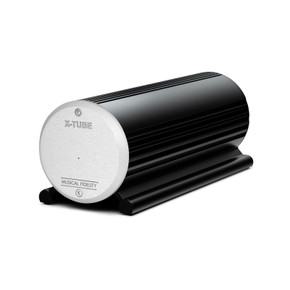
- One-Piece Aluminum Extrusion Chassis — The X-profile cabinet is machined from a single piece of aluminum, providing EMI shielding that protects the sensitive tube circuit from external interference. The brushed aluminum faceplate adds a clean, premium look.
- Internal Power Supply — A direct IEC mains input accepts 100–230V worldwide. No external power supply or wall wart — a significant upgrade over the original X-10D.
- Bypass Output — A dedicated bypass RCA allows you to compare tube-buffered sound to direct pass-through without disconnecting cables.
- Compact Footprint — At just 4.25" wide, 4.13" tall, and 10.8" deep, the X-Tube fits easily on a shelf or behind other components. It weighs just over 5 pounds.
Quick-Reference Specifications
| Circuit Type | Pure Class A triode tube output buffer |
| Tubes | 2× 6922/E88CC triodes (single-ended) |
| Gain | 1 dB (unity) |
| Frequency Response | 20 Hz – 80 kHz (+0, –0.3 dB) |
| THD | <0.003% (10 Hz – 20 kHz) |
| Signal-to-Noise Ratio | >96 dB (unweighted, ref. full output) |
| Crosstalk | >95 dB (20 Hz – 20 kHz) |
| Input Impedance | 470 kΩ |
| Output Impedance | <33 Ω |
| Input | 1× RCA (stereo pair) |
| Output | 1× RCA (stereo pair) |
| Bypass | 1× RCA (stereo pair, direct pass-through) |
| Mains Input | AC 100–230 V, 50/60 Hz, IEC C14 socket |
| Standby Consumption | <0.25 W |
| Width × Height × Depth | 108 × 105 × 274 mm (4.25" × 4.13" × 10.8") |
| Weight | 2.29 kg (5.05 lbs) |
| Shipping Weight | 2.58 kg (5.7 lbs) |
Frequently Asked Questions
Will the X-Tube change the sound of my system?
Yes, but subtly. The X-Tube adds a touch of harmonic richness and body associated with vacuum tubes. Most listeners describe the effect as a warmer, smoother, more engaging presentation — especially with digital sources. It doesn't dramatically alter the tonal balance or mask detail. Think of it as softening the edges without blurring the picture. Whether you prefer the sound with or without the buffer is a matter of personal taste, which is exactly why Audio Advisor offers a 60-day money-back guarantee.
Where do I put the X-Tube in my system?
Between your source component and your amplifier. For example: DAC → X-Tube → Integrated Amplifier. Or: CD Player → X-Tube → Preamplifier. If you're using a turntable, the X-Tube goes after your phono preamp (or after your turntable's built-in phono stage), not directly between the turntable and a separate phono preamp. The X-Tube handles line-level signals only.
Does the X-Tube work with balanced (XLR) connections?
No. The X-Tube is a single-ended design with RCA inputs and outputs only. If your source or amplifier uses XLR connections exclusively, you would need RCA-to-XLR adapters or a different signal path that includes RCA stages. If you're not sure how to make it work with your gear, call us at 800-942-0220 and we'll help you figure it out.
What kind of tubes does it use, and can I swap them?
The X-Tube uses two 6922/E88CC dual-triode tubes. These are common, widely available tubes with a huge variety of new-production and vintage options. Tube rolling — swapping in different brands or vintages of 6922/E88CC to fine-tune the sound — is one of the pleasures of owning tube equipment. Compatible tube types include 6922, E88CC, 6DJ8, and ECC88. Check with the tube supplier for compatibility before installing non-standard variants.
Does the X-Tube need an external power supply?
No. Unlike the original X-10D (which used an external wall-wart power supply), the X-Tube has a built-in power supply with a standard IEC inlet — the same kind of power cord your amplifier uses. It accepts 100–230V AC, so it works anywhere in the world without a voltage converter.
What does the bypass output do?
The bypass output sends the signal through the X-Tube's chassis without passing through the tube circuit. This lets you compare tube-buffered sound to unbuffered sound by simply switching which output your amplifier is connected to — without disconnecting any cables. It's a convenient way to hear exactly what the X-Tube is contributing to your system.
Will the X-Tube add noise or hum to my system?
Under normal conditions, no. Musical Fidelity specifies a signal-to-noise ratio exceeding 96 dB, which is very quiet. The one-piece aluminum chassis provides EMI shielding, and the internal power supply is designed for low noise. As with any tube component, proper grounding and cable routing matter — if you experience hum, it's typically a grounding issue in the system rather than the tube buffer itself. If you run into any trouble, give us a call and we'll help you troubleshoot.
How does the X-Tube compare to the original X-10D or X-10 V3?
The X-Tube is a modern redesign of the same concept. The biggest practical improvement is the internal power supply — no more external wall wart. The chassis is a newly designed one-piece aluminum extrusion that provides better EMI shielding. The tube type remains the same (6922/E88CC family), and the circuit topology is still a pure Class A triode buffer. If you loved the original, the X-Tube is a refined, updated version of the same idea.
What's in the Box
- Musical Fidelity X-Tube Tube Output Buffer
- 2× 6922/E88CC tubes (pre-installed)
- Power cord (IEC)
- Documentation
Note: RCA interconnect cables are sold separately. You will need two pairs — one from your source to the X-Tube and one from the X-Tube to your amplifier. Verify included accessories with manufacturer documentation if a complete packing list is critical to your purchase decision.
 40+ Years of Expertise — Since 1981, we've helped over a million music lovers find the right gear.
 60-Day Money-Back Guarantee — Take your time. Listen, enjoy, and make sure it's right for you.
 Real Experts, Real Help — Our team is here to answer your questions at 800-942-0220, weekdays 9am–6pm EST.
 Free Shipping — On orders over $49, delivered to your door.
 Flexible Payment Options — Financing available so you can start listening now.
Want to learn more about tube equipment and how it can improve your listening experience? Visit our Learning Center for guides, tips, and expert advice.